DOE books $5.25B to reconductor 1,500 miles of transmission lines
The US Department of Energy allocated $5.25 billion to reconductor and rebuild more than 1,500 miles of transmission lines across 26 states, targeting 23 GW of additional grid capacity.

The DOE booked $5.25 billion this week — $1.9 billion in federal money plus $3.35 billion in cost-share — to reconductor and rebuild transmission lines across 26 states. The program, called SPARK, targets 31 specific projects and is funded under the Grid Resilience and Innovation Partnerships (GRIP) umbrella. The scarce input is not generation capacity; it is the conductor already strung between substations.
More than 1,500 miles of transmission lines will be reconductored or rebuilt, and grid-enhancing technologies — sensors, power flow control devices, analytical tools — will be deployed across 21,000 miles of existing infrastructure. The agency expects at least 23 gigawatts of additional capacity to come online. No new power plants are in the plan. The 23 GW is extracted from lines that already carry load, by raising their thermal ceiling. The reconductoring work and the sensor deployment are separate line items within the same program, but the source does not split the $5.25 billion between them. The agency claims the upgrades will lower electricity costs for roughly 100 million Americans.
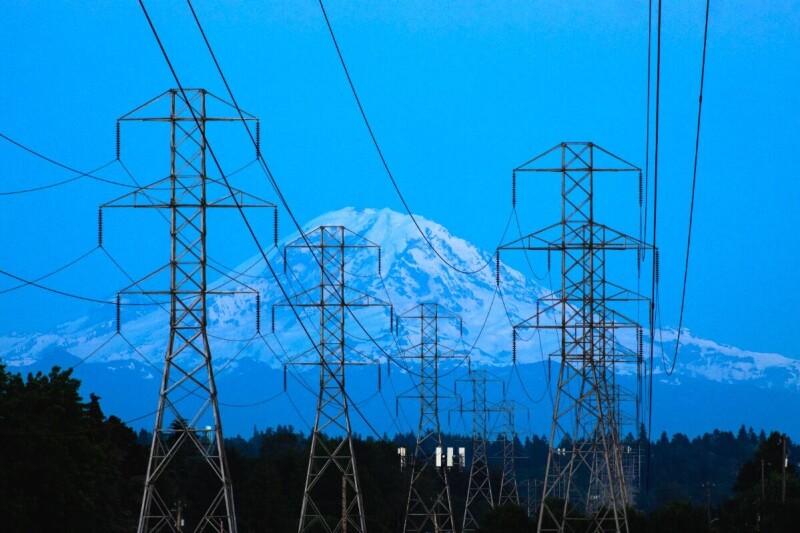
This is a retrofit, not a build. Reconductoring a line means replacing the existing conductor bundle with a higher-capacity one, which raises the thermal limit of the circuit without changing the right-of-way. The 21,000 miles of sensor and control deployment is the other half: it lets operators see where the grid is congested in real time and shift flows before a breaker trips. Secretary Chris Wright framed it as getting "more out of the infrastructure we already have." The program also includes resilience work in disaster-prone areas, including wildfire mitigation aimed at corridors passing through vegetation-heavy terrain.

The source does not name the per-mile cost of reconductoring, the specific conductor alloys or cross-sections being specified, the timeline for the 23 GW to actually come online, or the identity of the 31 project owners. The 26 states are not itemized. Moody's, cited in the same piece, estimates US datacenter electricity consumption will hit 426 TWh by 2030, nearly double the 2025 figure, but the DoE does not break down how much of the 23 GW is earmarked for datacenter load versus residential or industrial.
The next thing to watch is whether the 23 GW materializes on schedule and whether the reconductored lines actually hold the thermal margin the agency claims. If datacenter consumption tracks Moody's 426 TWh projection, the gap between grid capacity and demand will widen even after this program closes. The alternative-energy investments already in motion — small modular reactors, geothermal, recommissioned nuclear plants — will need to close that gap, and the transmission upgrades here are the prerequisite for any of that power to reach a load center.
Reconductoring raises the thermal ceiling of existing circuits without new right-of-way, which is the cheapest path to additional grid capacity but is bounded by the physical limits of the corridor. The 21,000 miles of sensor deployment is the enabling layer that lets operators manage the higher flows before protection devices trip.
$5.25B total: $1.9B federal + $3.35B cost-share · 31 projects across 26 states · 1,500+ miles reconductored or rebuilt · 21,000 miles of grid-enhancing technology deployment
After The Register. We did not report this. The pictures, if any, are theirs.