Gigabyte 1000GM PG5 pairs HEC platform with T-Guard for 12V-2x6
Gigabyte's 1000GM PG5 1000W pairs an HEC platform with all-Japanese capacitors and a T-Guard thermal protection circuit for the 12V-2x6 connector.
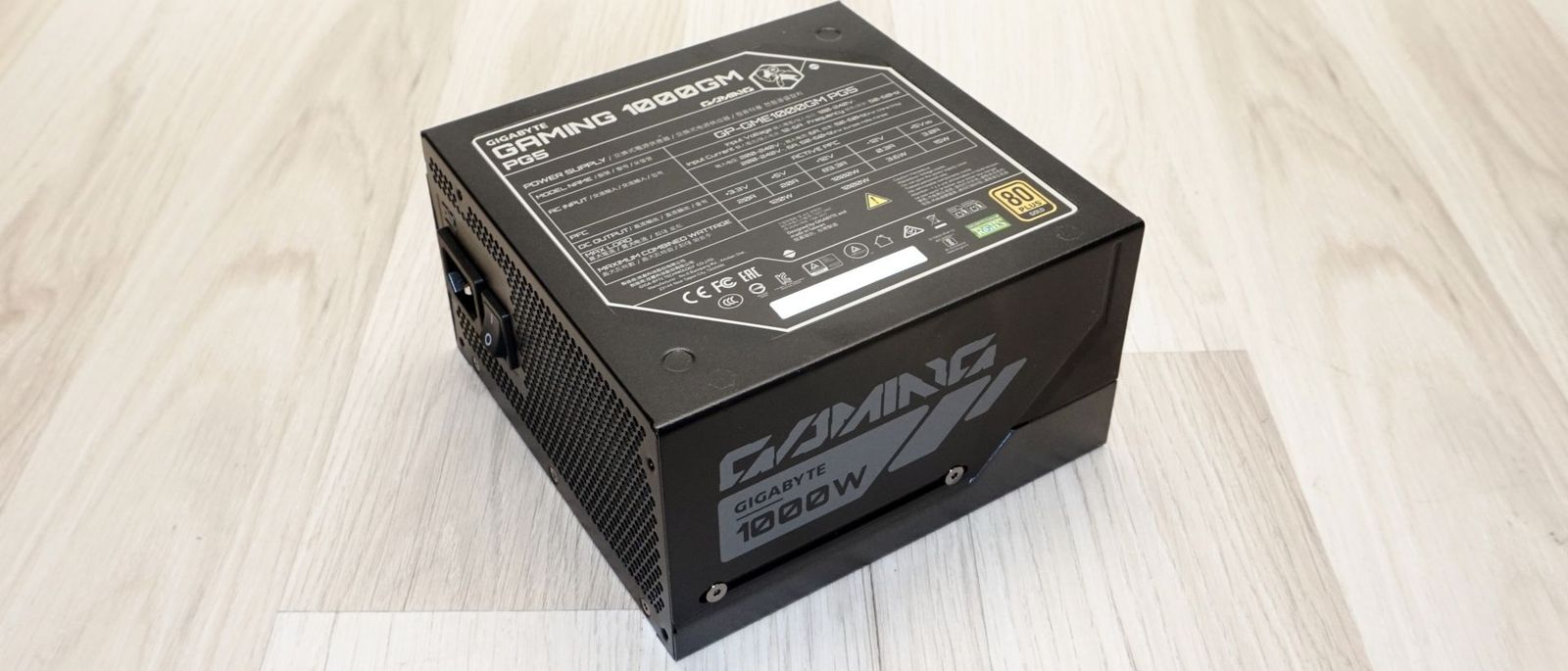
The 12V-2x6 connector is the thermal bottleneck in modern GPU power delivery, and Gigabyte's 1000GM PG5 1000W addresses it with a feature it calls T-Guard. The unit is the flagship of Gigabyte's Gaming series, built on an HEC platform with all-Japanese capacitors and Platinum-level efficiency. The 12V-2x6 connector carries the full power draw of high-end GPUs, making its thermal management a first-order design constraint rather than a secondary concern.
The HEC platform handles the primary conversion stage, though the source does not specify the topology or switching frequency. Japanese capacitors sit in the filter and hold-up positions, which is a cost premium over mixed-origin builds but a reliability signal for the ripple and transient response on the 12V rail. Platinum-level efficiency means the unit clears the 90% threshold at 50% load under the 80 Plus Platinum specification, though the exact figure is not stated in the source material. The capacitor sourcing claim covers the full filter chain, not just the bulk electrolytics, which matters for the high-frequency ripple filtering on the 12V output.
T-Guard is a thermal protection circuit aimed at the 12V-2x6 connector specifically. The connector carries the bulk of the GPU's power draw, and at high loads the contact resistance generates heat that can degrade the mating interface over time. A thermal protection feature here is a design choice that prioritizes connector longevity over raw throughput, which matters for systems running sustained loads rather than burst workloads. The circuit presumably monitors the connector temperature and intervenes before the interface reaches a degradation threshold, though the exact trip point and recovery behavior are not described in the source.
The source provides no measured efficiency figure, no load test data, no transient response numbers, no acoustic measurement, no price, and no release date. The HEC platform is not further specified beyond the name. The T-Guard circuit is not described in terms of its trip point, sensor type, or recovery behavior. The capacitor sourcing claim is not broken down by manufacturer or series. The review headline promises "impressive Platinum-level efficiency" but the body text does not quantify what impressive means in this context.
Watch for the full review data once it clears the editorial queue. The specific efficiency number at 50% load, the transient response on the 12V rail under a 12V-2x6 load step, and the T-Guard trip threshold will tell you whether this is a conservative design or an aggressive one. The HEC platform's topology and switching frequency will also clarify where it sits relative to competing 1000W units in the same tier. The capacitor manufacturer and series will round out the reliability picture for the filter chain.
The T-Guard circuit targets contact-resistance heat at the 12V-2x6 interface, a first-order constraint for sustained GPU loads. The all-Japanese capacitor chain and Platinum efficiency tier point to a conservative ripple and hold-up design.
HEC-built platform · All-Japanese capacitors · Platinum-level efficiency · T-Guard thermal protection for 12V-2x6
After Tom's Hardware. We did not report this. The pictures, if any, are theirs.