Ryzen 9000X3D Series ships with 208 MB V-Cache on 4 nm
AMD's Ryzen desktop page names the 9000X3D Series at up to 208 MB of stacked V-Cache on a 4 nm Zen 5 die, with no per-SKU price or clock printed.
| Ryzen 9000X3D Series | |
|---|---|
| On-chip memory | up to 208 MB |
| Process | 4 nm |
| Architecture | Zen 5 |
| IPC uplift | ~16% gen-over-gen |
| Threads | up to 32 |
| Platform | AM5 |
| Memory | DDR5 |
| PCIe | 5.0 |
The AMD Ryzen desktop page names the 9000X3D Series and puts a number on the cache: up to 208 MB of on-chip memory, stacked in what AMD calls 2nd Gen 3D V-Cache. The page does not print a price, and the $699 figure belongs to the PCWorld test configuration, not to the vendor listing. The vendor page is a marketing surface, not a spec sheet, and it carries no SKU-level pricing for any processor in the line, which means the starting price for the 9950X3D is a street number, not a vendor number.
The same page states the series is built on a 4 nm process with Zen 5 cores and carries an approximate 16 percent single-thread IPC uplift over the prior generation. Those are the only performance figures AMD prints on that page. No clock speed, no core count for a specific SKU, no TDP, no launch date, no per-SKU cache breakdown, and no power envelope for the die.
The platform row reads AM5, DDR5, PCIe 5.0, and the page adds Wi-Fi 6E and AMD EXPO memory tuning as supported features. Those are board-level and memory-controller features, not die-level specifications. They tell the buyer what the socket accepts and what the memory controller can address, not what the silicon does under load, and they do not change the fact that the page carries no per-SKU power or thermal data.
What the page does not do is name the 9950X3D. It names the series, and up to 32 processing threads is the ceiling language AMD uses for the top of the stack. A buyer scanning that page cannot tell which SKU in the 9000X3D line hits 208 MB and which one sits at a lower cache tier, because the page presents the series as a single block of marketing text rather than a table of discrete SKUs with individual cache sizes.
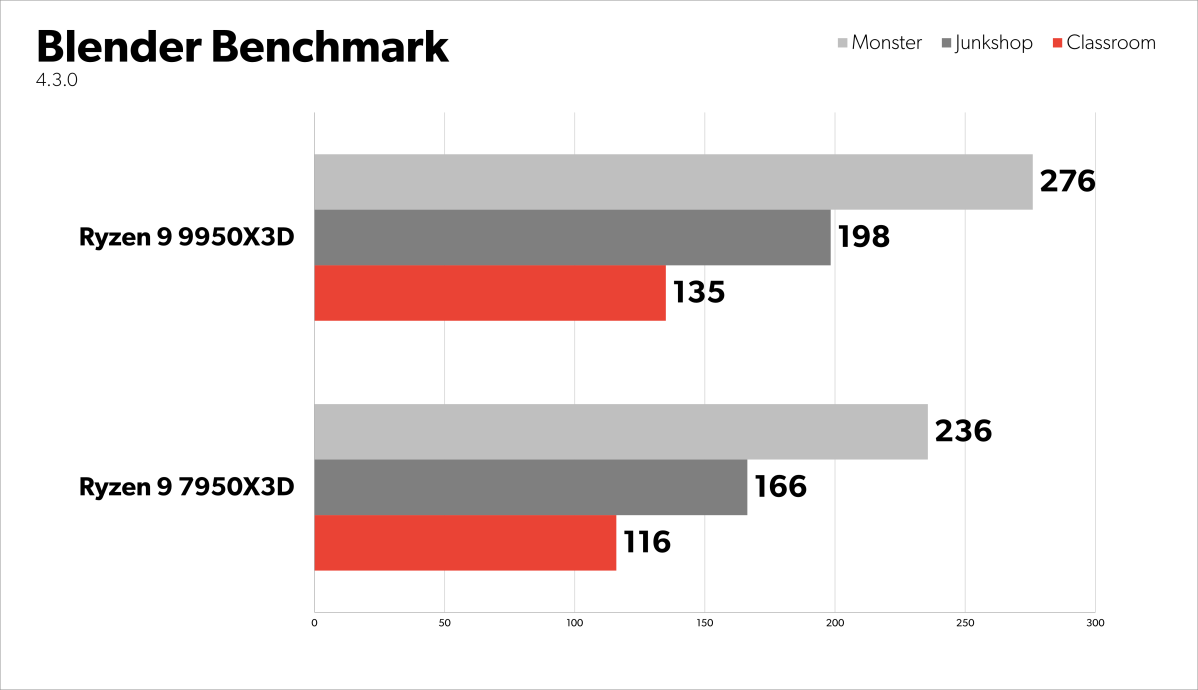
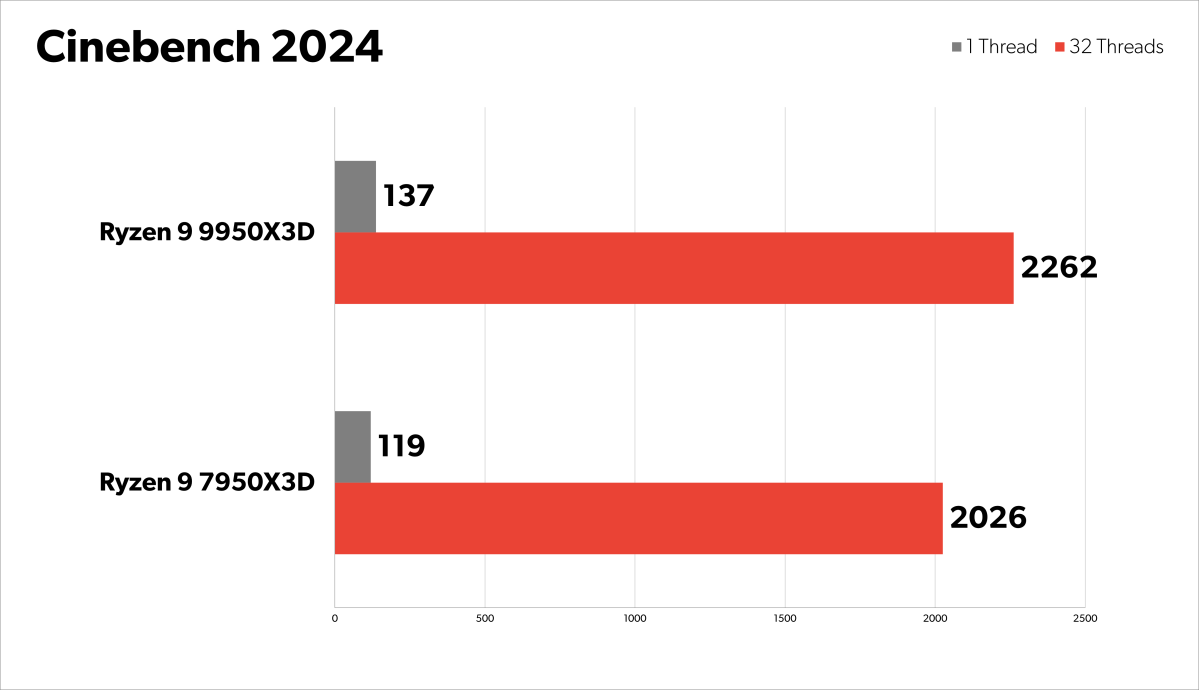
The PCWorld test bought the 9950X3D at $699 and ran it against Intel's top consumer part in Cinebench, Blender, Premiere Pro, and Cyberpunk 2077. Those results are measurements from a single lab on a single day, not figures AMD prints on its own page. The vendor page makes no benchmark claim and references no competitor by name, so the dominates language in the PCWorld headline is the lab's characterization, not AMD's, and it carries the lab's memory configuration, cooling setup, and driver version as hidden variables.
The Ryzen 9 9900X3D, the lower SKU in the same series, shares the 3D V-Cache stack but carries fewer cores and a lower thread count. The PCWorld test did not include it, and the AMD page does not differentiate between the two SKUs in its spec language. The page treats the 9000X3D as one product with one ceiling, which erases the distinction between a 16-core and a 12-core die in the same family and leaves the buyer to infer the delta from retailer listings.
The AMD page conflates the series with a single product in its marketing copy, and the phrase "The Fastest Gaming Processor the World has Ever Seen" is a claim about the series, not a measurement of any one die. A desk that reports that headline as a spec is collapsing a marketing sentence into a data point. The reader loses the distinction between a theoretical ceiling and a measured result, and the two get fused in the reader's mind until the marketing language reads like a benchmark.
The buyer at $699 gets the top of the 9000X3D stack, and the headline number on the AMD page—208 MB—describes that same top configuration. There is no second tier printed on the vendor page, so the stretch between a base configuration and a headline configuration does not exist in the document. The page presents one ceiling and calls it the series, which means the buyer cannot price out a lower V-Cache tier from the vendor's own listing and must rely on retailer pages for the lower SKUs.
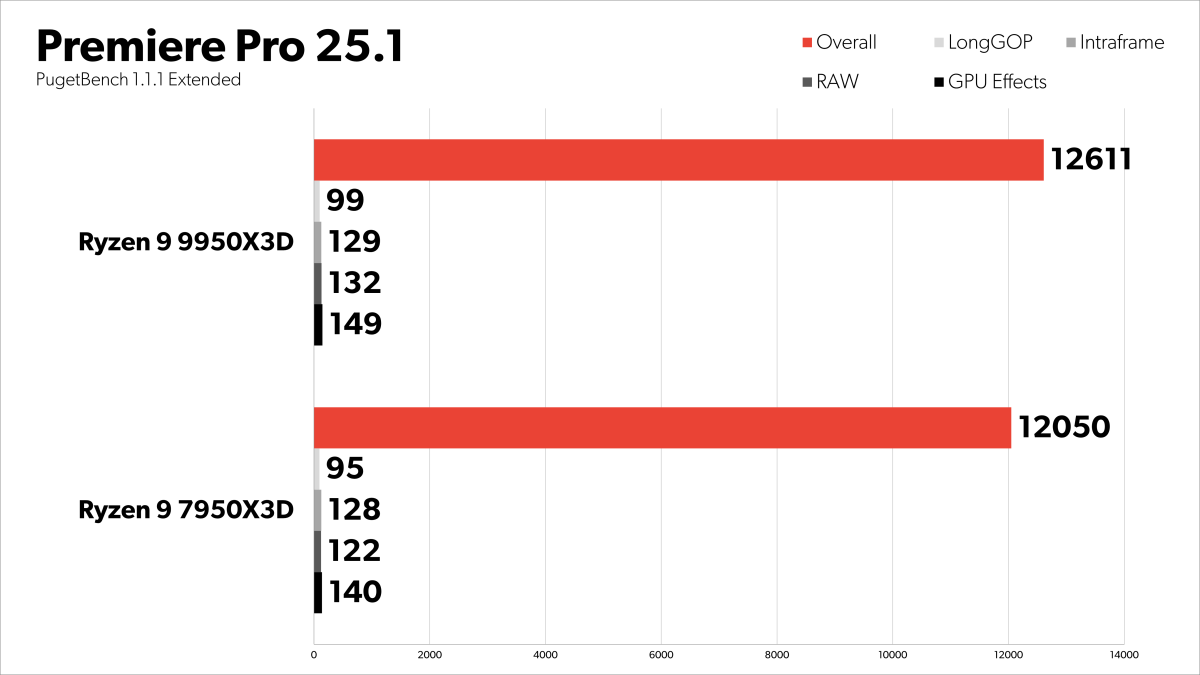
Die Brief's judgment: the document proves the 9000X3D Series exists on 4 nm with Zen 5 and up to 208 MB of stacked cache, and it proves the platform is AM5 with DDR5 and PCIe 5.0. It does not prove that the 9950X3D specifically beats Intel's best in any workload, because the document contains no benchmark data and no competitor comparison. That claim lives in the PCWorld test, in one lab, with one memory configuration and one cooling setup, and the buyer who reads only the AMD page has no way to verify it or to separate the architecture's contribution from the lab's configuration.
What is still unmeasured: thermal behavior under sustained all-core load, the actual clock the 9950X3D sustains at $699-tier cooling, and whether the 16 percent IPC uplift holds when the V-Cache tier is fully populated and the working set exceeds the on-chip boundary. The AMD page prints none of these figures, and the PCWorld test measured single-run benchmarks rather than sustained thermal or power curves. The document does not close that gap, and the buyer who wants a thermal envelope for a 16-core Zen 5 die with 208 MB of stacked cache has to look elsewhere.
The AMD page proves the 9000X3D Series architecture and cache ceiling but contains no benchmark, no per-SKU clock, and no competitor comparison, so the claim that the 9950X3D beats Intel's best rests entirely on one lab's single-day test. The buyer who reads only the vendor page cannot separate the architecture's contribution from the lab's memory, cooling, and driver configuration.
The document does not print a per-SKU clock, TDP, core count, price, launch date, or sustained thermal figure for the 9950X3D.
The primary document states 4 nm, Zen 5, ~16% IPC uplift, up to 208 MB V-Cache, AM5/DDR5/PCIe 5.0, and up to 32 threads. It does not state a per-SKU clock, TDP, core count, price, or launch date. The benchmark superiority claim is external to the document and originates from a single PCWorld test run. The 16% IPC figure is a gen-over-gen architectural claim, not a measured workload result, and the document does not specify whether it holds at the 208 MB cache tier under sustained load.
After amd.com. We did not report this. The pictures, if any, are theirs. Also filed by pcworld.com, guru3d.com, club386.com.