
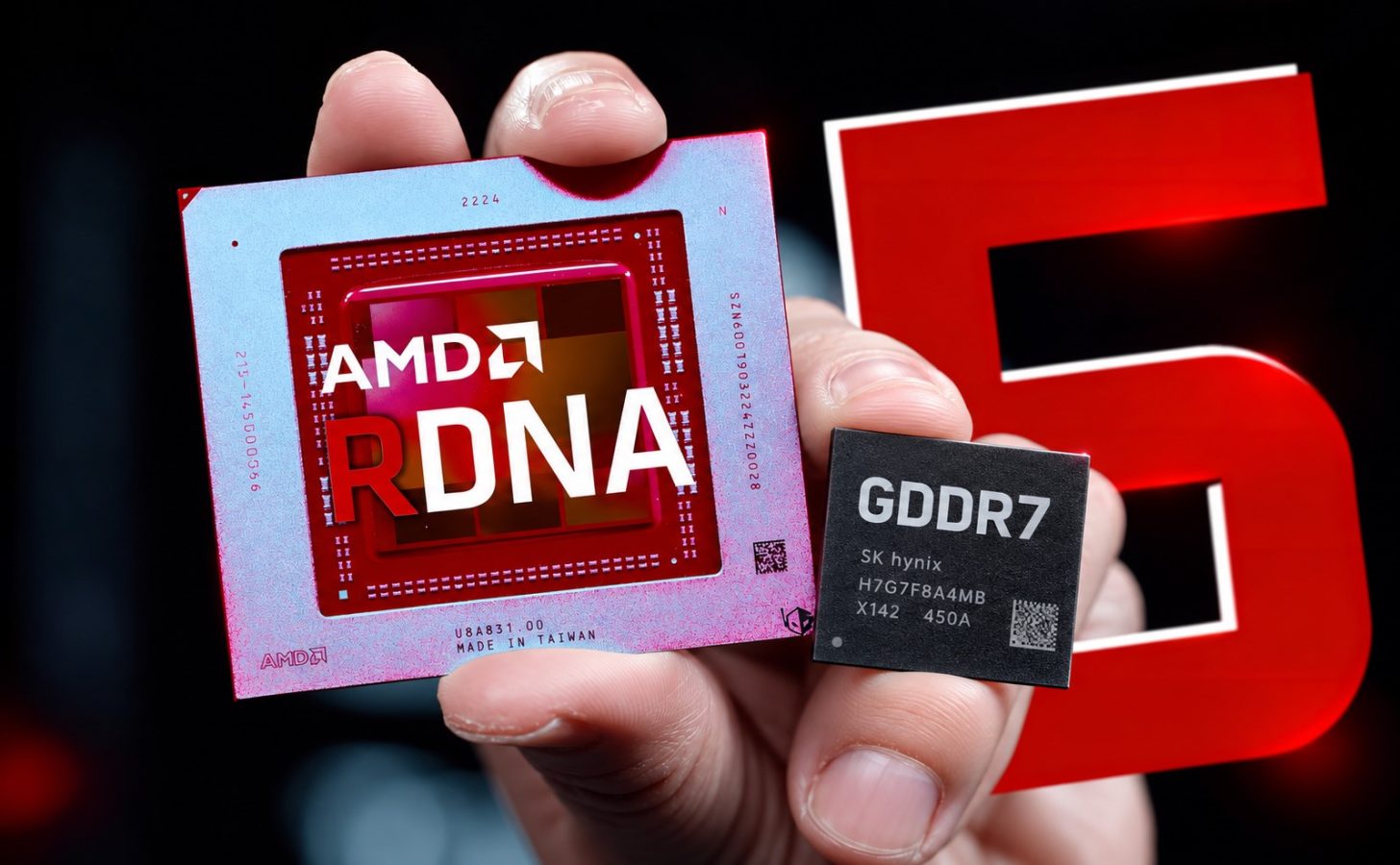
AMD Lays GDDR7 Groundwork in the Linux Kernel for RDNA 5
AMDGPU patches add a GDDR7 identifier and new IP blocks, signaling RDNA 5 may finally move off aging GDDR6.
According to Wccftech, AMD has begun preparing its open-source Linux graphics driver for GDDR7 memory, as spotted in the latest kernel patches. The latest AMDGPU patches add GDDR7 as a recognized video memory type, alongside new IP blocks that could be associated with AMD's RDNA 5 architecture. AMD has not confirmed the memory type for its next-generation cards, but the driver groundwork is in place. The patches are part of a broader RDNA 5 preparation that has been visible in the kernel for some time.
The mechanism is driver-level preparation. The patches introduce a GDDR7 identifier so the driver stack can recognize and handle GPUs with the newer memory. The same batch includes support for IH 8.0, which handles interrupt processing, and NBIF 7.10, a newer version of AMD's New Bus Interface. RDNA 5 has already appeared under the GFX13 codename, and AMD has been introducing support for related IP blocks in the kernel. The GDDR7 groundwork is part of that broader RDNA 5 preparation, not a standalone change. The identifier is the minimal step: it lets the driver name the memory type, which is a prerequisite for the bandwidth and timing logic that will follow.
Versus the status quo, this is a memory-generation transition. AMD has used GDDR6 for several generations of Radeon cards, while Nvidia has already moved to GDDR7 on the GeForce RTX 50 series. GDDR7 is significantly faster than GDDR6, giving GPUs a noticeable bandwidth boost. The appearance of GDDR7 in the Linux driver is not confirmation of RDNA 5 products or specs, but it is consistent with the rapid progress AMD is making on the RDNA 5 stack, which is likely to arrive in early 2028, with one GPU expected sooner. The driver groundwork landing before the product is the normal pattern, since the kernel must be ready before the hardware ships.
What is unconfirmed: whether RDNA 5 actually ships with GDDR7, the bandwidth figures, and the product timeline beyond the early-2028 window. The report is explicit that the driver change is groundwork, not a product confirmation, and the IH 8.0 and NBIF 7.10 blocks are associated with RDNA 5 but not mapped to specific features.
What to watch next: whether RDNA 5 launches with GDDR7, the bandwidth specs, and whether the IH 8.0 and NBIF 7.10 blocks map to specific RDNA 5 features. For the memory supply chain, AMD moving to GDDR7 adds a second large buyer for the faster memory, alongside Nvidia's RTX 50 series, which matters for the pricing and availability of GDDR7 modules.
Desk take
AMDGPU patches add a GDDR7 identifier and new IP blocks. Groundwork for RDNA 5, not a product confirmation, but consistent with a move off GDDR6.
It prepares AMD's driver for a GDDR7 transition, adding a second large buyer for the faster memory alongside Nvidia's RTX 50 series.
Source dispatch
AMD has begun preparing its open-source Linux graphics driver for GDDR7 memory as spotted in the latest kernel patches. Latest AMDGPU Patches Introduce a GDDR7 Identifier Alongside New IP Blocks, Which Could be Associated With AMD's RDNA 5 Architecture While AMD didn't confirm the memory type it will use for its next generation of graphics cards, it's likely that it's going to transition from GDDR6 to the newer GDDR7 memory type. This is now more evident from the latest Linux kernel patches that show AMD has laid the groundwork for GDDR7 memory support. The latest kernel patches add "GDDR7" as […]

