NVIDIA rubin GPU reaches 50 PFLOPS NVFP4 and 22 TB/s HBM4
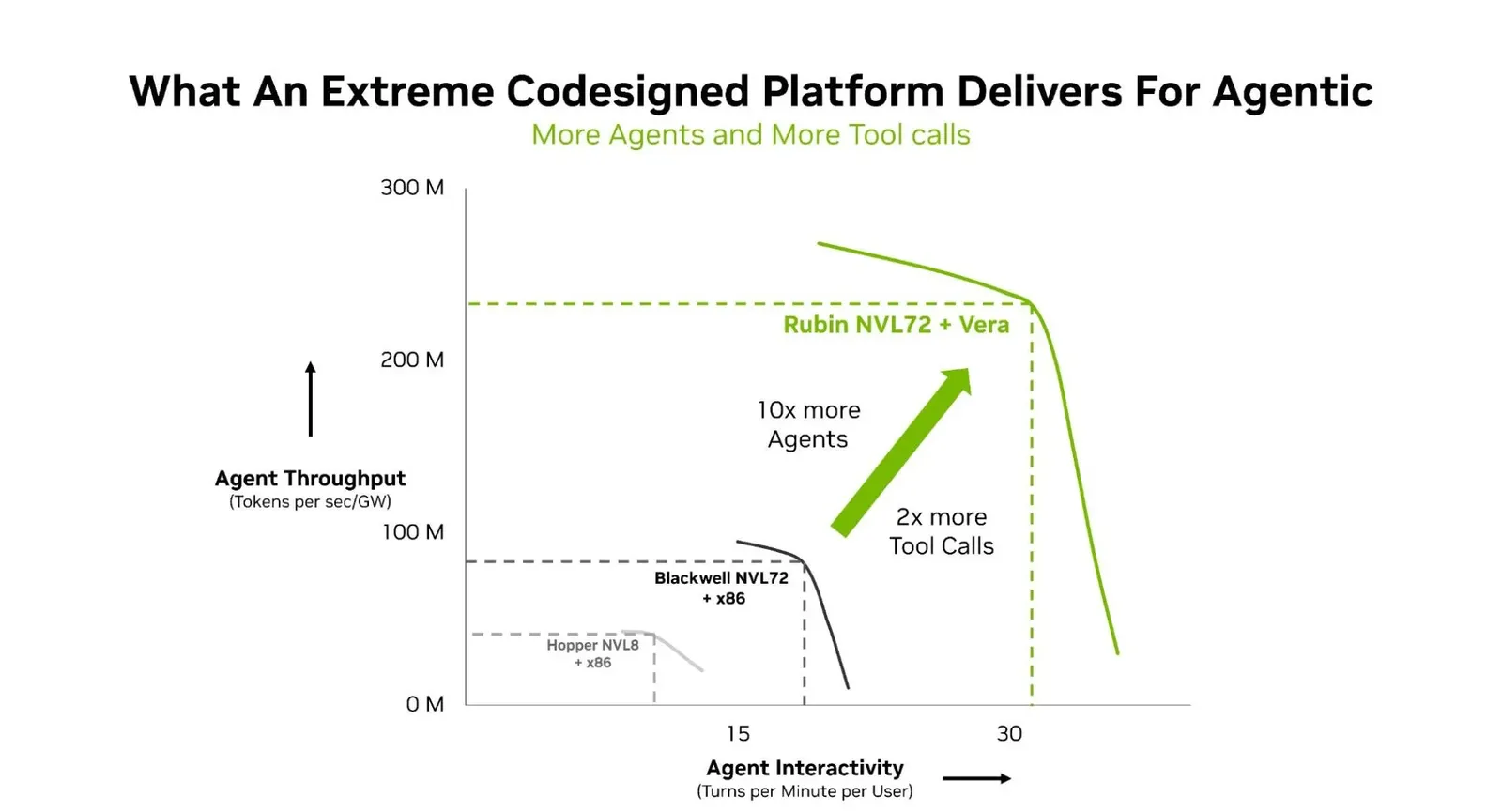
NVIDIA says the Rubin GPU delivers up to 10x more agentic throughput per unit of energy than Blackwell, with 50 PFLOPS NVFP4 and 22 TB/s HBM4 per GPU.
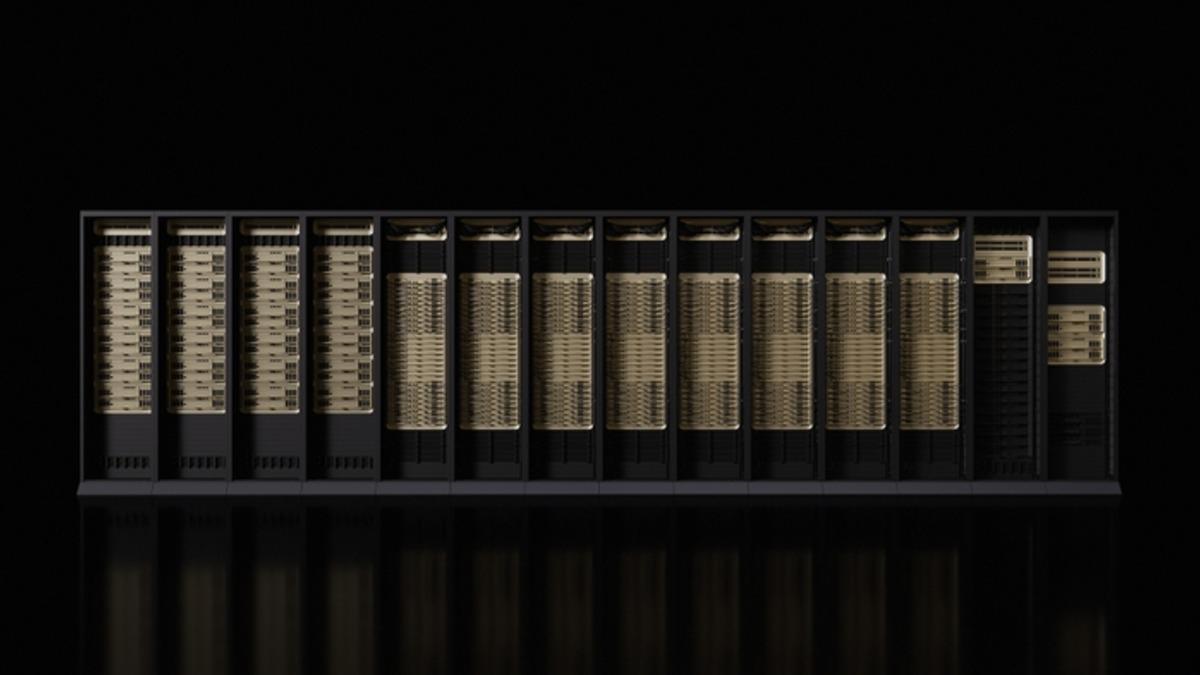
| NVIDIA Rubin GPU | |
|---|---|
| transistors | 336 billion |
| streaming multiprocessors | 224 |
| Tensor Cores | 896 |
| memory | 288 GB |
| memory bandwidth | 22 TB/s |
| NVFP4 performance | up to 50 petaflops |
| NVLink bandwidth | 3,600 GB/s |
The architecture note puts 50 PFLOPS NVFP4 on the Rubin GPU. That figure does not prove a rack can sustain the rate under production power, or that the 288 GB HBM4 pool will hold the KV cache for a multitrillion-parameter model without offload.
The constraint is not die count. It is the power envelope around 224 streaming multiprocessors, 896 Tensor Cores, and a third-generation Transformer Engine. If the 40% GPU-density claim from DSX MaxLPS holds, the buyer gets more inference per budgeted watt, but the fab still has to prove that the two reticle-limited dies and NV-HBI link keep clocks and yield stable at scale.
The note leaves out TDP, process node, training PFLOPS, and a measured token cost. Those are the numbers that decide whether the 10x agentic throughput claim is a design target or a billable workload.
The Rubin GPU specs are stated in NVIDIA's architecture note. The 10x agentic throughput figure is a design target, not a measured result. TDP and token cost are not stated.
After resources.nvidia.com. We did not report this. The pictures, if any, are theirs.