Xiaomi confirms REDMI Book 14 2027 with Wildcat Lake for October 27
Xiaomi confirmed the REDMI Book 14 2027 with a 72Wh battery and Intel Core Series 3 silicon, launching October 27 with no price or display specification published.
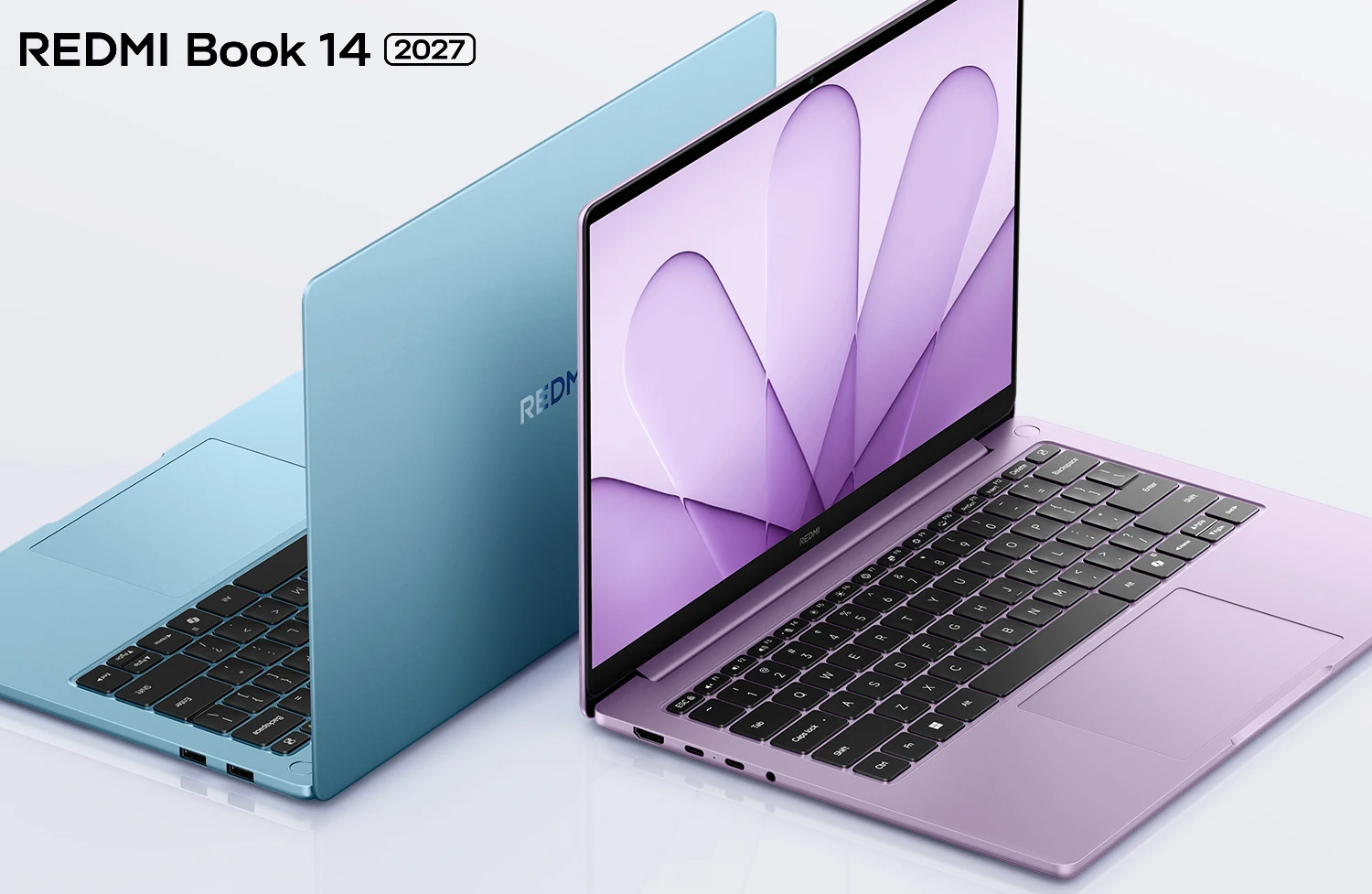
| REDMI Book 14 2027 | |
|---|---|
| Battery | 72Wh |
| Processor | Intel Core Series 3 (Wildcat Lake) |
| Ports | 2x USB-A, 2x USB-C, HDMI, 3.5mm |
| Colors | Blue, Purple |
| Launch date | October 27 |
Xiaomi confirmed the REDMI Book 14 2027 through its own promotional materials, with a launch date of October 27. The VideoCardz page that carries the confirmation does not state a price for any configuration. The vendor is Xiaomi, and the page that names the launch is the VideoCardz article published on October 22. No price is attached to the confirmation, and no configuration tier is defined. The October 27 presentation will also include the REDMI K100 smartphone, which means the laptop launch is one item in a broader product event rather than a standalone announcement.
The confirmed hardware for the Book 14 2027 is thin. A 72Wh battery is the only power figure Xiaomi has published for this model. The chassis retains two USB-A ports, two USB-C ports, an HDMI output, and a 3.5mm audio jack. Blue and purple are the color options shown in the promotional imagery. The redesign of the chassis is mentioned in the promotional copy but not quantified in any dimension or weight figure. A 72Wh battery in a 14-inch laptop is a reasonable capacity, but without a display power draw or a sustained CPU power figure, the runtime cannot be calculated.
The port layout is the most concrete piece of hardware information in the confirmation. Two USB-A ports and two USB-C ports give the buyer four data ports plus an HDMI output and a 3.5mm jack. The USB-C ports may support power delivery, but the page does not state whether they do. In a 14-inch laptop, four data ports plus video and audio is a full complement, and the retention of USB-A suggests that Xiaomi is targeting users who still carry USB-A peripherals.
What the page does not say is what matters more. Display resolution, panel type, memory configuration, and charging wattage are all absent from the confirmation. Xiaomi has not provided complete specifications for either laptop in the 2027 series. The absence is not an oversight in reporting. The company simply has not published those figures as of the VideoCardz article. A buyer who wants to know whether the display is 16:10 or 16:9, whether it is IPS or OLED, or whether the memory is soldered or socketed, has no answer from the vendor. The charging capability is equally opaque. A 72Wh battery needs a charger, and the wattage of that charger determines how quickly the battery recovers after a work session.
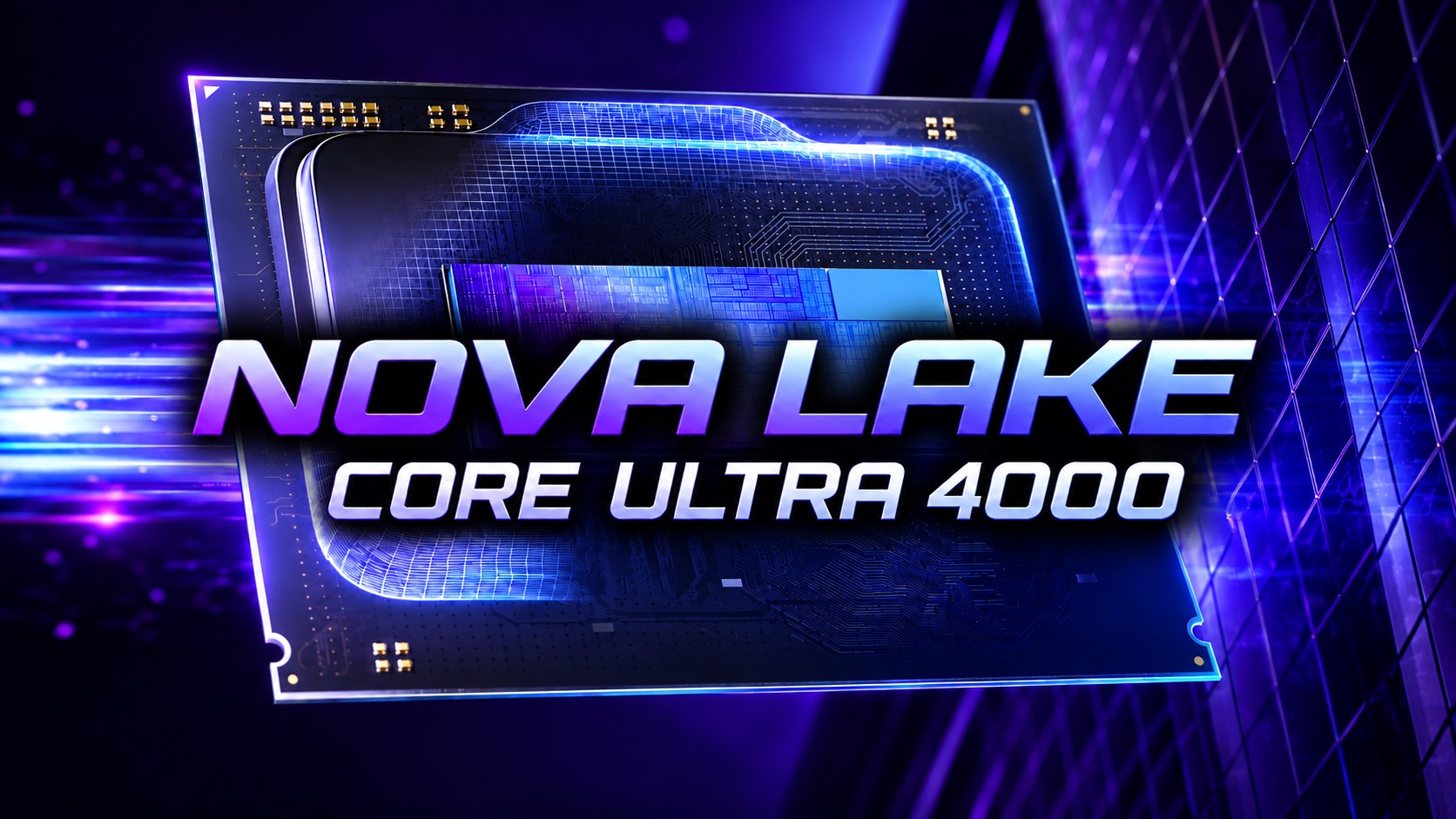
The processor family is Intel Core Series 3, the name Intel gave to its Wildcat Lake platform for lower-cost laptops. The series was introduced earlier in 2025 and targets the segment below the Core Ultra line. It is the first Intel laptop platform built on the 18A process node, which Intel has been developing as the successor to Intel 4. The positioning is explicit: this is the entry point for Intel's laptop silicon in the sub-flagship tier. The Core Series 3 name replaces the older Core naming convention for this segment, and the series number indicates the tier within Intel's current product hierarchy.
The specific chip that appeared in a Geekbench submission for the larger sibling is the Core 5 320. It is a six-core, six-thread part built on Intel 18A. Two Performance cores and four Low Power Efficient cores share the die, with a maximum turbo frequency of 4.6 GHz. Intel specifies a 15W base power and a 35W maximum turbo power. The 35W figure is a ceiling, not a sustained rating. In a 14-inch chassis with a 72Wh battery, the thermal design will determine how long that ceiling is reachable. The six-thread configuration means the part does not use hyperthreading. Each core runs one thread, which is a design choice that trades multi-threaded throughput for simpler power management.
The platform constraint that shapes every configuration in this series is the single memory channel. Core Series 3 supports DDR5 and LPDDR5X, but the memory controller is wired for one channel. That limits bandwidth regardless of which memory type a board designer chooses. For a six-core part, the single channel is the architectural bottleneck that no amount of clock speed can hide. The DDR5-4800 speed that appeared in the Geekbench submission is the base speed for DDR5, not a boosted figure. LPDDR5X would offer lower power at the same or higher speed, but the single channel constraint applies to both. A board designer who chooses LPDDR5X saves power but does not gain bandwidth.
The REDMI Book 16 2027, which appeared in Geekbench with the Core 5 320 and 16GB of DDR5-4800, is the only configuration in this family with a measured memory pairing.
The Geekbench appearance is not a confirmation. VideoCardz notes that Xiaomi has not officially confirmed the Core 5 320 configuration for the retail Book 16. The number is a leak, not a spec sheet. A Geekbench submission proves the chip exists and can be clocked, but it does not prove that the retail machine will ship with that memory speed or that the thermal design will sustain the 4.6 GHz turbo. The distinction between a leak and a confirmed spec is the difference between a number that might change and a number that will not. The 16GB DDR5-4800 pairing is a reasonable default for a mid-range laptop, but it is not a guarantee.
The buyer who walks into an October 27 presentation in China will see a laptop with a known battery and a known port layout, but no known display, no known memory, and no known price. The constraint is not the silicon. Intel 18A is a process node that has been discussed for over a year, and the Core 5 320's 15W base power is a figure that fits any thin-and-light chassis. The constraint is Xiaomi's own disclosure. A 72Wh battery in a 14-inch chassis implies a certain thermal envelope, but without a display specification or a memory configuration, the buyer cannot calculate whether the 35W turbo power will sustain under load or whether the single-channel memory will bottleneck the four LPE cores during multi-threaded work. The fab question is whether 18A yield at this power level produces a part that can hold 4.6 GHz across all six cores without throttling, and no document in this packet answers that. The buyer is constrained by information, not by hardware.
What is still unmeasured is the display, the memory, the charging rate, the price, and whether the machine ships outside China.
The buyer is constrained by Xiaomi's disclosure, not by the silicon. A 72Wh battery and a 15W base power define a thermal envelope, but without a display spec or memory configuration, the 35W turbo ceiling and the single-channel memory bottleneck cannot be evaluated against real workload.
Display resolution, memory configuration, charging wattage, price, and availability outside China are not stated in any document in the packet.
The Core 5 320 on Intel 18A is a 6C/6T part with 2P+4LPE topology, 4.6 GHz max turbo, 15W base, 35W max turbo. The single memory channel is the binding constraint for multi-threaded workloads. No document in the packet confirms sustained turbo, display power draw, or memory configuration for the Book 14 2027.
After techgup.com. We did not report this. The pictures, if any, are theirs.