Google Antigravity screens UniProt for antimicrobial peptide candidates
The DeepMind walkthrough says Antigravity used ProtNLM to scan UniProt and surface a novel antimicrobial peptide candidate now in wet-lab validation.
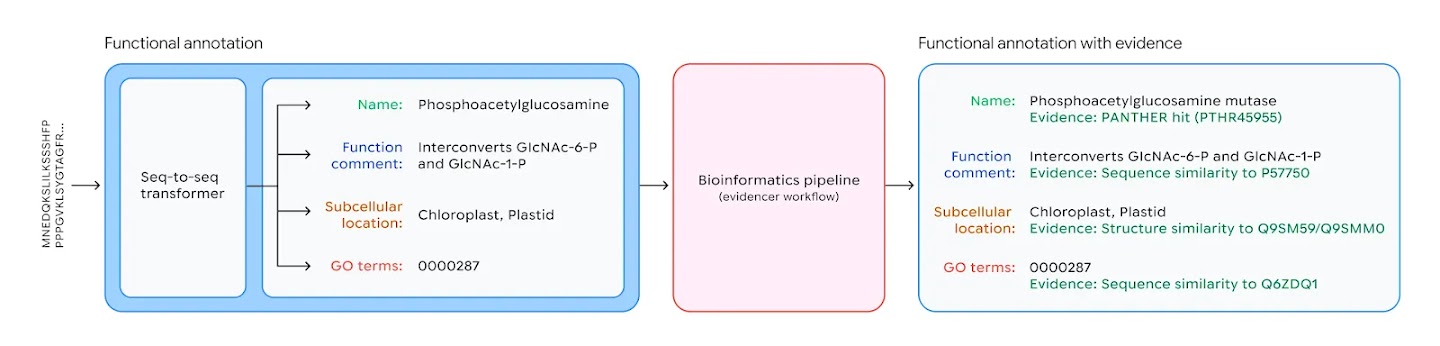
Millions of previously uncharacterized UniProt proteins are scanned. That number does not prove the peptide candidate is active, stable, or safe. It only shows that the search surface is large enough to need a filter, and that the filter is a model, not a lab result.
Die Brief reads the page as a workflow constraint, not a drug claim. Biologists are constrained by fragmented database work, and the platform compresses that work into one session. The buyer gets a screening loop, not a measured molecule, because the model's role is to rank sequences before a human or a lab spends time on them.
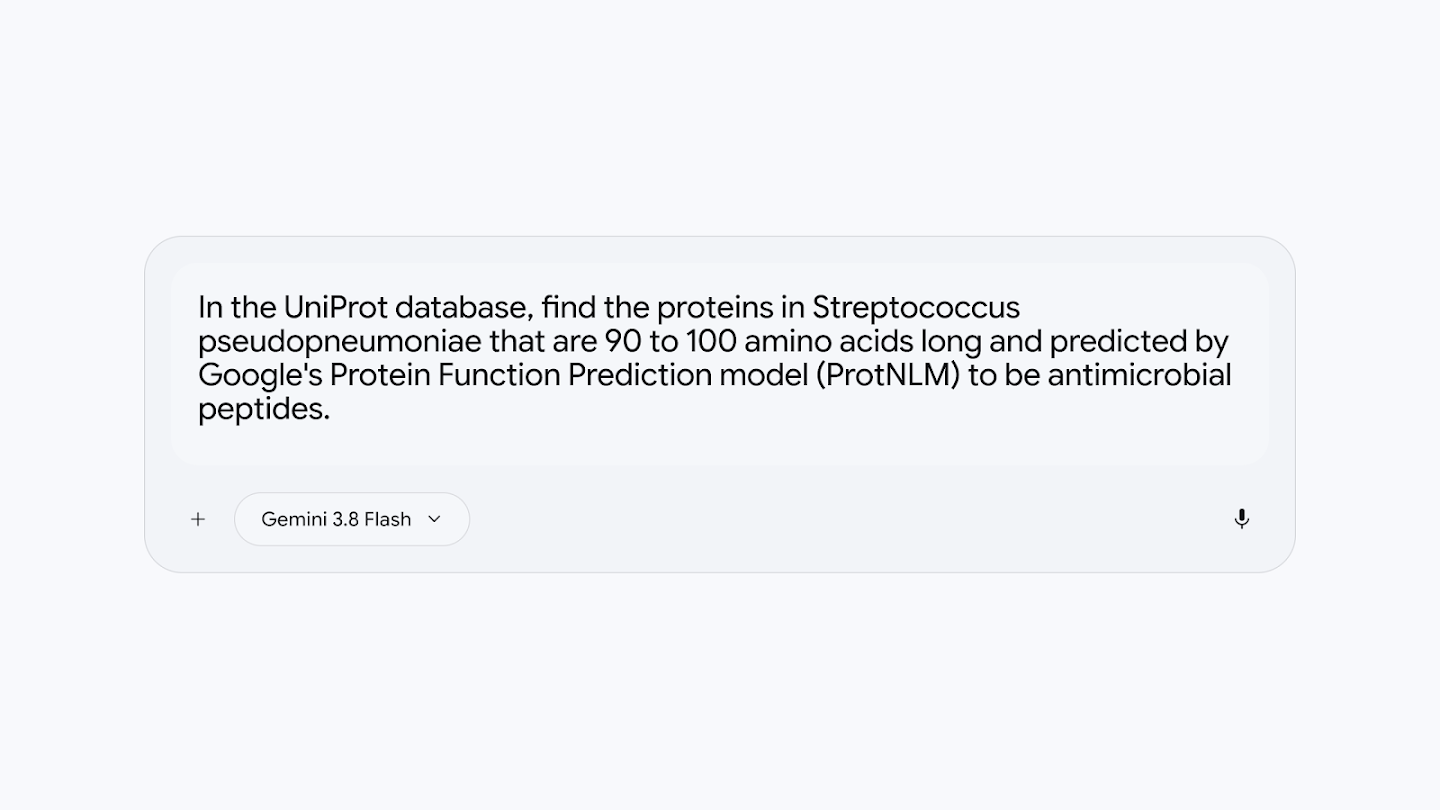
The page leaves out parameter count, context length, price, benchmark, and any measured antimicrobial activity. The candidate is still in wet-lab validation, so the page cannot support a potency claim. What changes for the buyer is the cost of the first screen, not the certainty of the final compound.
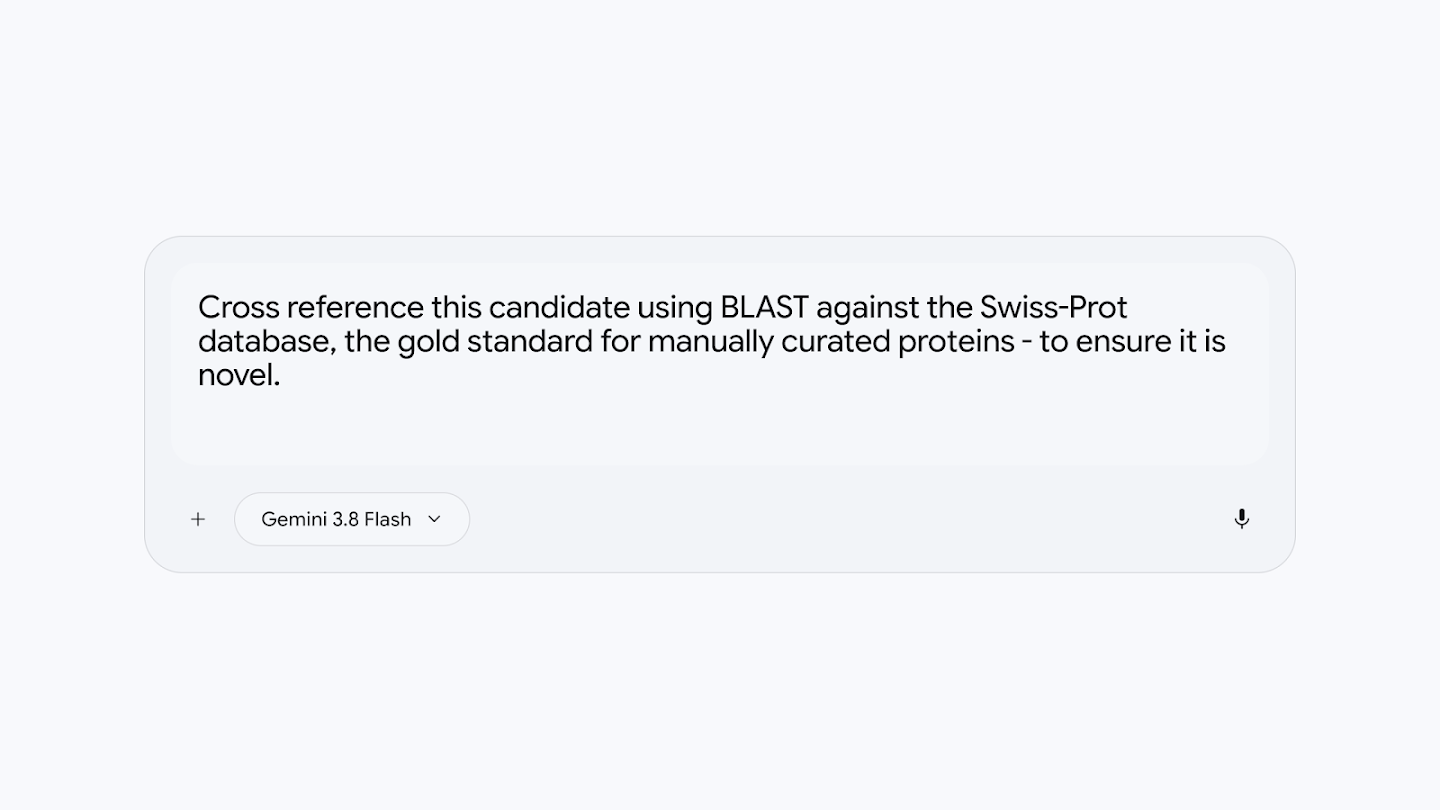
The constrained party is the biologist, not the model, because the page shows a workflow rather than a validated molecule. For a buyer, the useful artifact is a triage pipeline, not a therapeutic claim.
Left out are parameter count, context length, price, benchmark, and any measured antimicrobial activity.
The system couples an agentic workbench with a sequence-to-function model to rank UniProt hits. Its value is search compression, while efficacy remains outside the page's measurement.
millions · Google Antigravity · ProtNLM · UniProt · antimicrobial peptide candidate · wet-lab validation
After deepmind.google. We did not report this. The pictures, if any, are theirs.