NVIDIA splits Nemotron agents by memory tier
Super VL targets enterprise servers, while two Bolt models target local and edge hardware.
| Nemotron 3.5 Super VL | Nemotron 3.5 Bolt 74B-A9B 24GB | Nemotron 3.5 Bolt E4B 4GB | |
|---|---|---|---|
| parameters | 120B | 74B-A9B | |
| memory | 24GB | 4GB | |
| quantization | 2-bit | ||
| availability | now | now | Oct. 23 |
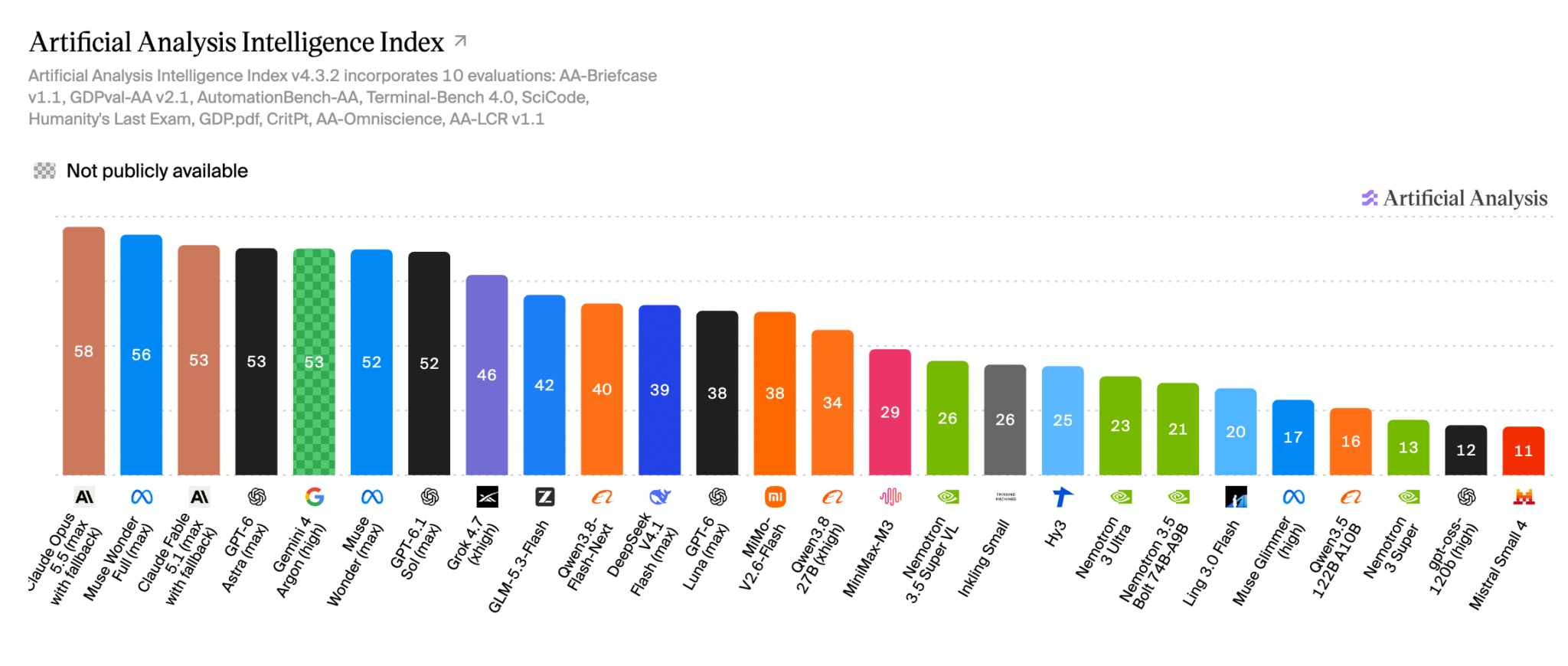
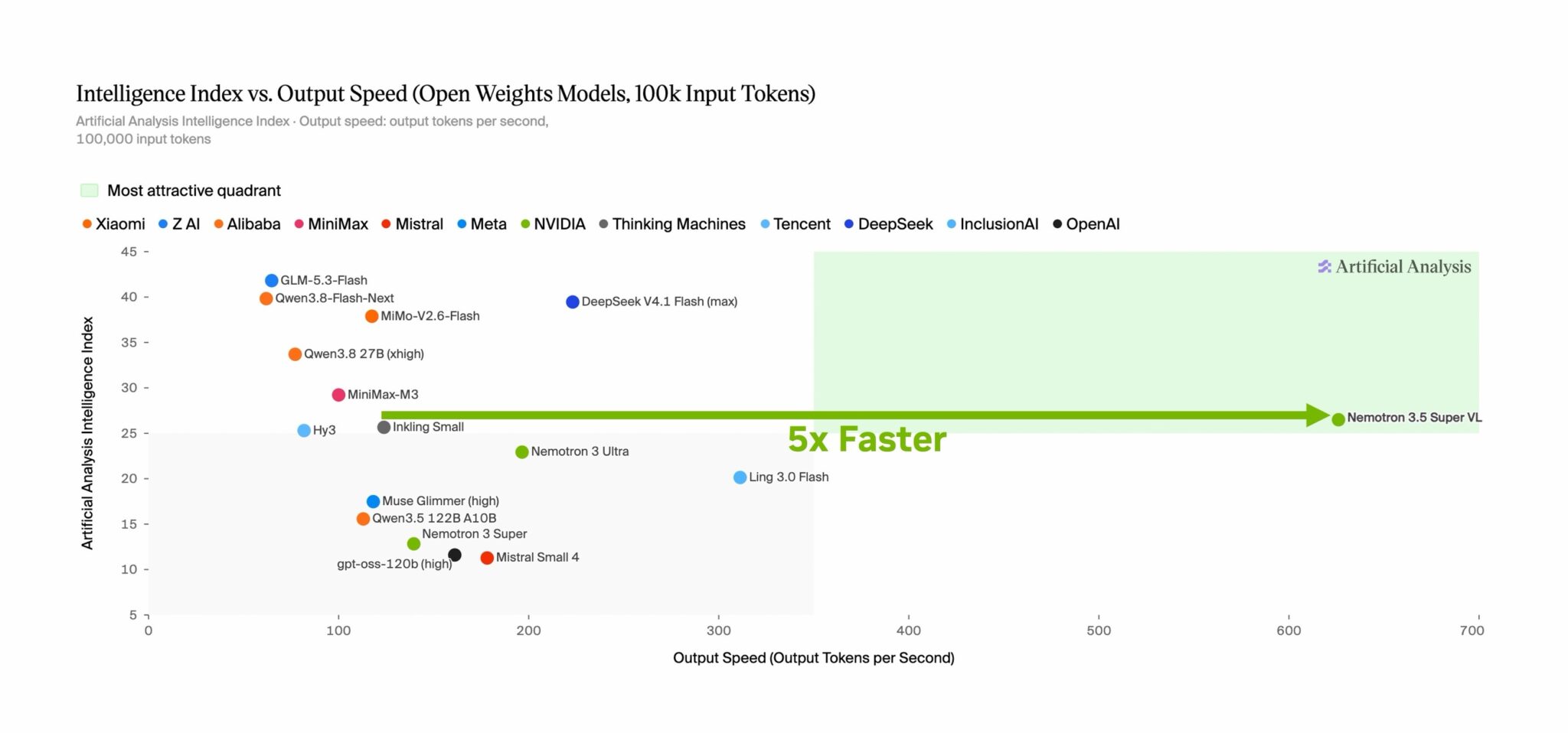
| benchmark | 5x faster than next best; Artificial Analysis Intelligence Index leadboard | #1 PinchBench, #2 BrowseComp | |
| training tokens | 26 trillion | ||
| post-training samples | 3.8 million | ||
| serving | 8x more users, 85% lower latency |
Nemotron 3.5 Super VL is a 120-billion-parameter open model. No memory footprint, power draw, or minimum hardware requirement appears for Super VL.
Bolt 74B-A9B 24GB targets local RTX/DGX Spark workloads in 24GB. Bolt E4B 4GB targets 4GB edge devices.
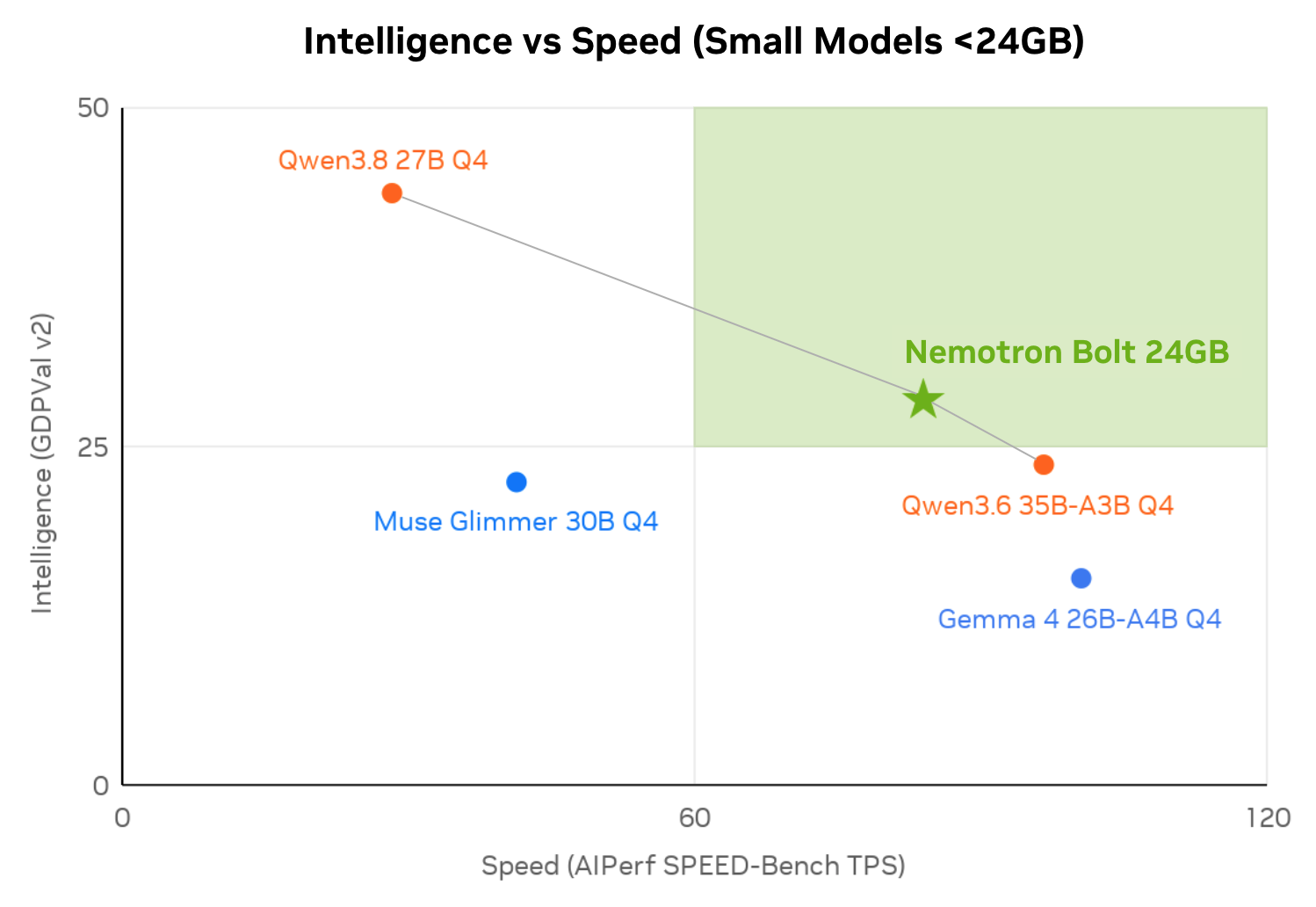
The lineup separates agent capability by memory tier instead of one benchmark. Buyers still need to map Super VL to their own hardware.
Open weights and post-training shift customization to customers. The page does not tie that path to silicon utilization.
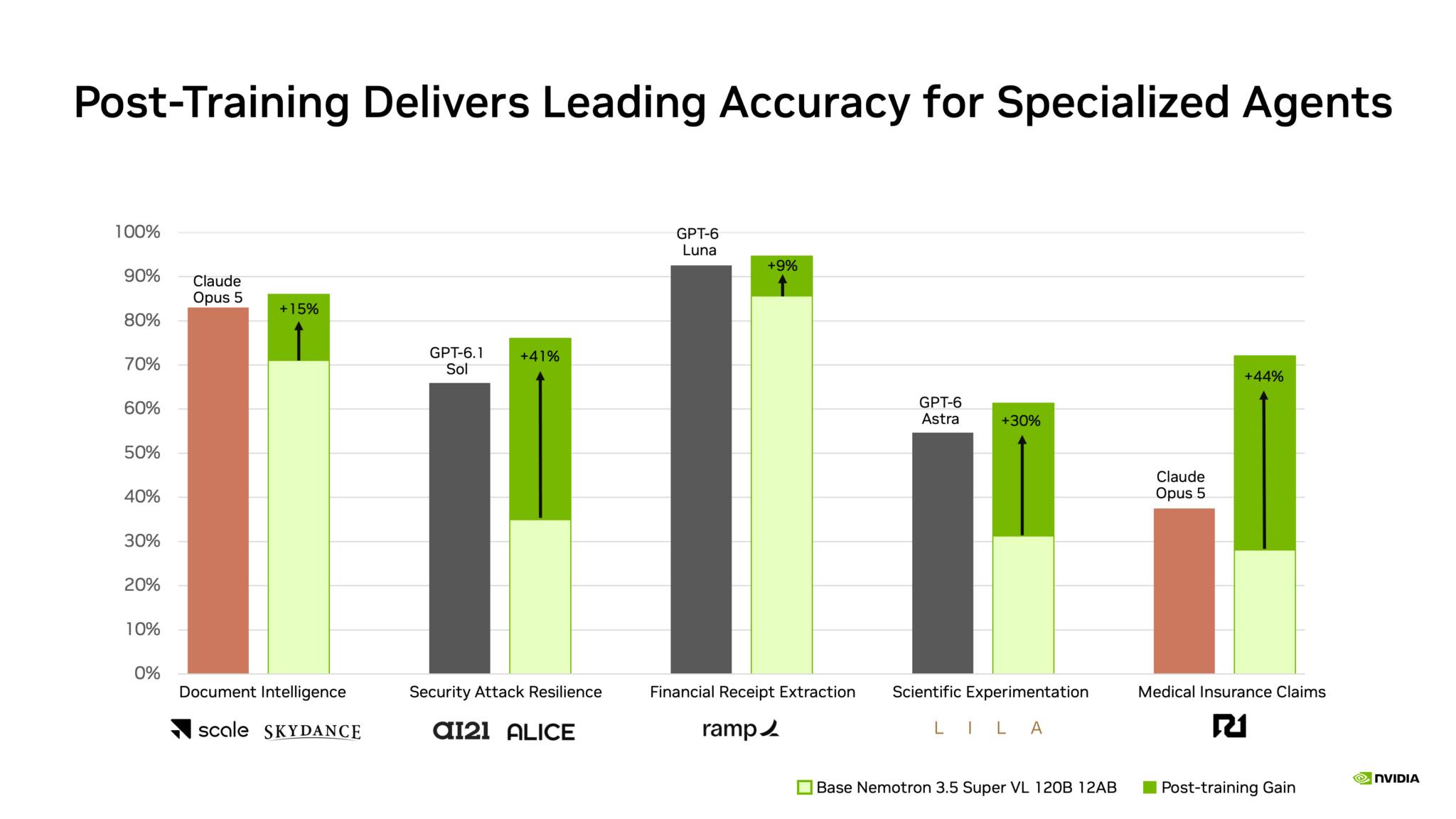
The unmeasured gap covers Super VL's actual memory requirement and whether the 5x faster claim holds outside NVIDIA's serving stack. Bolt E4B also lacks a stated benchmark.
Memory tier is the real constraint.
After blogs.nvidia.com. We did not report this. The pictures, if any, are theirs.