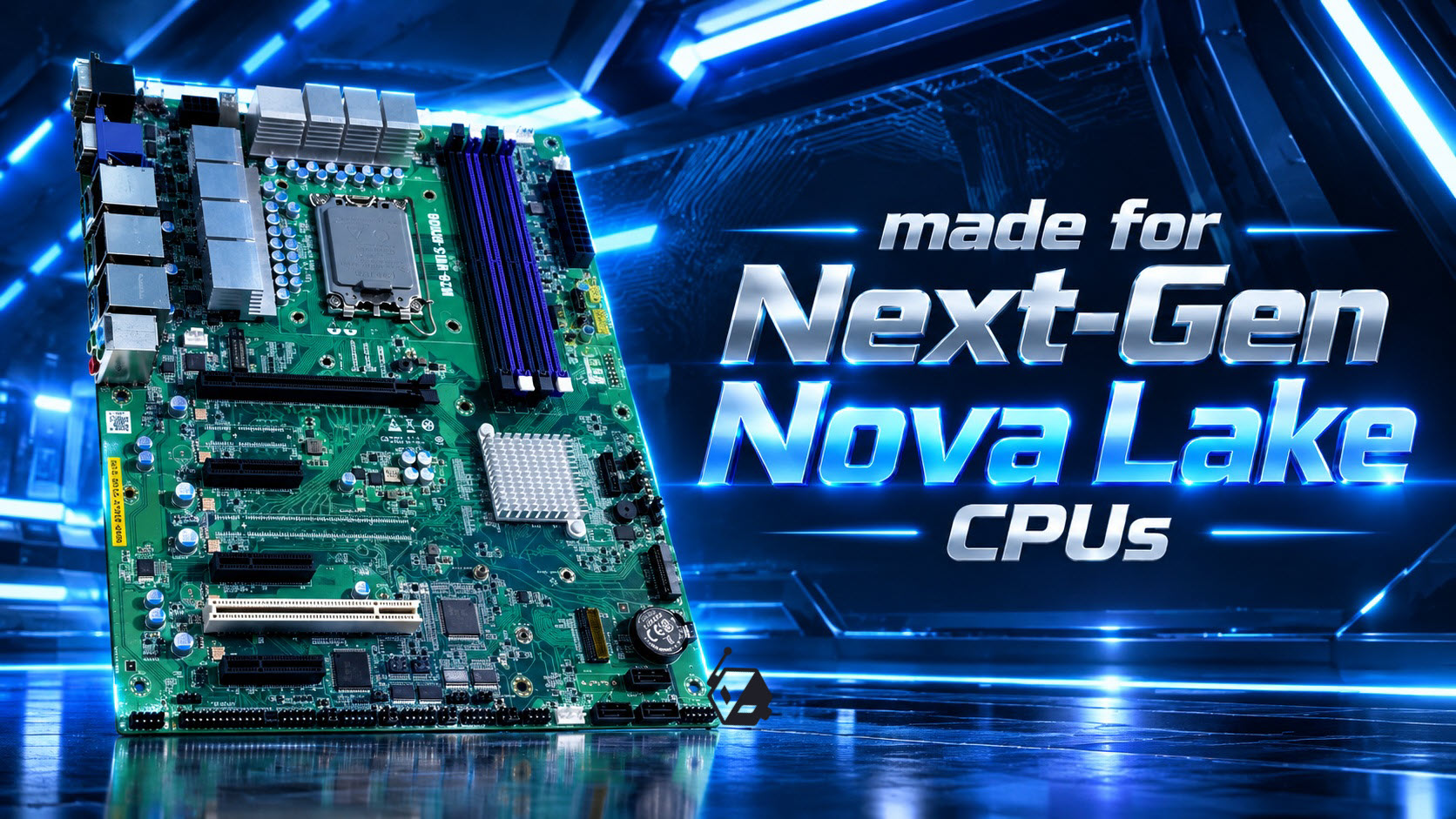
Decenta M26-NVLS-ATX09 pictured with LGA 1954 socket and Q970 or B960 chipset
Decenta's M26-NVLS-ATX09 motherboard was photographed at a China event with an LGA 1954 socket targeting Nova Lake-S Core Series 4 CPUs.
| M26-NVLS-ATX09 | |
|---|---|
| Socket | LGA 1954 |
| Chipset | Q970 / B960 |
| Memory | 4x DDR5 6400 MT/s U-DIMM, 256 GB max |
| PCIe | 2x 5.0 x16, 2x 5.0 x4, 1x PCI |
| M.2 | 2x M-Key 2242/2280, 1x E-Key 2230 |
| Wireless | Wi-Fi 7, Bluetooth 6 |
| Power | 8+4 pin |
| Security | TPM 2.0 |
A Decenta board called M26-NVLS-ATX09 was photographed at a trade event in China, per a post by @wxnod that Wccftech filed on October 13, 2026. The unit carries an LGA 1954 socket and is built for Intel's Nova Lake-S "Core Series 4" processors, with a standard single-lever retention mechanism rather than the 2L-ILM design seen in earlier socket photographs. Decenta is not a name in the usual motherboard vendor lineup, and the Wccftech desk notes that other partners have shown LGA 1954 boards only in secrecy.
The spec table below carries the figures the Decenta flyer states. What the table does not prove is which of the two chipsets, Q970 or B960, is actually populated on this particular unit, or whether the two PCIe 5.0 x16 slots will both run at full x16 bandwidth simultaneously when a second card is installed. The 8+4 pin power connector, the conventional ATX layout, and the triple-display output of VGA, HDMI, and DP all point to a board designed for sustained office workloads rather than enthusiast overclocking.
The board lists four DDR5 U-DIMM slots at 6400 MT/s in dual-channel configuration, with a 256 GB maximum capacity. Two M.2 M-Key slots accept 2242 and 2280 drives, and a single E-Key 2230 slot is reserved for a Wi-Fi 7 and Bluetooth 6 wireless card. The PCIe complement includes two 5.0 x16 slots, two 5.0 x4 slots, and one legacy PCI slot, with TPM 2.0 encryption support listed without a controller part number, and heatsinks over the VRM area that are conventional rather than custom.
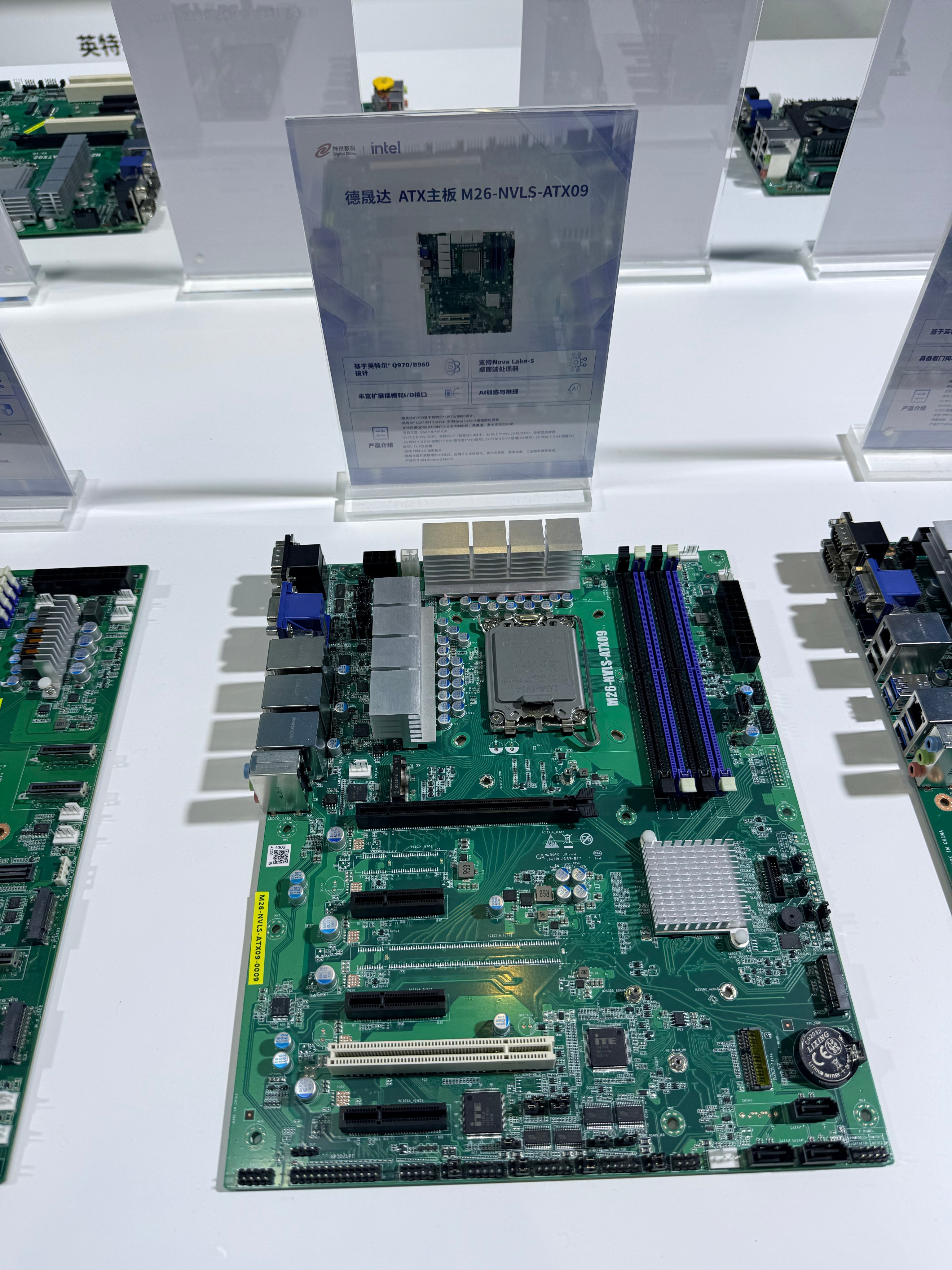
Die Brief reads the single-lever socket as the load-bearing detail in this photograph. If Intel reserves the 2L-ILM retention for Z-series boards and gives the Q/B tier a standard lever, the thermal headroom for Nova Lake-S in the enterprise segment is bounded by whatever TDP the chipset permits, and no buyer can verify that number from a flyer image. The DDR5-6400 ceiling across four DIMMs is a platform floor, not a ceiling, but the absence of a price, a launch date, and a TDP figure means the cost per socket remains unmodelable for a 24/7 deployment buyer constrained by a spec sheet that has not yet been published.
No document in this packet states a price, a launch date, a TDP figure, or memory timings for the M26-NVLS-ATX09. The exact chipset designation between Q970 and B960 remains ambiguous in the flyer, and the Wi-Fi 7 and Bluetooth 6 module is a placeholder slot, not a populated component. The PCI slot is a legacy holdover whose bandwidth role is not specified in the document.
The single-lever socket on a Q/B-tier board tells the buyer that Intel is reserving 2L-ILM retention for the Z-series, which caps the thermal envelope for enterprise Nova Lake-S deployments. No price, TDP, or launch date exists in any document, so the cost per socket is unmodelable until Intel publishes the chipset spec.
Single-lever retention on a Q970/B960 board implies a lower sustained-load TDP ceiling than the 2L-ILM Z-series path. The 256 GB / 4-DIMM memory ceiling and DDR5-6400 floor are fixed by the chipset, not the CPU, so the buyer's expansion path is bounded before the processor is even selected.
After Wccftech. We did not report this. The pictures, if any, are theirs. Also filed by ComputerBase, OC3D, videocardz.com.