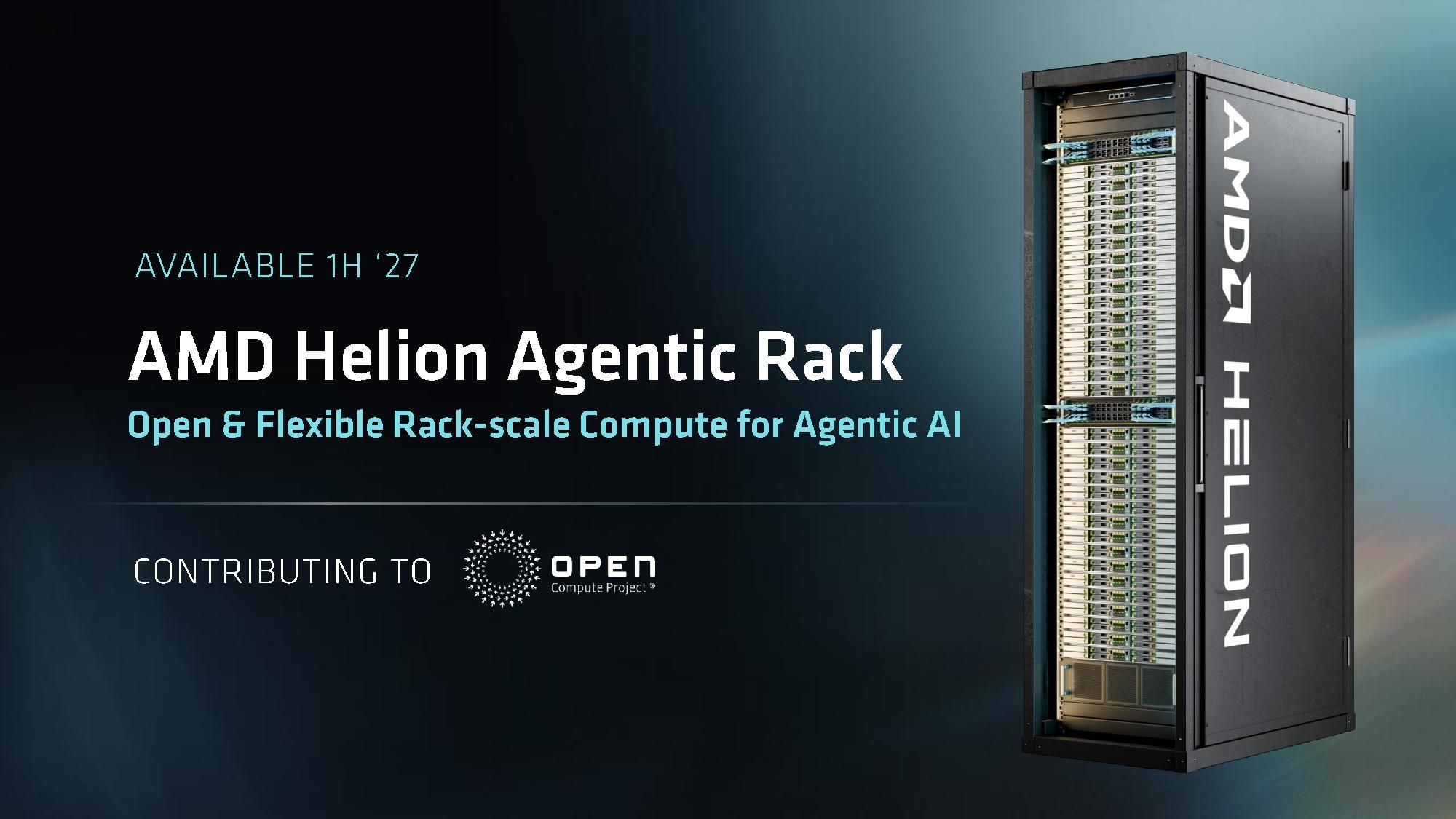
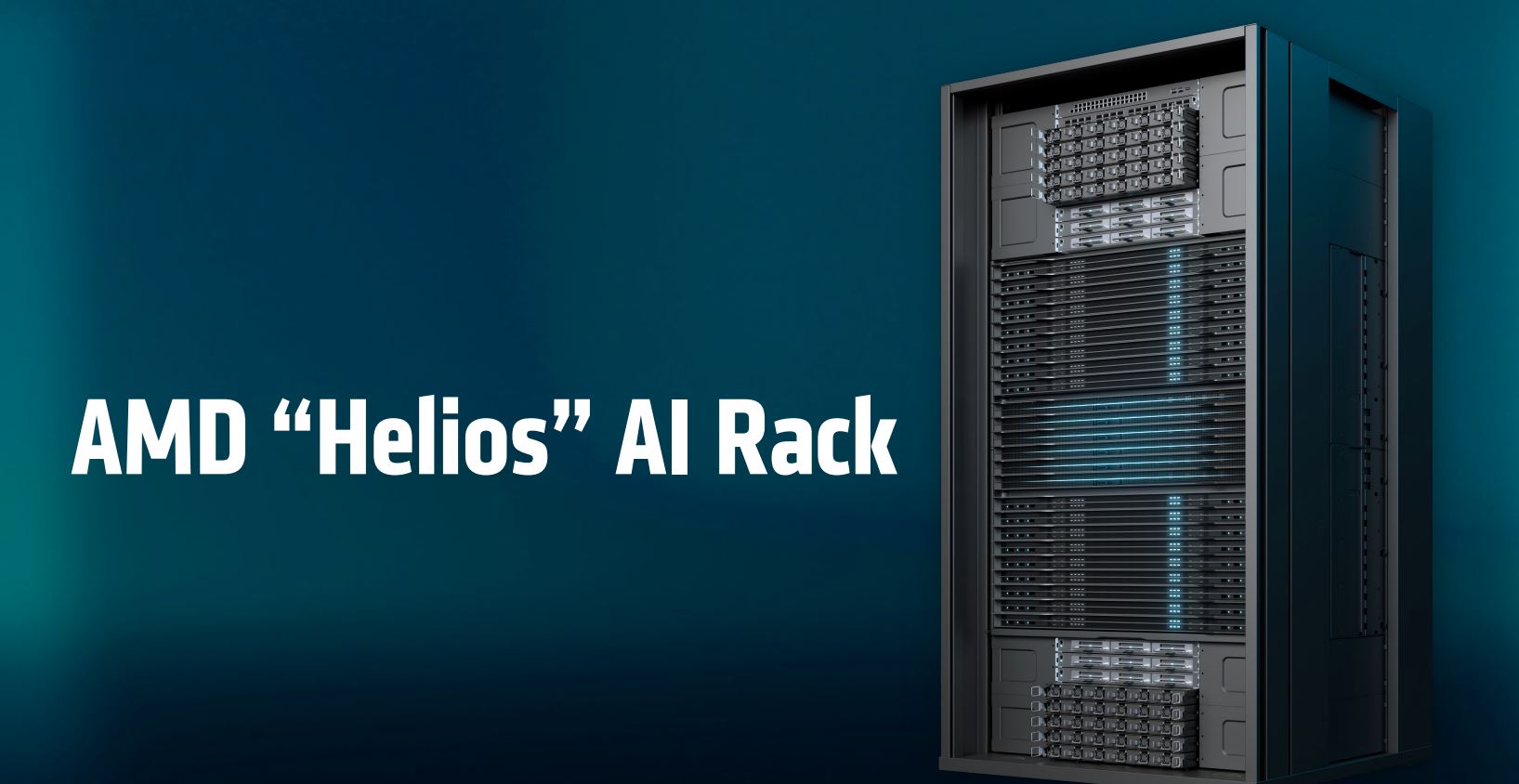
AMD Helion's rack choice puts the power budget on customers
The AMD Helion rack blueprint leaves the power budget to customers, who must choose between CPU-only agent capacity and an all-in-one rack with GPU nodes.
| CPU-only rack | All-in-one rack | |
|---|---|---|
| CPU | 6th Gen AMD EPYC | AMD EPYC CPU nodes |
| CPU cores | up to 32,768 | |
| GPU nodes | AMD Instinct MI350P | |
| Cooling | liquid- and air-cooled | liquid- and air-cooled |
| Availability | November 2026 | November 2026 |
The CPU-only version is aimed at hyperscale deployments and can carry up to 32,768 6th Gen EPYC cores. That ceiling is a configuration limit, not a proof of socket count, rack power, or measured throughput.
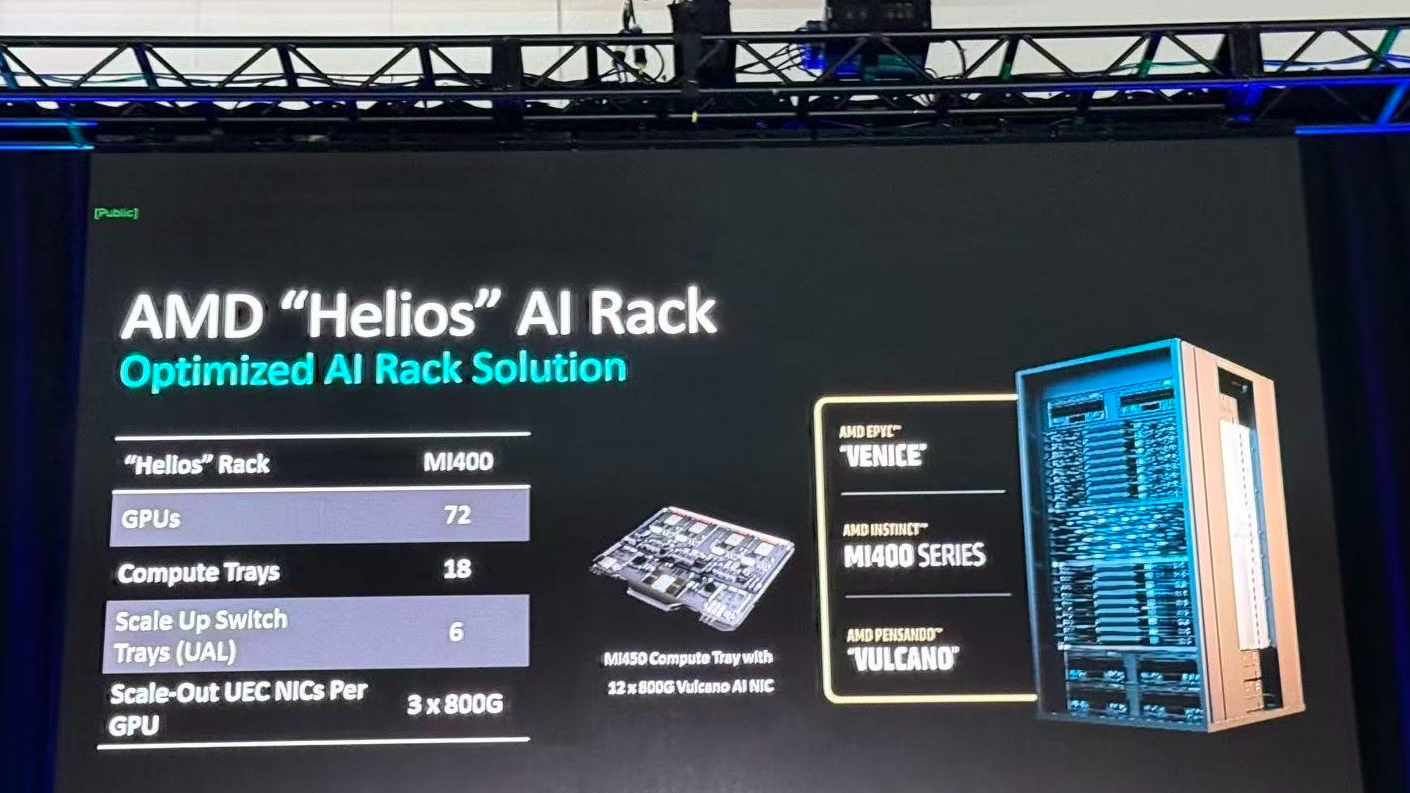
The all-in-one version pairs EPYC CPU nodes with MI350P GPU nodes and general-purpose compute, aimed at enterprise agentic AI. Both versions rest on an open OCP spec-based blueprint, with liquid- and air-cooled options, and the token router directs model calls across frontier and open-source models.
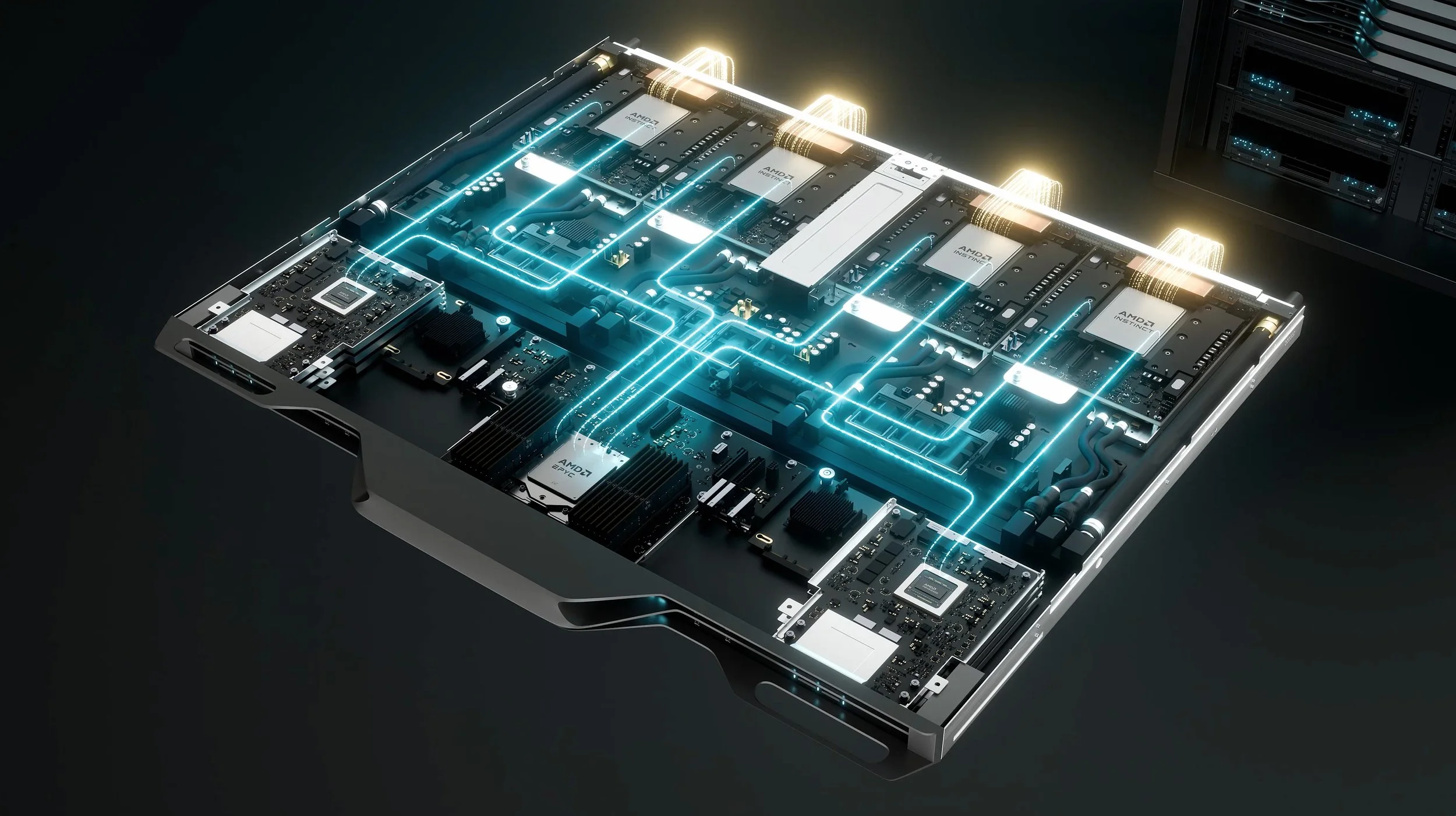
The document still omits price, rack power, memory bandwidth, token-router latency, and measured benchmarks. November 2026 availability is a schedule, not validation, and no partner quote substitutes for benchmarks.
Treat Helion as a packaging and routing constraint, not a chip launch; the CPU-only versus all-in-one choice matters more for power budgets than the core ceiling.
After amd.com. We did not report this. The pictures, if any, are theirs.