Hamamatsu's iPHEMOS-DDX packs seven FA techniques into one inverted stage
Hamamatsu Photonics K.K. filed a press release on October 1, 2026, introducing the iPHEMOS-DDX, an inverted emission microscope integrating seven failure-analysis techniques for AI chiplets and HBM packages.
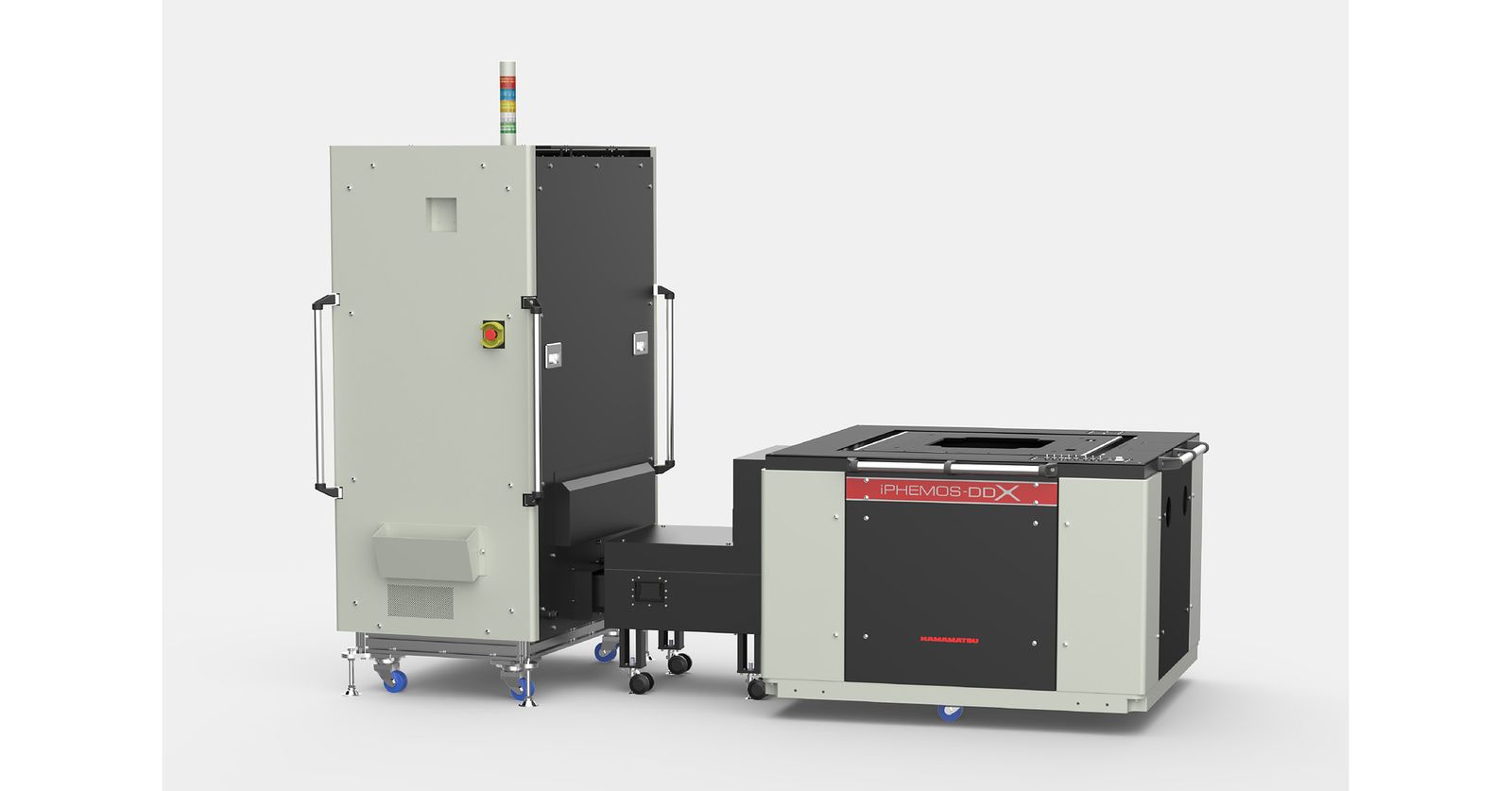
Seven techniques on one stage. has put PEM, Thermal/LIT, LSM, OBIRCH, DALS, EOP/EOFM, and TD Imaging into a single inverted emission microscope it calls the iPHEMOS-DDX, aimed at failure analysis of AI chiplets, HBM stacks, and 2.5D/3D packages. The press release, filed October 1 from Bridgewater, N.J., carries no resolution figure, no field-of-view number, and no measured defect-detection rate.
The docking architecture is the constraint that matters here. The DDX connects directly to a tester from three directions, which means the package under test stays on the probe card while the optical head moves. That eliminates the transfer step between a tester station and a standalone FA bench, the step where a 2.5D interposer or a 16-Hi HBM stack can shift, crack, or lose its thermal gradient. The seven techniques share one sample stage, so a thermal scan that flags a hotspot can be followed by an OBIRCH pass on the same die without re-clamping.
What the release does not prove is whether the integrated platform actually reduces cycle time versus a multi-instrument bench. Hamamatsu says the configuration "can improve failure analysis workflows and reduce analysis time," but no benchmark, no A/B comparison, and no per-technique throughput number appears in the filing. For a fab running a 2.5D package line, the question is whether one stage with seven heads outperforms a dedicated PEM scope plus a separate OBIRCH rig, and the document gives no basis to answer that.
The desk's read: the three-direction docking is the real differentiator, not the technique count. A buyer already running a tester-centric flow gets value from eliminating the off-card transfer; a buyer with a standalone FA lab gains less. The technique integration is a convenience claim until Hamamatsu publishes cross-technique alignment specs—lateral registration between the PEM camera and the OBIRCH laser, for instance, is the number that determines whether a single-stage workflow is actually single-stage.
No pricing, no delivery window, no SKU, no detector quantum efficiency, no minimum feature size for the thermal channel. The ISTFA 2026 booth in San Antonio, October 4 through 8, is the first public surface where a buyer can put a die under the stage and ask for a number. Watch for a published lateral-resolution spec on the PEM channel and a stated thermal sensitivity in millikelvin. Until those appear, the DDX is a platform announcement, not a spec sheet.
The three-direction tester docking is the architectural differentiator, not the technique count, and the release provides no cross-technique alignment spec to validate single-stage workflow claims. Until Hamamatsu publishes lateral registration and thermal sensitivity numbers, the DDX remains a platform announcement rather than a spec sheet.
The docking geometry eliminates the off-card transfer step that risks interposer shift on 2.5D packages, but the seven-technique integration is unvalidated without published lateral registration between the PEM camera and OBIRCH laser. A fab evaluating this needs per-technique throughput data and a thermal sensitivity figure in millikelvin before comparing it to a multi-instrument bench.
Seven integrated FA techniques on one sample stage · Direct tester docking from three directions · Target: AI chiplets, HBM, 2.5D/3D packages · ISTFA 2026, San Antonio, Oct 4-8
After prnewswire.com. We did not report this. The pictures, if any, are theirs.