Nuvacore's Core First strategy leaves the ISA as the last open variable
Nuvacore, a startup from Apple and Nuvia alumni, will design its CPU core before committing to an instruction set, a sequencing choice that leaves no spec to order against.
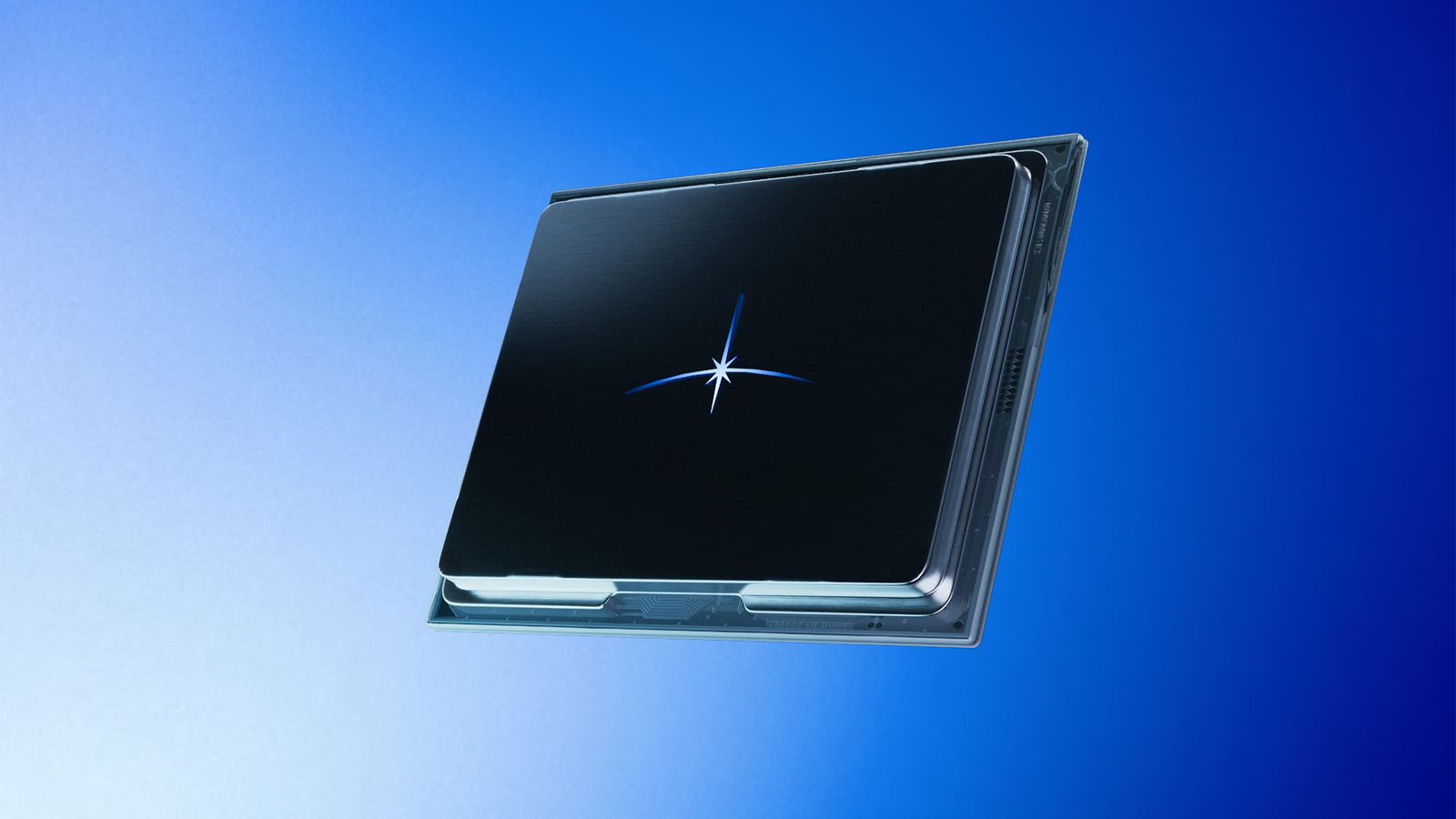
A core is a block of logic on a die, and it is the only thing Nuvacore has committed to so far. The startup, staffed by engineers who came out of Apple and Nuvia, has published a design strategy it calls "Core First." The instruction set the core will speak is, by the company's own account, still undecided.
In the standard flow, the ISA is the first fixed point. The decoder width, the register-file depth, the number of execution ports, the cache-line size — all of it follows from the encoding. Nuvacore reverses the order: the pipeline is drawn, the functional units are sized, and only then does the team map an instruction set onto the hardware. The document does not name a target ISA, nor does it say whether the team is evaluating one or several.
The announcement carries no engineering numbers. No clock target, no product name, no SKU, no tape-out date. It is a design-philosophy statement, not a datasheet, and the absence of a single watt or nanometer figure means there is nothing to cross-check against a foundry's PDK or a memory vendor's timing table.

The constraint this places falls on the customer, not on Nuvacore. A foundry cannot schedule a tape-out against a core whose instruction encoding is still open, and a system integrator cannot write a BIOS, a hypervisor, or a device driver against a target that has no ISA. The document proves that the team has a microarchitecture philosophy. It does not prove that the philosophy survives contact with a real process, where the cost of a wrong decode width or a mis-sized register file is measured in yield and silicon area, not in a strategy slide. For the buyer, nothing is orderable, schedulable, or spec-sheetable yet.
What remains unmeasured is whether the core-first approach actually compresses design iteration or merely defers the hardest decision to a later, more expensive phase. The ISA commitment is the next concrete artifact to watch. Until that lands, the core is a block diagram, not a product, and the "Core First" label is a sequencing choice, not a performance claim.
The document proves a sequencing philosophy, not a shippable part. Until the ISA is fixed, no foundry can schedule a tape-out and no integrator can write firmware, so the buyer's constraint is total.
Core-first inverts the dependency chain: the execution pipeline is the fixed point, the ISA is the variable. Without a named ISA, node, or power figure, the announcement is a design-intent memo, not a product definition. The risk is that decode-width and register-file sizing, which are ISA-dependent, get locked in before the encoding is known, forcing a re-spin at the RTL level.
Strategy name: Core First · ISA selection explicitly deferred · Team sourced from Apple and Nuvia · No node, watt, clock, or date printed
After Tom's Hardware. We did not report this. The pictures, if any, are theirs.