Zen 6c EPYC 9996 leads Zen 5 by 16.5 percent at 4.1 GHz
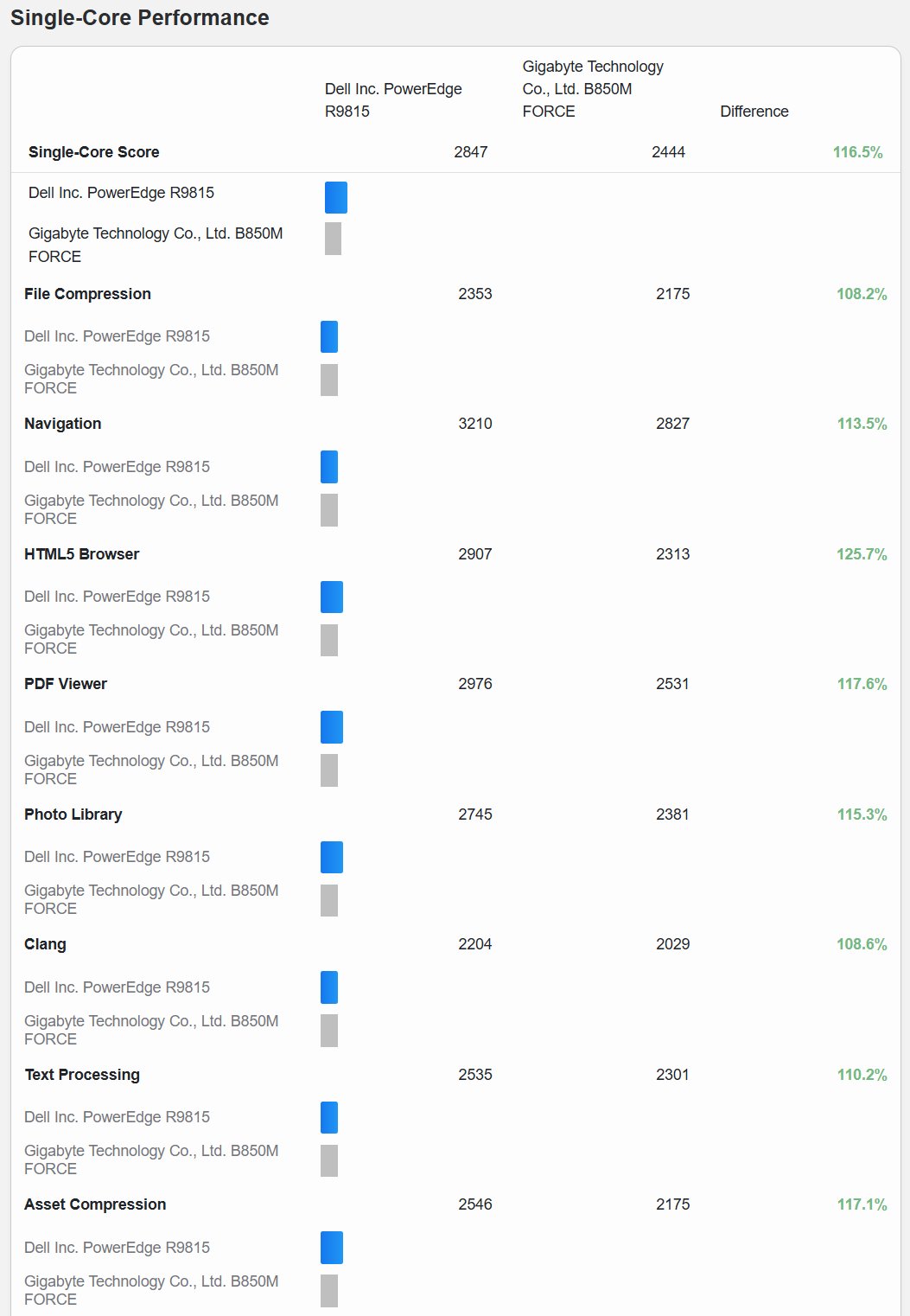
The Geekbench 7 run puts the Zen 6c EPYC 9996 at 2,847 single-core points at 4.1 GHz, ahead of a 9700X at 2,444.
| EPYC 9996 | Ryzen 7 9700X | EPYC 4545P | |
|---|---|---|---|
| single-core score | 2,847 | 2,444 | 3,064 |
| clock | 4.1 GHz | 4.1 GHz | approximately 5.45 GHz |
| cores | 256 | ||
| threads | 512 | ||
| L3 cache | 1 GB | ||
| memory | DDR5-6000 CL34 | ||
| FCLK | 2,000 MHz |
An early Geekbench 7 comparison, run on a Dell PowerEdge R9815 with Geekbench 7.1.0 and AVX2, puts the Zen 6c EPYC 9996 at 2,847 single-core points at 4.1 GHz, against 2,444 for a Ryzen 7 9700X pinned near the same clock. A tweet that circulated the result calls it "proper Zen 5 vs Zen 6 ST comparisons". VideoCardz's Geekbench page is the document I trust, and the deciding number is 2,847, because it belongs to a 256-core EPYC 9996, not to a desktop Zen 6 part.
The constraint is the server die. Zen 6c is the dense EPYC core, and the 9996 carries 1 GB of L3 cache in a 256-core, 512-thread package.
That makes the 16.5 percent single-core lead useful for the fab: it shows the dense core can hold 4.1 GHz in a large server package. It does not prove that standard Zen 6 desktop cores will deliver the same per-GHz result, because the 9700X test used DDR5-6000 CL34, automatic secondary timings, 2,000 MHz FCLK, and a desktop memory path that the EPYC platform does not share.
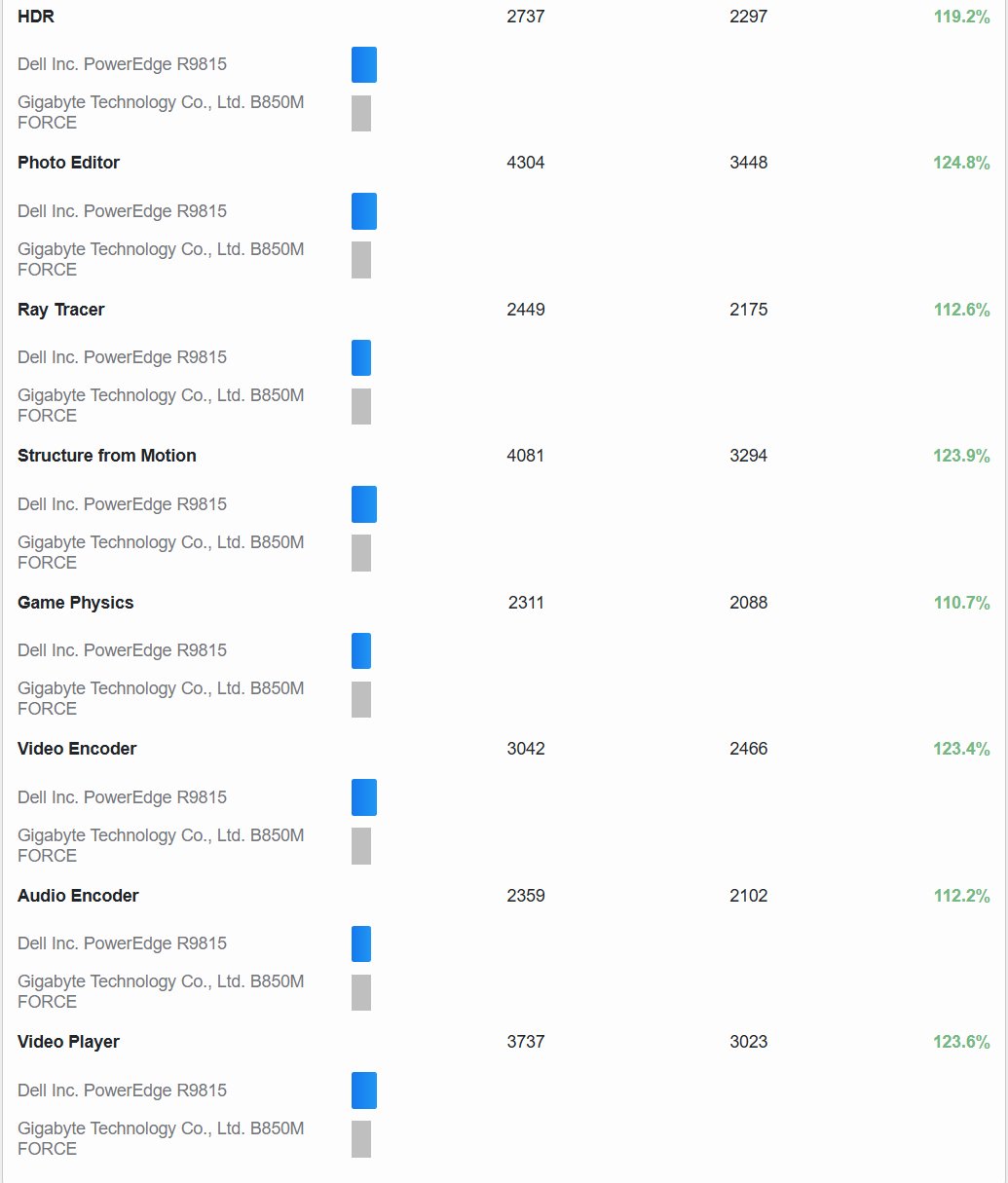
What remains unmeasured is the public desktop question: power, thermals, gaming, and the EPYC 9996 memory configuration are not yet in the document, while the 2,847-point score still narrows the IPC question but does not settle the buyer question for standard Zen 6.
The 16.5 percent lead belongs to the dense EPYC core, not to a desktop Zen 6 part. It tells the fab that Zen 6c can hold 4.1 GHz in a 256-core package, but it does not settle desktop IPC, power, or gaming.
Power, thermals, gaming, and the EPYC 9996 memory configuration are not measured.
The 2,847-point EPYC 9996 result is a server-die datapoint at 4.1 GHz. It supports a per-GHz improvement over Zen 5, but platform, cache, and memory differences block a direct desktop IPC claim.
After x.com. We did not report this. The pictures, if any, are theirs.