One DDR4 stick died in 90 minutes under a 35B LLM, and nobody measured the DIMM temp
One 8GB DDR4 ECC module failed 90 minutes into a 35B LLM inference run, and the user never recorded a DIMM temperature.
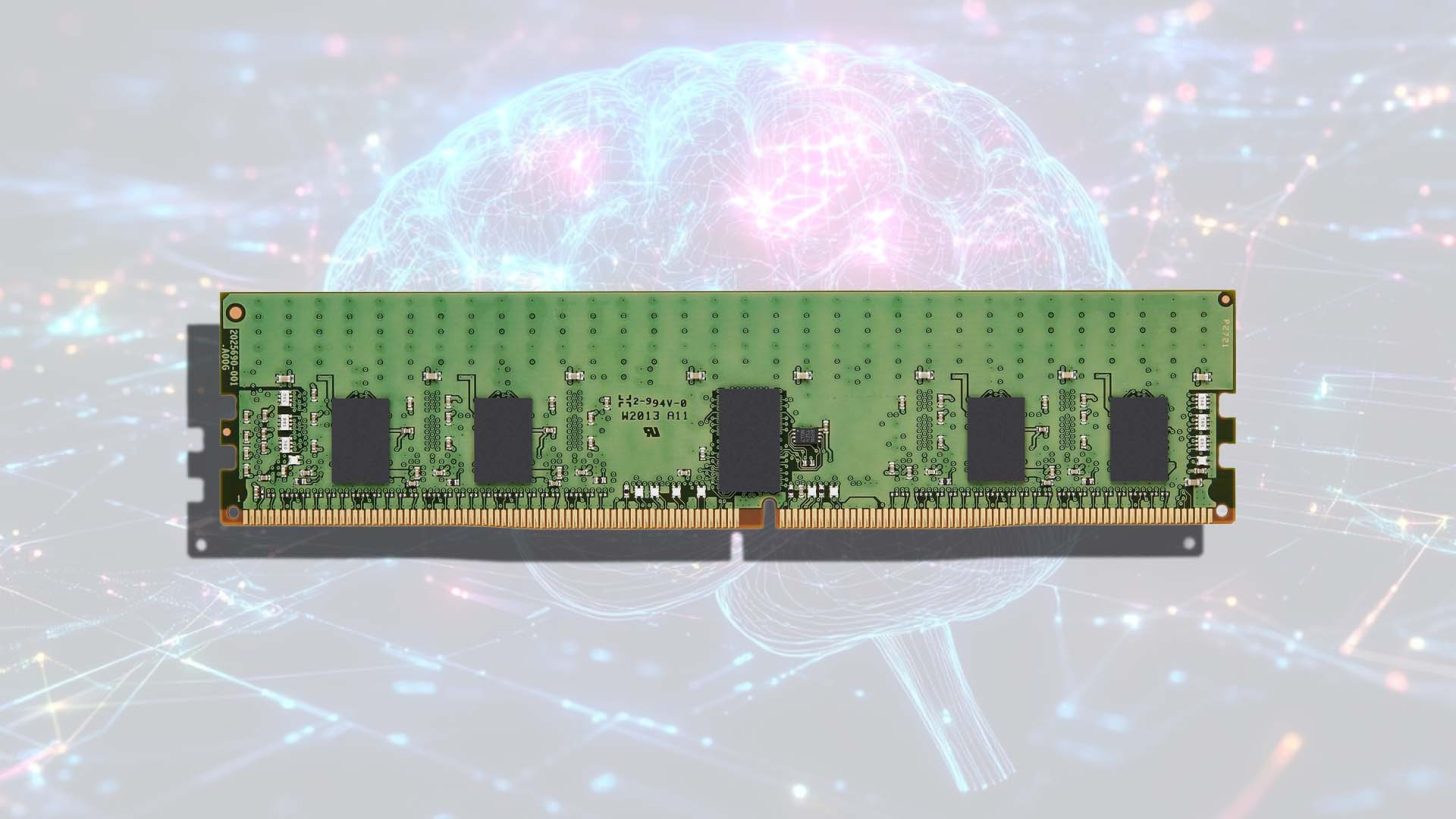
That is how long one 8GB DDR4 ECC stick survived before a 35B-parameter language model tore it apart. The user, posting on Reddit under the handle Future_Fuel_8425, had just swapped from a 20B model that sat comfortably in the 16GB GDDR7 framebuffer of an RTX 5070 Ti to Ornith-1.5-35B-A3B, which required offloading to 128GB of DDR4 ECC pulled from a workstation.
Straightforward in principle. A 35B model does not fit in 16GB of VRAM. Once the GDDR7 is exhausted, the inference engine reads weights and KV-cache entries from system memory in long, sequential bursts. Sixteen 8GB DIMMs, each cycling through continuous reads for the duration of the session, present a duty cycle that consumer and workstation DDR4 was never spec'd to sustain. The 20B model, by contrast, stayed in the framebuffer and ran for hours without incident.
What the user actually measured is where the story gets thin. CPU and GPU temperatures peaked at 80°C; no DIMM temperature was recorded, no stick age given, no airflow reading, no error log, no CPU model. The second 8GB module began throwing errors after eight to nine days of the same workload, and the Wccftech write-up dated September 29, 2026, speculates about age, stress, and airflow without a single measurement to back any of the three.
Die Brief's read: the "not a temperature issue" claim is unproven, because the user never put a probe on the DIMMs. Eighty degrees on the CPU die says nothing about the junction temperature of a DDR4 IC sitting under a heatsink with no dedicated fan. For the buyer, the practical constraint is that DDR4 ECC workstation modules carry no thermal or endurance rating for sustained sequential-read duty cycles of this kind. The document does not prove what killed the first stick, and it does not prove the second will survive the month.
What remains unmeasured: DIMM junction temperature, stick age, whether the same workload on DDR5 would show the same degradation curve, and whether the error pattern on the second module is a single-bit flip or a growing cluster. Watch for a follow-up with actual memory-temperature telemetry. Until then, the 90-minute figure is a data point, not a diagnosis.
The "not thermal" claim is unproven because the user measured CPU and GPU junctions, not the DIMM ICs. DDR4 ECC workstation memory has no published endurance spec for sustained sequential reads, so the buyer is operating outside the rated duty cycle.
The failure mechanism is unconfirmed. No DIMM temperature, no stick age, no error log, no airflow data. The 90-minute figure is a single observation, not a reproducible test. DDR4 ECC is not rated for this duty cycle; DDR5's higher thermal margin is the only variable the document names as a potential fix, and it is untested here.
128GB DDR4 ECC in 8GB sticks (16 DIMMs) · RTX 5070 Ti, 16GB GDDR7 VRAM · CPU/GPU max 80°C; no DIMM temp recorded · Second stick errors after 8-9 days
After Wccftech Hardware. We did not report this. The pictures, if any, are theirs.