NVIDIA launches N1 RTX Spark mini-PC with Grace CPU and Blackwell GPU
NVIDIA N1 RTX Spark pairs a 20-core Grace CPU with a 6,144-core Blackwell GPU in a Windows on Arm mini-PC, with no price listed.
| NVIDIA N1 RTX Spark | |
|---|---|
| CPU | 20-core NVIDIA Grace |
| GPU | Blackwell, 6,144 CUDA cores |
| Memory | Up to 128 GB unified |
| AI compute | Up to 1 petaflop |
| Ethernet | 10Gb |
| LLM support | Up to 120 billion parameters |
| Availability | November 18 |
NVIDIA N1 RTX Spark, the model designation printed on the VideoCardz filing, carries no price. The page states that NVIDIA's announcement does not include pricing for the individual systems. The number belongs to the configuration the page describes, but that configuration has no dollar figure attached to it, and no OEM has published one either.
The machine pairs a 20-core NVIDIA Grace CPU with a Blackwell-based RTX GPU carrying 6,144 CUDA cores. Unified memory tops out at 128 GB. The system carries 10Gb Ethernet, which the filing frames as the path for moving large datasets and model files between local storage and networked devices. The platform runs Windows on Arm, and the filing positions it as a dedicated machine for local AI workloads: large language model inference, AI agents, image and video generation, and model fine-tuning.
The 1 petaflop figure is a theoretical peak for AI compute performance. No measurement accompanies it. The page does not state whether the peak assumes FP4 precision, sparsity, or any other condition that would narrow the number to a specific workload or precision format. It is a ceiling, not a reading.
Because no price exists in the document, the configuration a buyer would receive at the entry point is undefined. The headline number describes the ceiling: 128 GB unified memory, 1 petaflop of AI compute, 6,144 CUDA cores. The gap between what a starting SKU ships and what the top specification promises is, at this stage, a blank that only the OEMs can fill. A buyer who walks into an ASUS or MSI store on November 18 will see a price tag, but the NVIDIA document that launched the platform does not contain one.
The NVIDIA GeForce RTX landing page, the deepest document in the packet, does not mention the Spark. It lists the RTX 5090, RTX 5080, RTX 5070 series, RTX 5060 series, RTX 5050, and RTX 40 series as discrete consumer cards, with DLSS 5 and Dynamic Multi Frame Generation as the headline features. The Spark is a Windows on Arm system, not a discrete card, and it does not appear in that product lineup. The two documents describe different products that share the RTX brand.
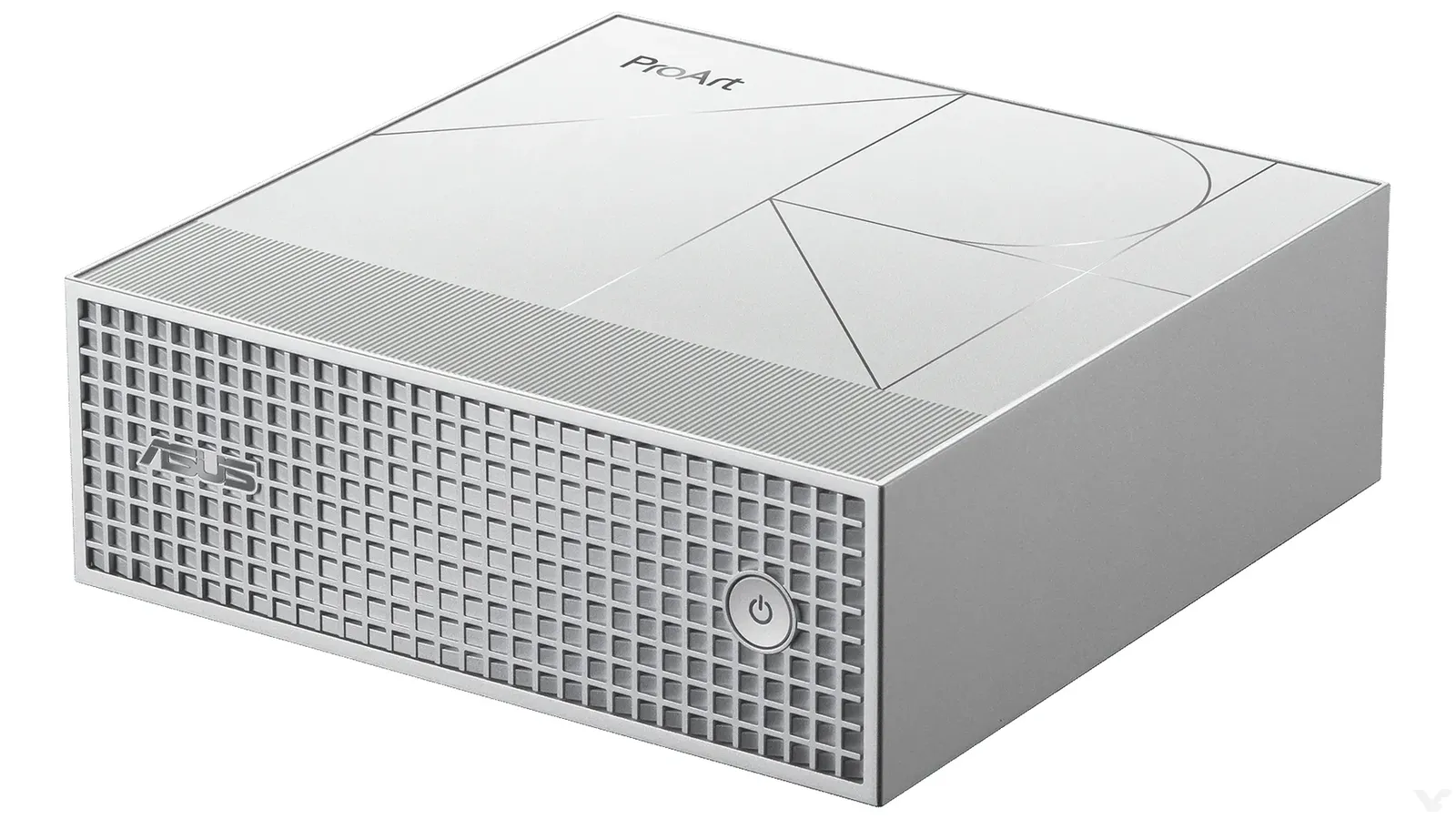
ASUS ProArt GR1X and MSI EdgeMesa N AI+ are the two partner systems named for the November 18 availability window. Dell is also in the first wave. Acer, GIGABYTE, and HP are listed as planned for later, with no dates attached to any of them. The filing describes both the ASUS and MSI units as dedicated Windows PCs for AI development and continuous agent workloads, not as general-purpose desktops.
The filing lists two additional workload targets beyond LLM inference. Real-time rendering of 3D scenes exceeding 90 GB is one. Real-time 4:2:2 video editing is the other. These are the workloads NVIDIA says the 128 GB unified memory and the 6,144-core GPU are sized to handle, but the document does not provide a frame rate, a scene complexity metric, or a video resolution that would let a reader verify the claim.
The software stack carries the most concrete detail in the filing. Adobe Premiere gains TensorRT-RTX acceleration for Enhance Speech, Object Mask, Scene Edit Detection, and Auto Reframe, with NVIDIA claiming a 50 percent reduction in H.264 deliverable turnaround. Adobe Photoshop receives TensorRT-RTX acceleration for its Remove Tool, along with native Camera Raw support on the platform. Substance 3D Painter 12.2 enters public beta with native Arm support. Illustrator and InDesign ship as native Windows on Arm builds, with NVIDIA claiming up to 30 percent better performance in Illustrator compared to the emulated version.
Blender 5.3 adds DLSS 4.5 Ray Reconstruction in the Cycles viewport, letting a user preview ray-traced lighting and materials with reduced noise during editing. ComfyUI workflows gain RTX Video Frame Generation and RTX Video HDR, which the filing describes as converting clips to 60 FPS. Developers access CUDA and Linux tooling through Windows Subsystem for Linux. NVIDIA has also introduced Switchyard integration with Hermes, allowing AI agents to route tasks between locally installed and cloud-based models depending on workload requirements, and Unsloth provides model fine-tuning capabilities on the platform.
The Microsoft Surface RTX Spark Dev Box is the one other system in the same platform family, and it is scheduled for a later window.
The buyer is constrained by the absence of a price, a TDP figure, and a sustained clock speed. The 1 petaflop number tells a buyer what the silicon can do at its theoretical ceiling, but it does not tell them what the machine draws from the wall, what the sustained clock is under a 120-billion-parameter inference load, or whether the 128 GB of unified memory is a single pool shared between the Grace CPU and the Blackwell GPU or a partitioned arrangement. The document does not prove that the 1 petaflop is achievable at the 128 GB configuration, or that it degrades at lower memory tiers. What changes for the buyer is that the machine exists as a product with a named CPU, a named GPU core count, and a named memory ceiling, but the economic terms of that product are still in the OEMs' hands, and the performance terms are still in NVIDIA's marketing language rather than in a measured benchmark.
What is still unmeasured: power draw, sustained clock under load, the actual inference throughput for a 120-billion-parameter model, and the price of any configuration.
The buyer cannot price the machine, measure its power draw, or verify the 1 petaflop figure against a sustained inference load, because the document provides none of those numbers. The 128 GB unified memory ceiling and the 120-billion-parameter LLM target are architectural claims that the OEMs will have to back with a price tag and a benchmark before the November 18 window closes.
Power draw, sustained clock under load, inference throughput for a 120-billion-parameter model, and the price of any configuration are not in the document.
The 1 petaflop peak is unverified and unconditioned; the 128 GB unified memory pool's partitioning between Grace and Blackwell is unspecified; TDP and sustained clock are absent. The buyer's constraint is economic and thermal, not architectural.
After nvidia.com. We did not report this. The pictures, if any, are theirs. Also filed by NVIDIA Newsroom, ComputerBase, guru3d.com, tomshardware.com.