ASUS ProArt GR1X price: 128 GB at €7,299, from $4,499
ASUS ProArt GR1X lists from $4,499, with the 128 GB configuration at €7,299. That euro price is the memory ceiling on the availability note, not a measured AI score.
| ASUS ProArt GR1X | |
|---|---|
| GPU | 6,144-core Blackwell RTX |
| CPU | 20-core Grace |
| Memory | Up to 128 GB LPDDR5X |
| Bandwidth | 300 GB/s |
| AI peak | Up to 1 PFLOP FP4 |
| TDP | 140W |
| Price | From $4,499; 128 GB at €7,299 |
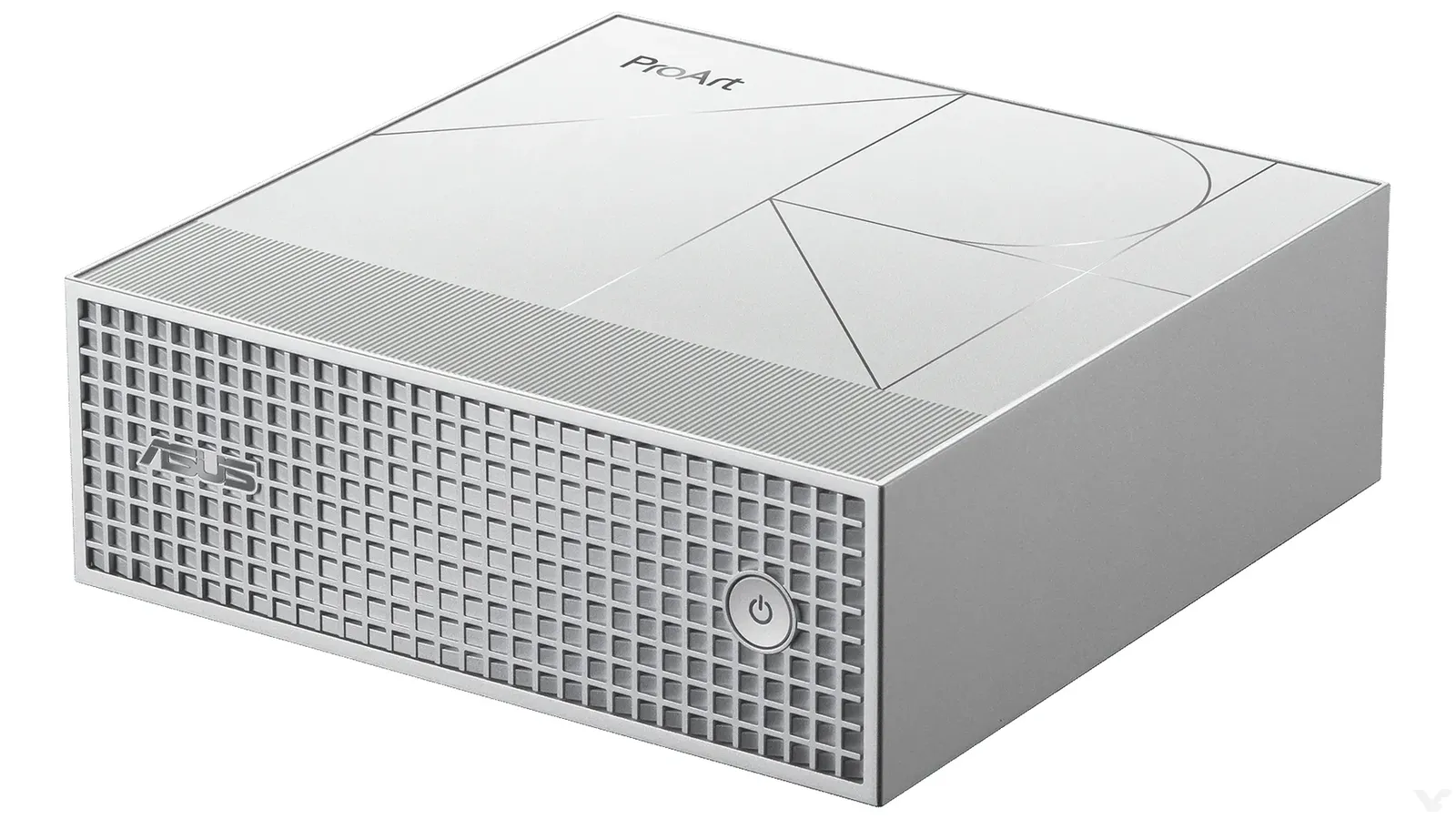
| Chassis | 150 x 150 x 51 mm, 1.1 L, 1.48 kg |
ASUS lists the ProArt GR1X 128 GB configuration at €7,299 on the VideoCardz note of the availability release; the same note opens the line at $4,499 and €4,699. The euro figure belongs to the memory ceiling, not to a benchmark run. A further listed tier reaches €9,299, and neither page itemizes what that last step adds.
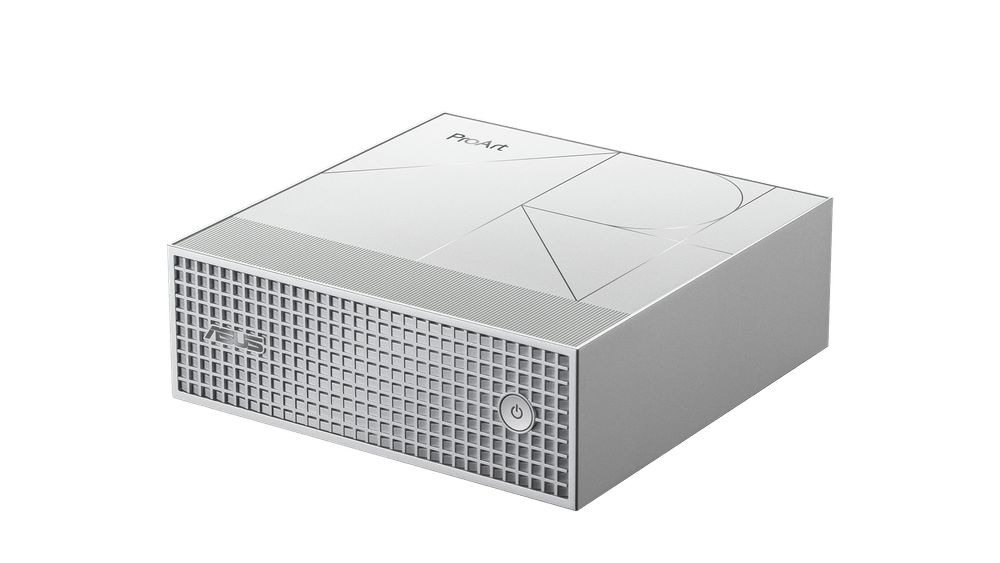
The box is the RTX Spark N1X in a Windows 11 Pro chassis the ASUS DACH release calls an always-on home for local AI agents. The superchip pairs a 6,144-core Blackwell RTX GPU with a 20-core Grace CPU over NVLink-C2C. Unified memory is LPDDR5X, shared by both sides, and rated up to 128 GB at 300 GB/s. The shell is 150 by 150 by 51 mm, 1.1 liters, 1.48 kg, sandblasted silver, with the fans built into the case rather than hung off a discrete card.
NVIDIA rates the chip at up to 1 PFLOP of FP4 AI performance. That sentence is a peak, not a measurement taken on this enclosure. The availability pages do not say the peak uses sparsity, and they do not publish a token rate, a named model under test, or a sustained clock. FP4 is a four-bit format. A petaflop of it is not a petaflop of FP16, and nothing in the packet shows the GR1X holding the rating once the only cooler is the one inside 1.1 liters.
The starting price and the headline number describe different places on the same price list. $4,499 and €4,699 buy a ProArt GR1X. The documents never state how much unified memory that entry configuration ships with. The claims that travel with the platform — support for 120B-parameter LLMs and up to 1 million tokens of context — are written against a system that shares up to 128 GB. €7,299 is the price attached to that 128 GB version. A buyer who pays the entry figure cannot read, from these pages, whether the model ASUS is advertising will fit in the box that price actually buys.
Cooling is specified as parts, not as a result. A dual-fan system, four heat pipes, 218 fan blades, and 57 fins are there to handle a 140W TDP. No page gives a junction temperature, a noise figure in decibels, or watts drawn under a long CUDA job. The TDP is the rating the cooler is built around. It is not proof that whatever clocks would be required to approach 1 PFLOP of FP4 survive in this volume.
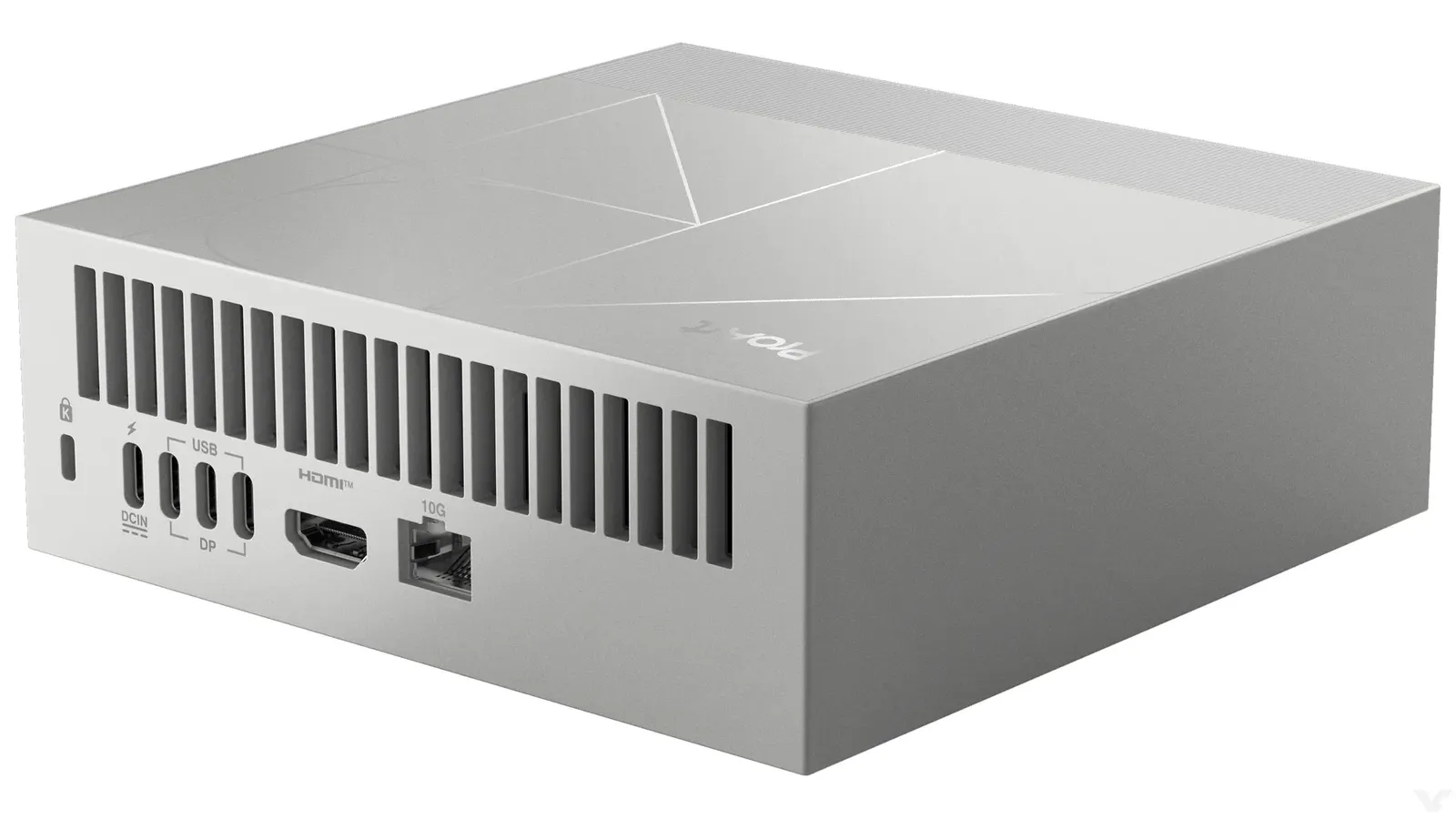
Ports are the part of the sheet that does not need a footnote. Connectivity is 10GbE LAN, Wi-Fi 7, Bluetooth 5.4, four USB 3.2 Gen 2×2 Type-C ports, and HDMI 2.1, with support for up to four 4K displays. Storage is two M.2 slots, one PCIe 5.0 and one PCIe 4.0. The software list on the ASUS release is Hermes Agent from Nous Research, ComfyUI, Adobe Creative Cloud, ASUS Zenni Claw, and MuseTree; the availability note adds FLUX and Wan inside MuseTree. CUDA runs natively on Windows 11 Pro, so the workloads ASUS is pointing at do not require a Linux install.
One page in the packet is the wrong machine. NVIDIA's GeForce RTX brochure, including the Norwegian variant that turned up in the same read, sells path tracing, DLSS, and a count of more than 1,000 games and applications. It does not name ProArt, N1X, Grace, a liter volume, or a euro price. Reading that brochure as the GR1X spec collapses a discrete GeForce marketing page into a 140W unified-memory mini PC. Fourth-gen RT Cores and fifth-gen Tensor Cores appear there without numeric counts, and they are not tied, on that page, to this superchip. The 1 PFLOP figure lives on the ASUS availability release. It is still a rating, not a run.
MECHREVO's 1.25-liter RTX Spark mini PC is a separate chassis and a separate article. It is not this 1.1-liter, 1.48 kg ProArt, and nothing on these pages makes the two boxes interchangeable on price or memory.
The constrained buyer is the one who needs the 120B and million-token claims. Those sentences describe the 128 GB ceiling, priced at €7,299, not the $4,499 entry whose memory size is unpublished. Even that ceiling sits on 300 GB/s of LPDDR5X and a 140W TDP, so the FP4 peak is a chip rating the chassis has not been shown to sustain. What the buyer still cannot know is clock, noise, load power, and whether the cheaper configuration has the memory the advertisement implies.

IFA 2026 in September is the debut the availability note records, and the sale prices are now on the page. Still unmeasured are GPU and CPU clocks, RT core and Tensor core counts, watts under load, decibels, and any junction temperature or sustained clock. The 1 PFLOP FP4 number remains a vendor peak. No independent run is in the packet.
The 120B and million-token claims describe the €7,299 128 GB ceiling, not the $4,499 entry whose memory size these pages never state. At 300 GB/s and 140W, the 1 PFLOP FP4 rating is a chip number the chassis has not been shown to hold.
Clocks, RT and Tensor core counts, load power, noise, and junction temperature were not measured.
Entry price and the 128 GB headline are different configurations; only the latter is specified against the 120B claim. 300 GB/s LPDDR5X and a 140W TDP bound any FP4 peak long before a missing clock table does.
After nvidia.com. We did not report this. The pictures, if any, are theirs.