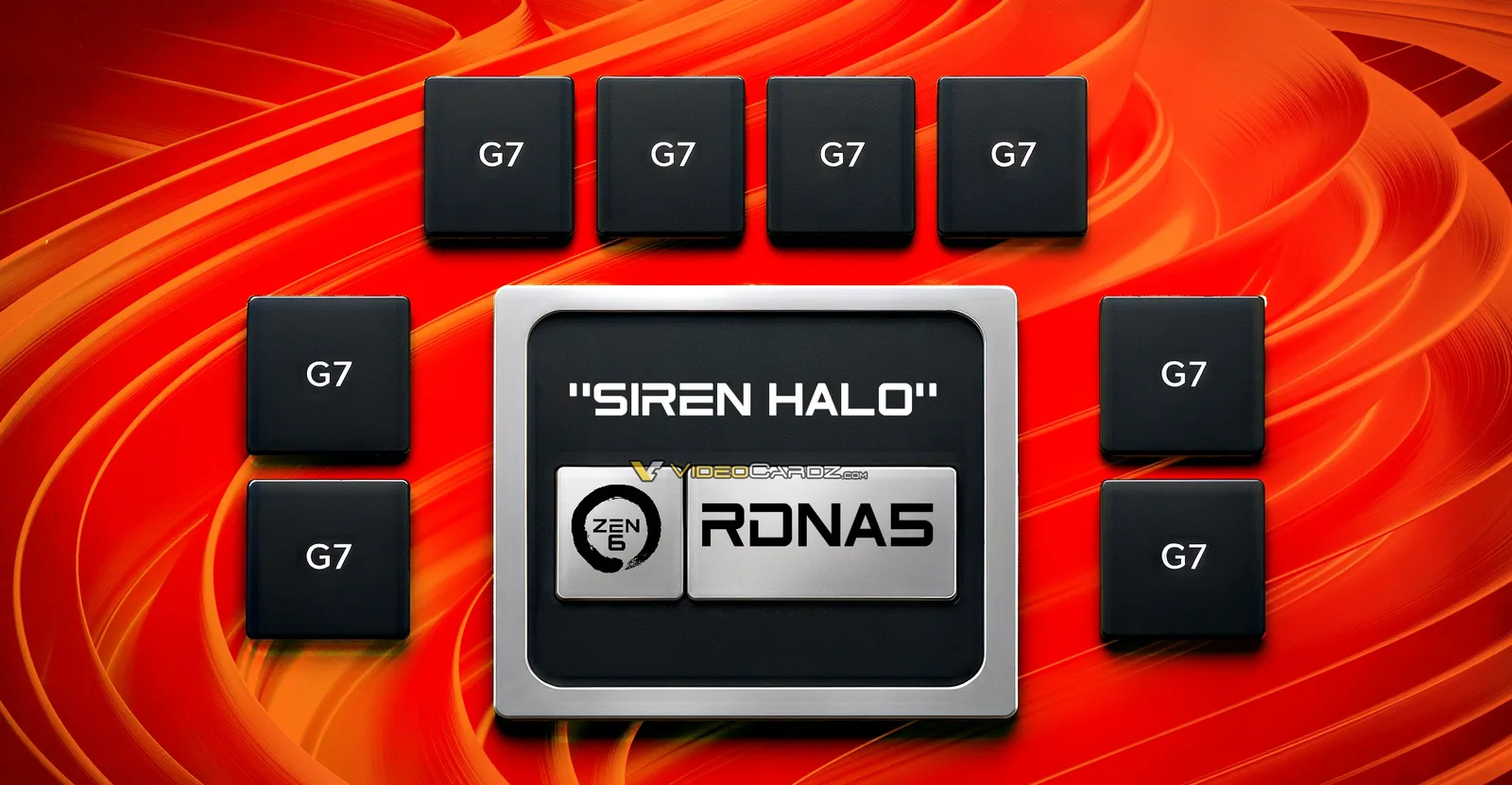
Siren Halo splits AMD's unified memory into a GDDR7 pool and an LPDDR pool
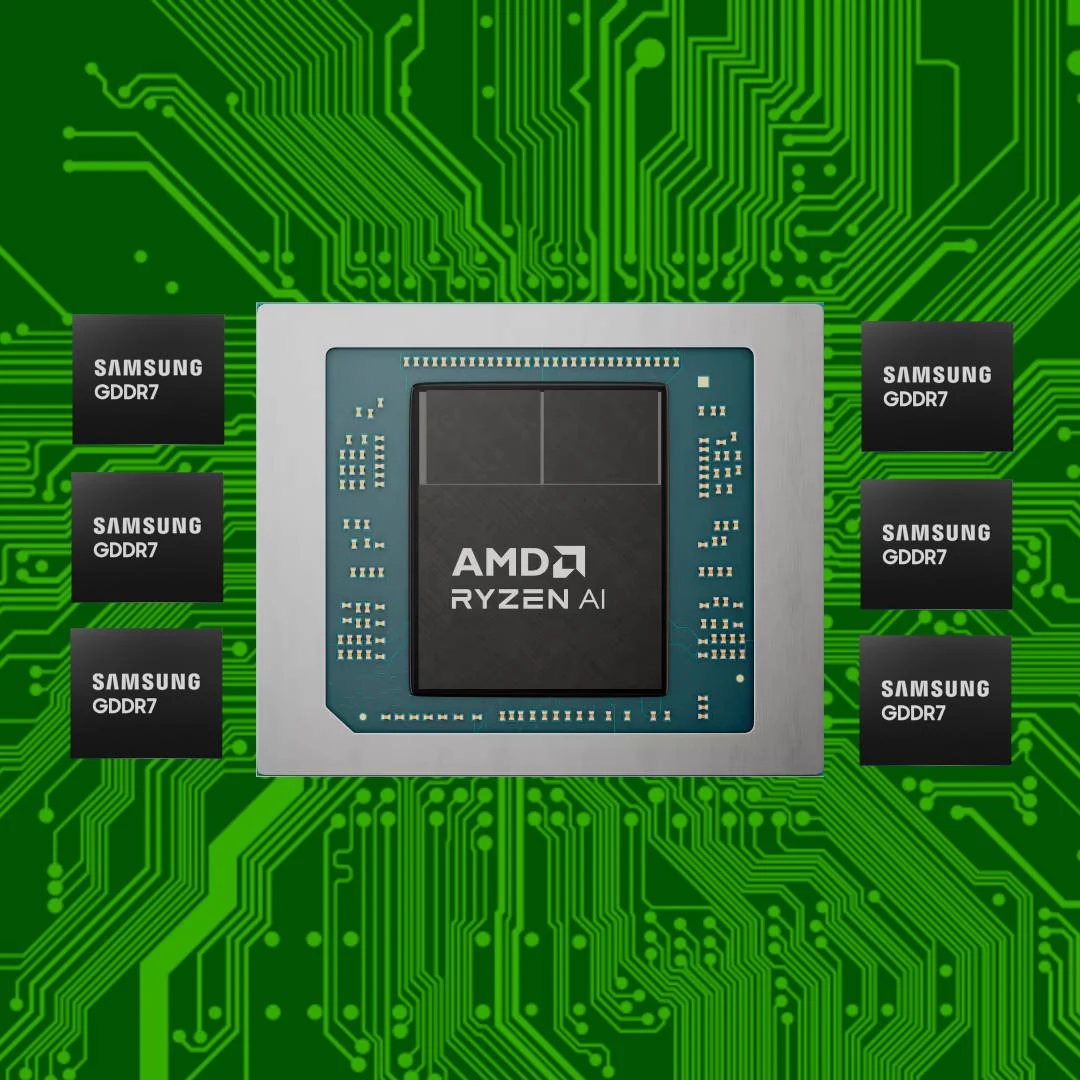
The November 12 leak splits Siren Halo's memory into two pools—dedicated GDDR7 for the GPU and LPDDR for the system—where Gorgon Halo's 192 GB unified pool had made it the local-LLM pick at roughly $7,000.
| Siren Halo | Magnus | |
|---|---|---|
| GPU memory | GDDR7 (dedicated) + LPDDR | GDDR7 |
| GPU memory capacity | 48 GB | |
| GPU interface | 192-bit | |
| CPU cores | 3 Zen 6 + 8 Zen 6c | |
| GPU compute units | 68 enabled (70 on die) |
The leak, attributed to Gotou_3rd and carried through Videocardz into the Notebookcheck wire, maps Siren Halo as Medusa Halo's successor and Siren Point as a Medusa refresh. No capacity, bus width, or core count appears in the post.
The design question is not the GDDR7 side. It is whether the RDNA 5 GPU can reach the LPDDR pool at comparable latency. Gorgon Halo drew local-LLM buyers at roughly $7,000 precisely because the GPU and CPU shared one address space, and a split that handicaps that access path trades frame-rate bandwidth for inference capacity.
Club386, the other desk that filed this launch, built a 672 GB/s bandwidth figure from 28 Gb/s GDDR7 chips on a 192-bit bus and assumed the 256-bit LPDDR bus from Gorgon Halo carries forward. Neither number appears in Gotou's post. The 192-bit figure belongs to Magnus, a chip Gotou calls "very likely" related to Siren Halo but explicitly unconfirmed.
Club386 also carried forward a 24-core Zen 6 count from earlier Medusa Halo rumors without noting that Gotou's post does not state a core count.
The September 2026 driver patch that added GDDR7 to amdgpu_vram_names is the only artifact in AMD's public tree confirming the memory type is being wired into the stack. Everything else in this filing is one leaker's roadmap sketch.
No document states the GDDR7 capacity, the LPDDR capacity, the bus width for either pool, or whether both CPU and GPU can address both memory types. The Siren Halo–Magnus link remains a leaker's probability, not a confirmed SKU mapping.
The draft's core reporting is sound but buries the design implication under a flat attribution lede. The rewrite leads with the split itself and the Gorgon Halo contrast, which is what actually matters to a reader who saw the other briefs today. Club386's unverified bandwidth and core-count figures are flagged as absent from the source post, and the Magnus connection is kept at the leaker's own confidence level. The September 2026 driver patch is the only hard artifact and is positioned as such. Frank Min and Alex Deucher, named in the draft, do not appear in the source and are dropped.
After x.com. We did not report this. The pictures, if any, are theirs. Also filed by club386.com, HotHardware, lists.freedesktop.org, tech.yahoo.com.