SMT stays on at 256 cores
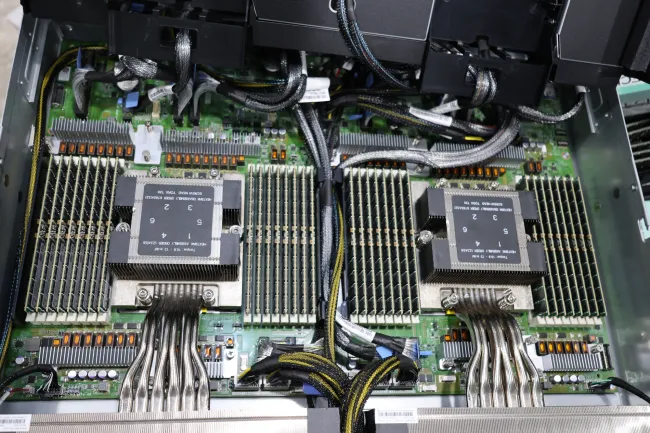
On a dual-socket EPYC 9996 running Ubuntu 26.10 and Linux 7.3, Phoronix found SMT still worthwhile for performance and power at 256 cores per socket.
| AMD EPYC 9996 | |
|---|---|
| cores | 256 |
| threads | 512 |
| base clock | 2.55 GHz |
| max boost | 4.1 GHz |
| L3 cache | 1024 MB |
| default power | 600 W (400–600 W) |
| memory | DDR5 RDIMM/MRDIMM, 16 ch, 8000/12800 MT/s |
| price (1kU) | 14,904 USD |
The test pitted SMT on against SMT off across 512 cores and 1024 threads in the 2P configuration. Per-workload performance and wattage readings sit on pages 2 through 5 of the review, and the AMD spec sheet prints no benchmark result.
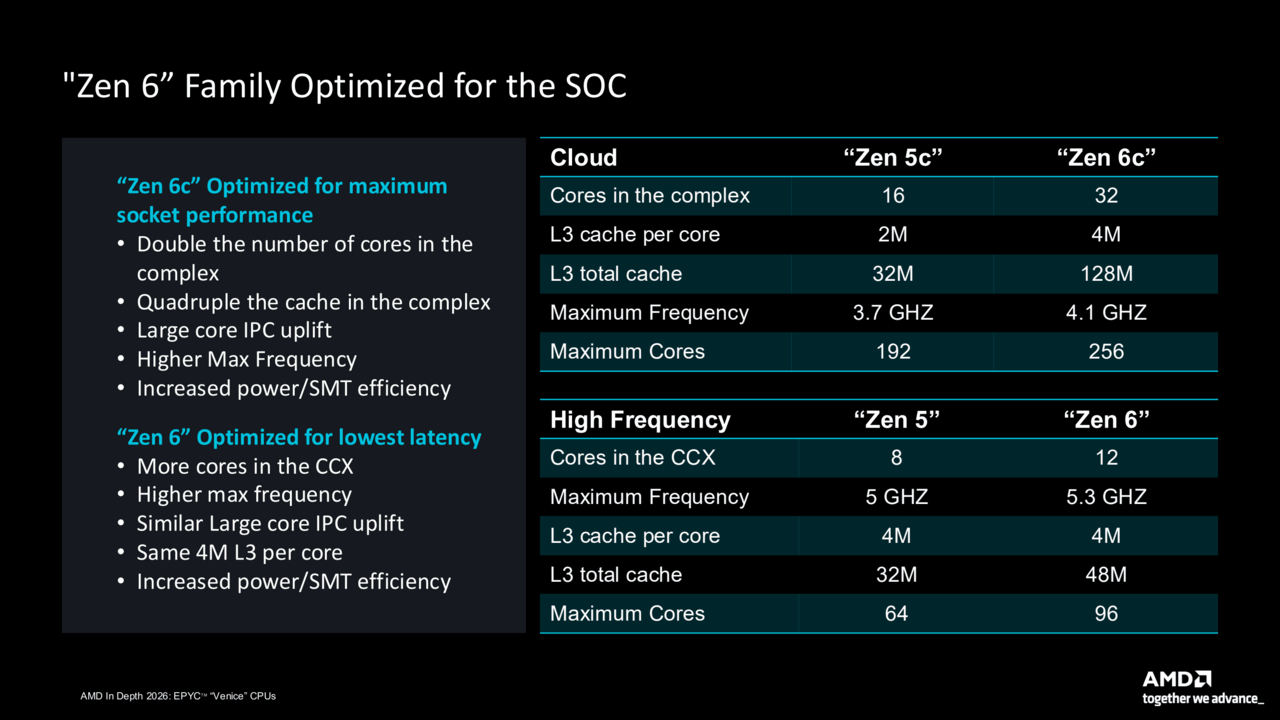
The 600 W default power rating is the constraint the buyer actually faces. At 256 cores per socket sharing 1024 MB of L3, enabling SMT doubles thread demand on that shared cache. The buyer choosing between 512 and 1024 threads in a 2P box is making a cache-pressure trade the spec sheet does not quantify.
No process node, no die size, no Tjunction figure, no workload-specific wattage, and no SPEC CPU2026 Int Rate Base score appear in any document in the packet. The 400–600 W range is a planning envelope, not a measurement taken under load.
Phoronix confirms the SMT advantage at 256 cores, but the AMD spec sheet alone cannot tell a buyer whether L3 pressure at full thread count erodes per-thread gains. The 600 W ceiling is the real planning constraint, and the packet leaves the cache-pressure trade unquantified.
After amd.com. We did not report this. The pictures, if any, are theirs.