Zen 6 and Zen 6c keep one ISA and split on queue depth
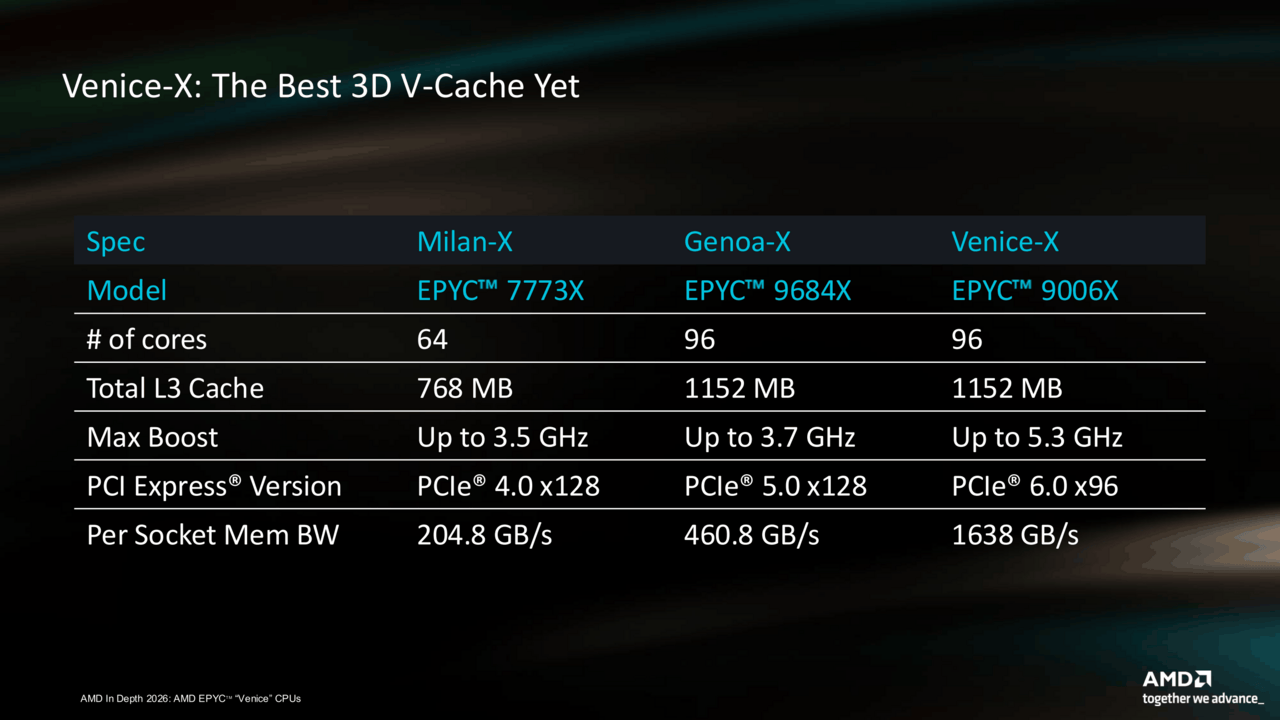
A 27 percent average IPC uplift is the number on AMD's slide, but the 20 to 31 percent range and the 4.1 to 5.3 GHz spread mean no single Epyc SKU lands both the top clock and the top core count.
| Zen 6 | Zen 6c | |
|---|---|---|
| Cores per die | 12 | 32 |
| L3 per die | 48 MB | 128 MB |
| L3 per core | 4 MB | 4 MB |
| Clock | up to 5.3 GHz | 4.1 GHz |
| VNNI-INT8 pipes | 4 | |
| FP16 native | yes |
The Register's Las Vegas account puts 256 cores and 5.3 GHz as the headline figures for the Zen 6 and Zen 6c families. The constraint is that those extremes sit on different parts, forcing a datacenter buyer to choose between latency tolerance and throughput ceiling at the die level.
Both variants run the same ISA, so an application compiled for one runs on the other without a port. The 4 MB L3 per core is now constant across both, removing the software-target split that made Bergamo's Zen 4c a different deployment decision in 2023.
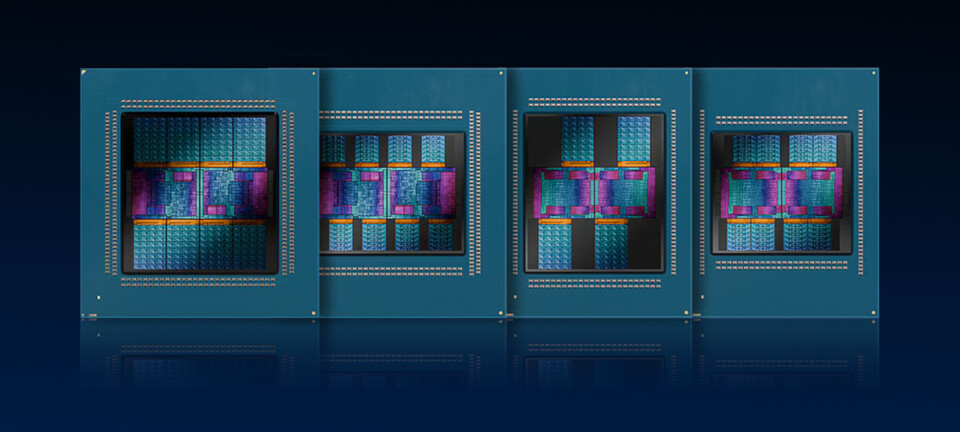
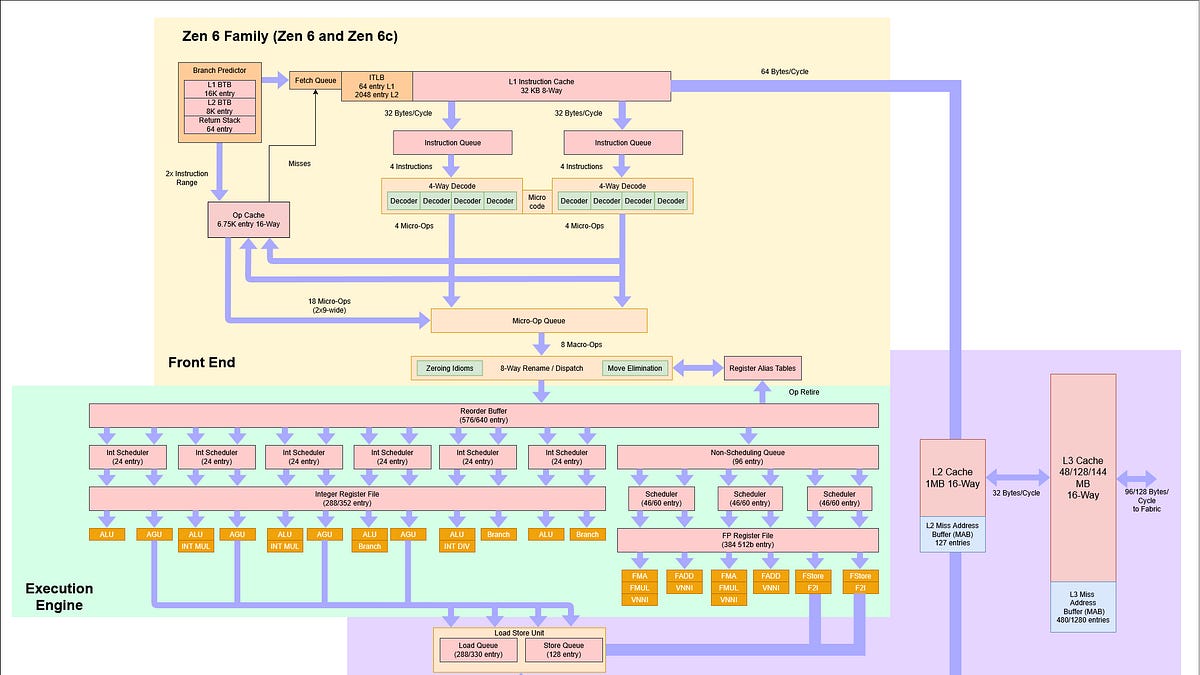
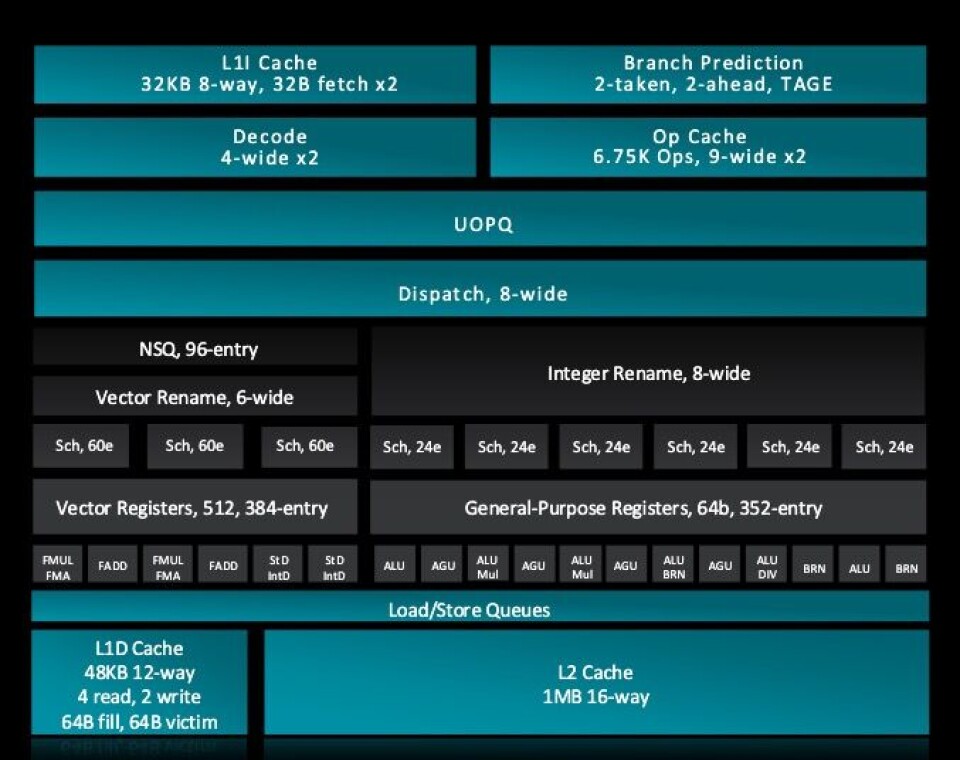
The memory path is where the generational jump lives: 16-channel DDR5 and CXL 3.1 replace the prior configuration. The core itself is iterative, with a front end and backend that look close to Zen 5.
No TDP, no process node, no SKU name, and no consumer Ryzen date appear in the document. The 27 percent figure is a workload-mix average across AI and server tasks, with no SPEC or MLPerf run named behind it.
The draft led with the ISA-sharing fact and buried the SKU caveat. This rewrite leads with the IPC/clock spread and the fact that the extremes do not coexist, which is the actual buyer constraint. The ISA point moves to the second paragraph as context rather than the hook. Rhythm shifts from a single long lede sentence to a two-sentence lede that pairs the headline number with its limitation. The Bergamo comparison is kept but compressed into one clause rather than a full paragraph. The missing-specs paragraph is tightened to two sentences instead of being repeated twice as in the draft.
After theregister.com. We did not report this. The pictures, if any, are theirs.