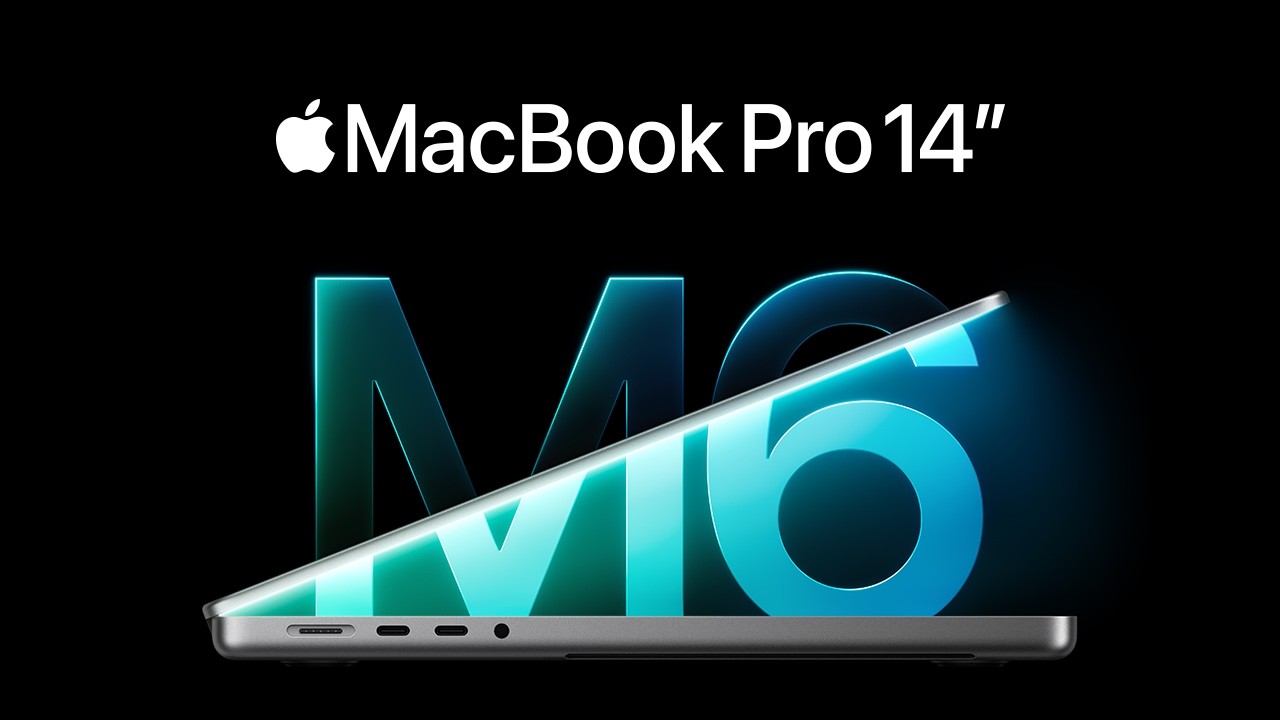
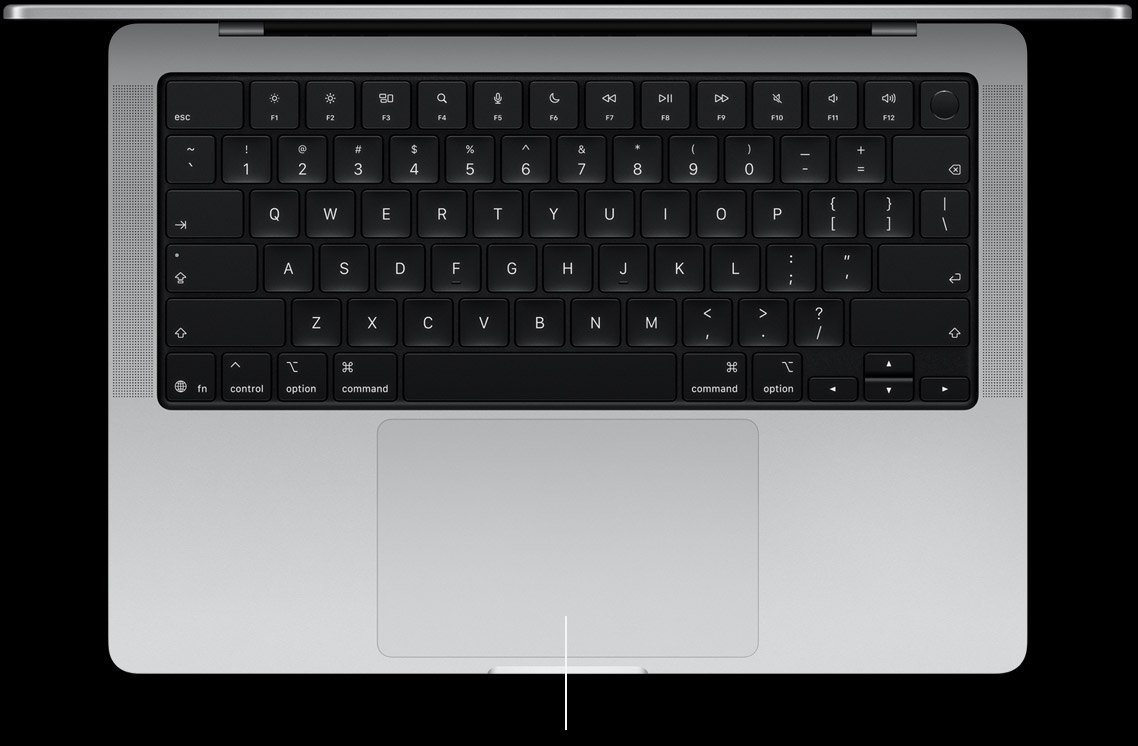
M6 14-inch MacBook Pro holds the $1,999 entry price
Apple's M6 14-inch MacBook Pro starts at $1,999 with 16GB of unified memory and 1TB of storage, available November 6.
| M6 14-inch MacBook Pro | |
|---|---|
| CPU | 12-core |
| GPU | 12-core with Neural Accelerators |
| Neural Engine | Dual 16-core |
| Memory (base) | 16GB unified |
| Storage (base) | 1TB |
| Price | $1,999 |
| Battery | Up to 24 hours |
| Availability | November 6, 2026 |
The M6 14-inch MacBook Pro starts at $1,999, a figure MacRumors reported on October 27 alongside the Apple Newsroom press release that names the chip. The press release, dated the same day, states a 12-core CPU with what Apple calls the world's fastest CPU core, a 12-core GPU with Neural Accelerators in each core, and a Dual 16-core Neural Engine. The machine runs macOS 27 and is available in space black and silver.
The $1,999 configuration ships with 16GB of unified memory and 1TB of storage as standard. The headline number — up to 30 percent faster graphics versus M5 — describes the 12-core GPU in that same base configuration. The top configuration stretches to 32GB of memory and 4TB of storage, a gap of 16GB and 3TB between the floor and the ceiling. The press release does not state the price of the 32GB or 4TB configurations, so the buyer cannot calculate the per-gigabyte cost of the upgrade from the document alone. The base storage of 1TB is the minimum; there is no lower tier in the lineup.
The press release states no absolute peak. The 30 percent and 25 percent figures are relative to M5, not a FLOPS number or a TFLOPS figure. No FP4-with-sparsity claim appears on the page. The "up to" qualifier means the 30 percent is a best-case scenario, not a sustained measurement under a defined workload. A buyer who wants to compare the M6 GPU against a discrete GPU from another vendor has no absolute number to work from, and the Neural Accelerators in each GPU core are not given a throughput figure or a precision specification.
MacRumors noted that the 1TB base storage would have been double the M5 model's base, "had Apple not removed the 512GB option in March." That correction matters for the buyer who was tracking the lineup. The apparent storage bump is partly a re-baselining of the lineup, not a pure gain in the configuration a buyer actually receives. The 512GB option is gone; the floor moved up, and the buyer who wanted the cheapest entry point now pays for 1TB whether they need it or not.
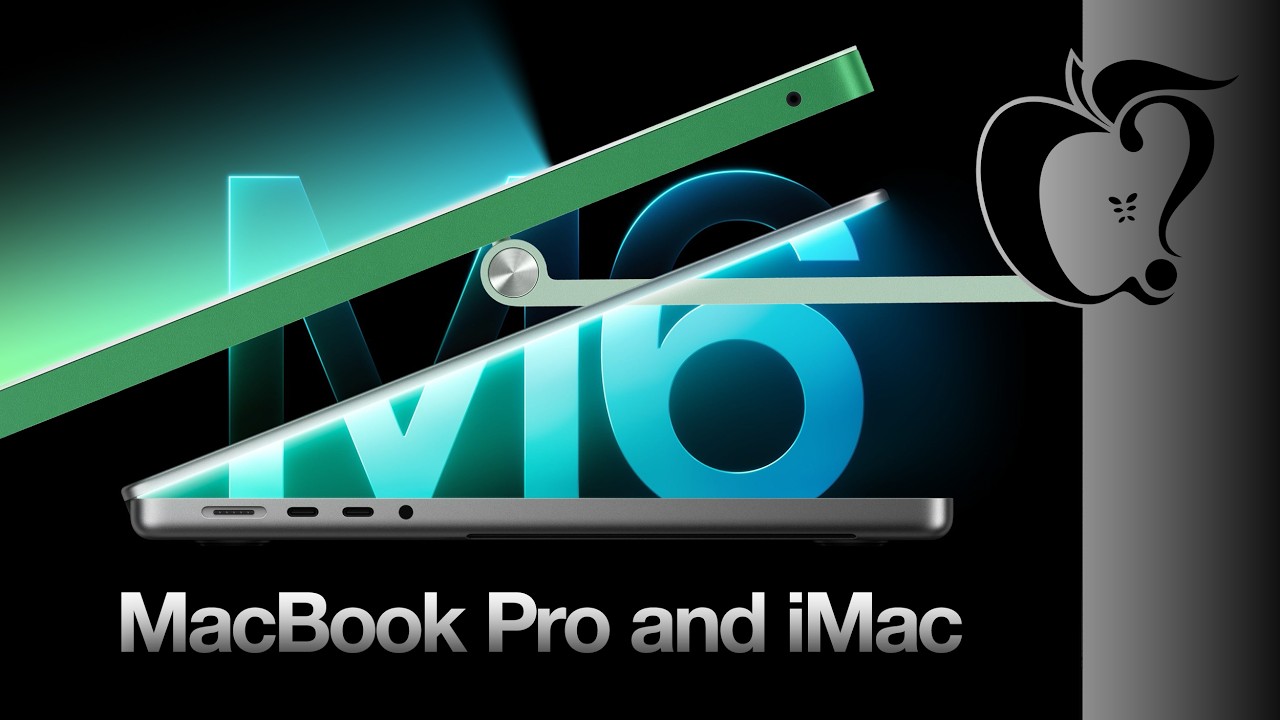
The M6 iMac, announced the same day, shares the chip but not the chassis or the price point.
Connectivity moved to Wi-Fi 7 and Bluetooth 6. Battery life is stated as up to 24 hours, a figure that has no stated workload attached. The display is a Liquid Retina XDR with a nano-texture option, the camera is a 12MP Center Stage unit, and the sound system has six speakers. Pre-orders open October 28 at 10:10 a.m. Pacific Time on apple.com and in the Apple Store app, with availability starting Friday, November 6. The nano-texture option is a display treatment, not a performance feature, and it does not change the GPU or CPU configuration.
Against M1, the press release claims up to 11x faster graphics and up to 13x faster AI performance. Those are the largest numbers on the page, and they describe a four-generation jump rather than a year-over-year step. A buyer upgrading from an M1 MacBook Pro in 2020 would see the largest relative gain, but the absolute performance of the M6 GPU is not stated in any unit. The 11x figure cannot be independently verified against a benchmark because the M1 baseline is not restated on the page, and the workload that produces the 13x AI number is not named.
The Dual 16-core Neural Engine is the component Apple points to for on-device AI workloads. The 25 percent improvement over M5 is attributed to the GPU's Neural Accelerators, not to the Neural Engine itself. The press release does not separate the two, and it does not state a TOPS figure for the Neural Engine. The buyer who is evaluating this machine for local inference has two AI paths — the GPU cores and the Neural Engine — but no number that tells them which one will be the bottleneck at 16GB.
The buyer who pays $1,999 gets 16GB of unified memory. That is the same amount the M5 base carried, and it is the amount the M1 base carried. The chip is faster, but the memory ceiling at the entry price did not move across three generations of the base MacBook Pro. The buyer who needs more than 16GB must pay for the 32GB configuration, and the press release does not state what that costs. For a user running local AI models or large datasets, 16GB is the constraint, not the GPU.
What the document does not prove: memory bandwidth, storage speed, thermal design power, weight, port list, or the exact battery-life test methodology. The "world's fastest CPU core" claim has no clock speed or IPC number attached. A buyer comparing this to a Windows laptop with a discrete GPU cannot do so from the numbers on this page. The fab question — what node, what process — is not answered, and the buyer who needs to know for thermal or power-budget reasons has no answer from Apple.
The M6 14-inch MacBook Pro is a chip upgrade in a chassis that has not changed in a meaningful way since the M1 generation. It is the memory at the entry price and the absence of any absolute performance number that a buyer can verify against a competitor's spec sheet. Apple's press release reads as a value proposition for the existing base, not as a spec sheet for the buyer who needs to compare. The buyer who is constrained is the one who needs more than 16GB and cannot find the price of the upgrade.
The entry price did not move, but neither did the memory ceiling at that price. The buyer who needs more than 16GB is the one this press release does not serve.
No page states memory bandwidth, storage speed, TDP, weight, port list, or the battery-life test methodology.
The M6 chip is a generational step in CPU and GPU cores, but the 16GB unified memory floor at $1,999 is unchanged from M1 through M5. No absolute FLOPS, TOPS, or bandwidth figure is stated, so cross-vendor comparison is not possible from the document.
After apple.com. We did not report this. The pictures, if any, are theirs. Also filed by MacRumors, videocardz.com, AppleInsider, 9to5Mac.