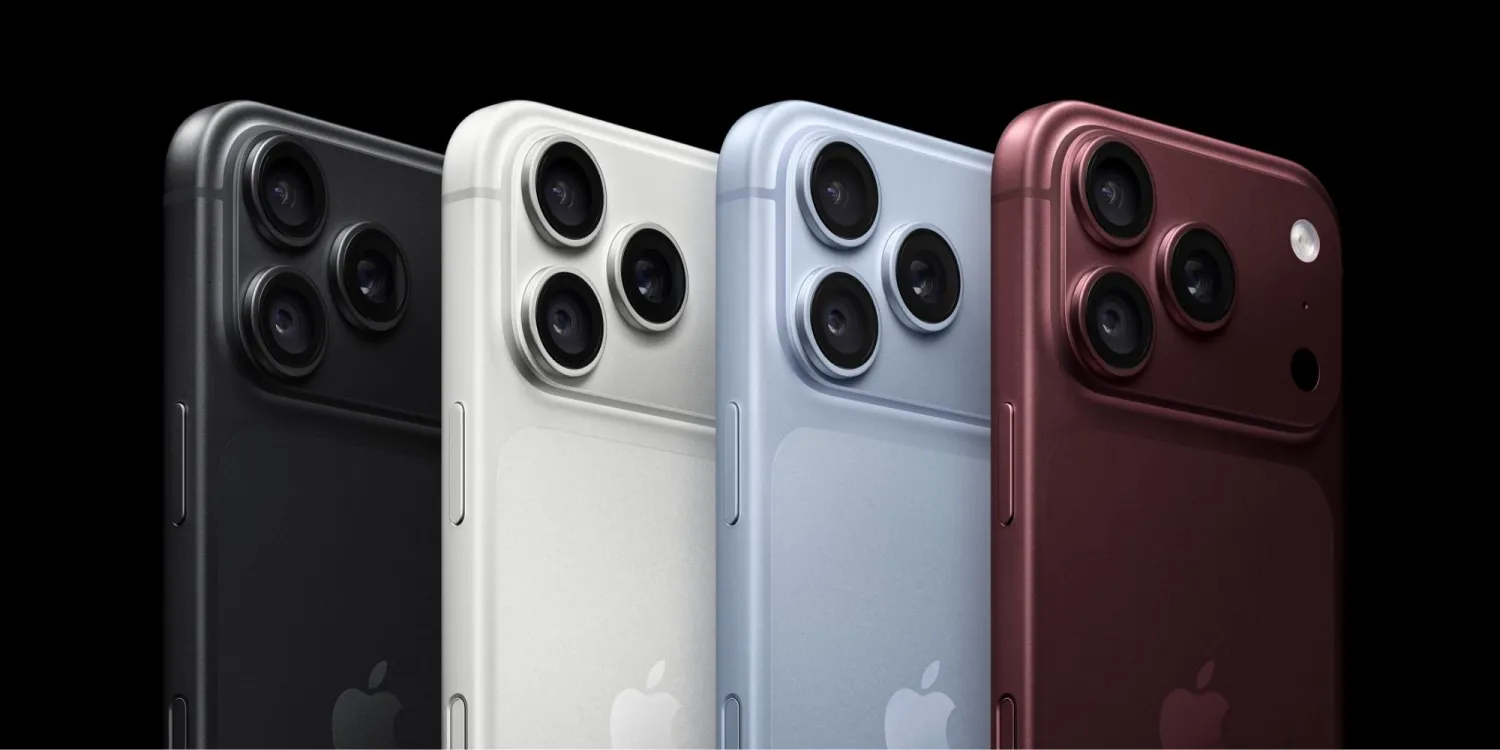
Apple Names Perryman and Qnity as AMP Partners for iPhone Duo and 18 Pro
Apple's October 20 newsroom page names Perryman Company as the titanium supplier for iPhone Duo and Qnity Electronics for the 18 Pro's variable aperture films.

| iPhone Duo | iPhone 18 Pro | |
|---|---|---|
| Enclosure | grade 5 titanium | |
| Camera | 48MP Fusion Main, variable aperture | |
| Recycled titanium | 80% minimum | |
| U.S. components | nearly 100 | nearly 100 |
| Perryman commitment | up to $100M / 3 years | |
| Broadcom chips | more than 15 billion | more than 15 billion |
Apple's newsroom page dated October 20, 2026, names Perryman Company in Houston, Pennsylvania, as the titanium supplier for iPhone Duo, the first foldable iPhone, under a commitment of up to $100 million over three years. The same page expands Qnity Electronics' role in producing the advanced films behind the variable aperture in the iPhone 18 Pro's 48MP Fusion Main camera. Sabih Khan, Apple's chief operating officer, frames the announcement as a continuation of the American Manufacturing Program, which launched last year inside a $600 billion, four-year commitment.
The table carries the figures Apple printed: grade 5 titanium, 80 percent recycled content, nearly 100 U.S.-made components, Broadcom's 15 billion chips, TSMC Arizona's 100 million wafers. What the table does not prove is whether the foldable hinge mechanism, the variable aperture actuator, or the Dynamic Island redesign on the 18 Pro are themselves American-made. The page says "nearly 100 components" drawn from "more than a dozen states," but it does not itemize which of those parts sit inside the Duo's folding mechanism or the 18 Pro's camera stack. The Amkor packaging facility in Peoria, Arizona, is named as a future customer site, but no component is assigned to it yet.
Die Brief's read: the Perryman deal is the load-bearing one. A foldable phone's enclosure is a structural part, not a cosmetic one, and Apple is paying a family-owned Pennsylvania shop to melt, forge, and roll grade 5 titanium with a recycled floor. That is a different supply-chain posture than buying sheet metal from a Japanese or Korean mill. The Qnity film contract is narrower; it covers the aperture mechanism's optical films, not the sensor or the lens group. Broadcom's 15 billion chips and TSMC's 100 million Arizona wafers are the volume backbone, but they serve the entire Apple lineup, not just these two phones. The constraint here is not silicon yield; it is whether a foldable enclosure can be forged and rolled to tolerance in a plant that also makes aerospace titanium, and whether the 80 percent recycled floor holds at foldable-scale geometry.
What the page leaves open: no price, no ship date, no hinge torque spec, no aperture f-stop range, no yield figure for the Arizona fabs. The 80 percent recycled titanium is a minimum, not a target, and the page does not say whether the Duo's enclosure will exceed that floor. Corning's Harrodsburg plant will make all iPhone and Apple Watch cover glass by year's end, but the page does not confirm whether the Duo's foldable display glass comes from the same line or a separate process. The Amkor Peoria facility, still in shell construction, has no named component assignment for either phone.
The Perryman titanium contract is the structural commitment; the Qnity film deal is a component-level add. Apple is buying foldable-enclosure capability in Pennsylvania rather than importing it, and the 80 percent recycled floor is the first hard number that constrains the Duo's material spec.
No price, ship date, hinge torque, aperture f-stop range, or Arizona fab yield figure appears on the page.
The foldable enclosure is a structural part. Apple is sourcing grade 5 titanium from a Pennsylvania forge with a recycled-content floor, which changes the material supply chain for the first foldable iPhone. The Qnity contract covers aperture films only, not the sensor or lens group. Broadcom and TSMC Arizona provide the silicon volume but serve the whole lineup, not just these two phones.
After apple.com. We did not report this. The pictures, if any, are theirs. Also filed by AppleInsider, MacRumors, 9to5Mac, HotHardware.