The outsourced GPU tile is driving CPU prices up
The high-end Panther Lake price jump of 15% to 20%, effective September 1, traces to a single outsourced component rather than the CPU core Intel makes on its own 18A process.
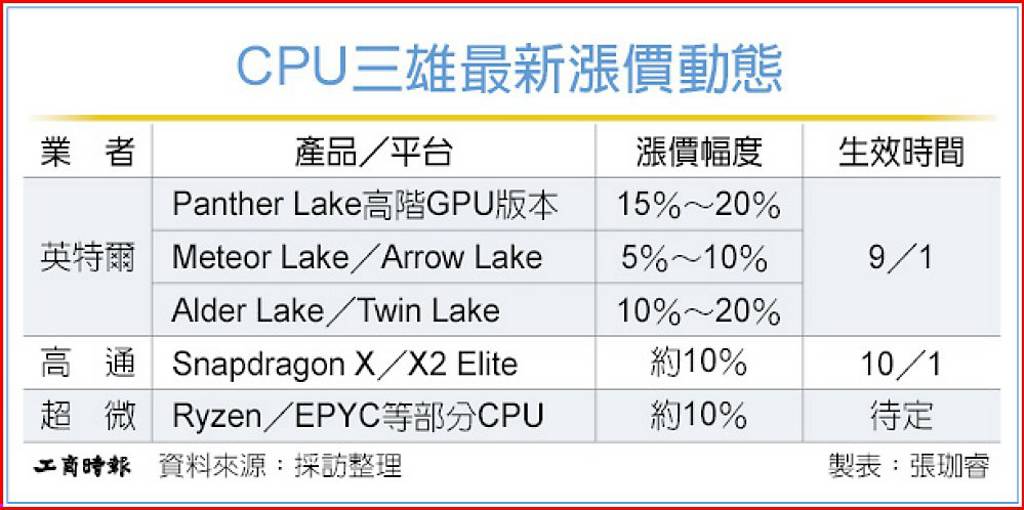
| Panther Lake | Snapdragon X/X2 Elite | AMD Ryzen / EPYC | |
|---|---|---|---|
| price increase | 15% to 20% | about 10% | |
| process | 18A CPU tile; N3E GPU tile | 2nm target for new EPYC | |
| effective date | September 1 | October 1 |
Meteor Lake and Arrow Lake saw smaller increases of 5% to 10%, and the Panther Lake bump is limited to products carrying the high-end GPU tile. That distinction isolates the foundry surcharge to one part of the chip.
Qualcomm followed with an approximately 10% lift on Snapdragon X and X2 Elite platforms starting October 1. The company is expanding from mobile SoC into PC and edge computing, and the higher CPU, GPU, and NPU specifications increase reliance on advanced processes and packaging.
AMD has not confirmed its increase, scope, or effective date. The page does not provide TSMC wafer prices, SKU-level list prices, or power figures. Those gaps remain unmeasured.
The structural shift is that Intel's cost pressure moves from its own 18A process to TSMC capacity. The premium AI PC buyer absorbs a foundry surcharge embedded in the CPU price, while Qualcomm's move shows the same pressure reaching edge platforms.
The draft's core claim holds: the N3E GPU tile, not the 18A CPU tile, drives the Panther Lake price increase. The Qualcomm and AMD angles are supported but thinner. The missing TSMC wafer price and SKU-level data limit the story's depth.
After ctee.com.tw. We did not report this. The pictures, if any, are theirs.