RTX 5070 Ti GDDR7 memory reaches 39 Gbps in an overclock test
A Samsung GDDR7 module on an RTX 5070 Ti reportedly ran at 39 Gbps, or +5500 MHz, while +6000 MHz produced artifacts or crashes.
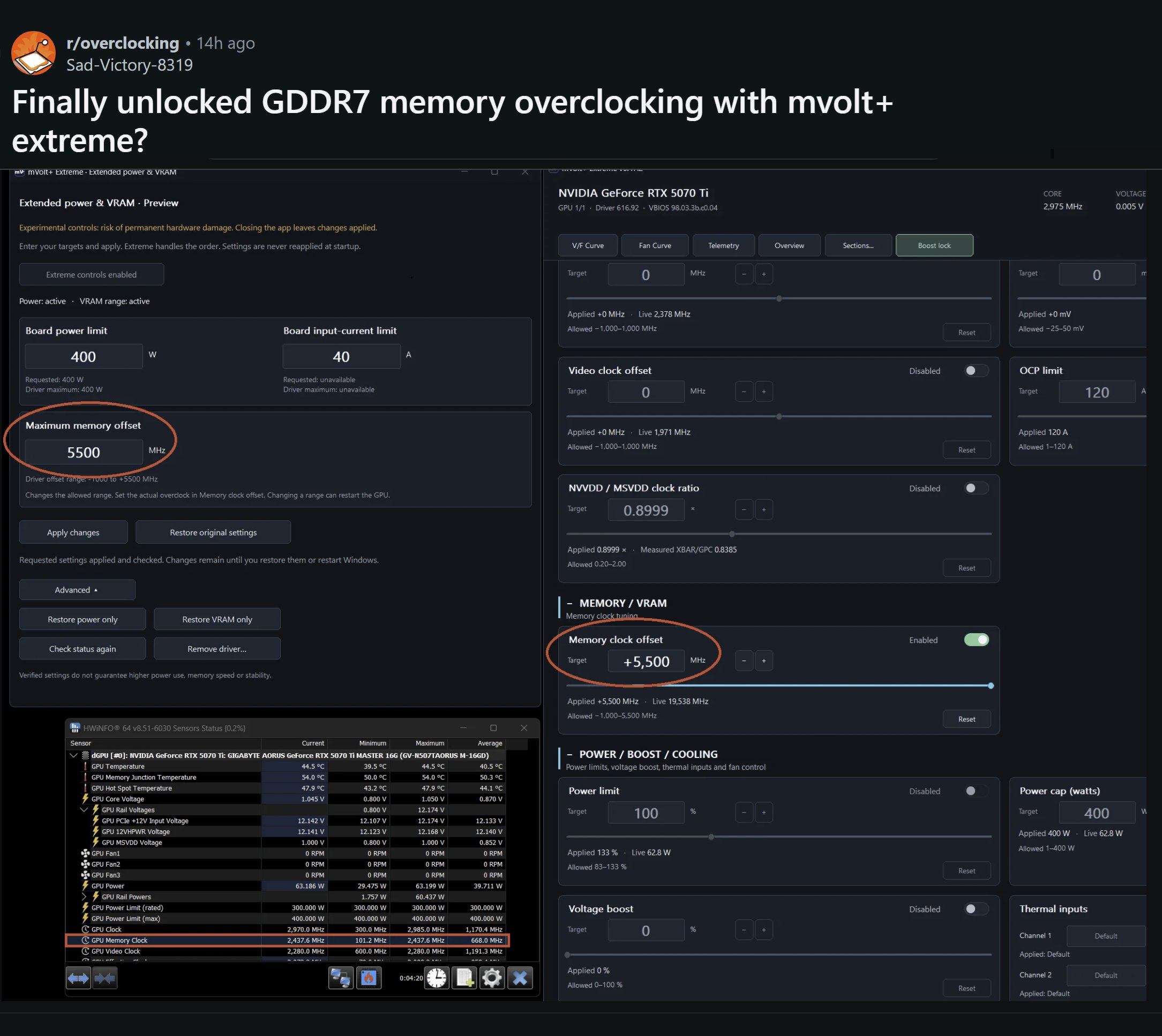
That is a reported memory speed. It does not prove that every 5070 Ti, every Samsung module, or every driver path can hold that speed. The same filing says +6000 MHz caused artifacts or crashes, so the ceiling is a per-card limit, not a part number.
The constraint is the driver and tool stack, not the GDDR7 label. Normal BIOS paths cap the offset at +3000 MHz, an XOC BIOS at +4000 MHz, and mVolt+ Extreme allows higher values, but the warning still says pushing beyond intended limits may degrade chips faster. For a buyer, 39 Gbps is a stress margin, not a purchase spec; for a fab, it is evidence that Samsung G7 has headroom, while the 5090 result shows the margin is not transferable.
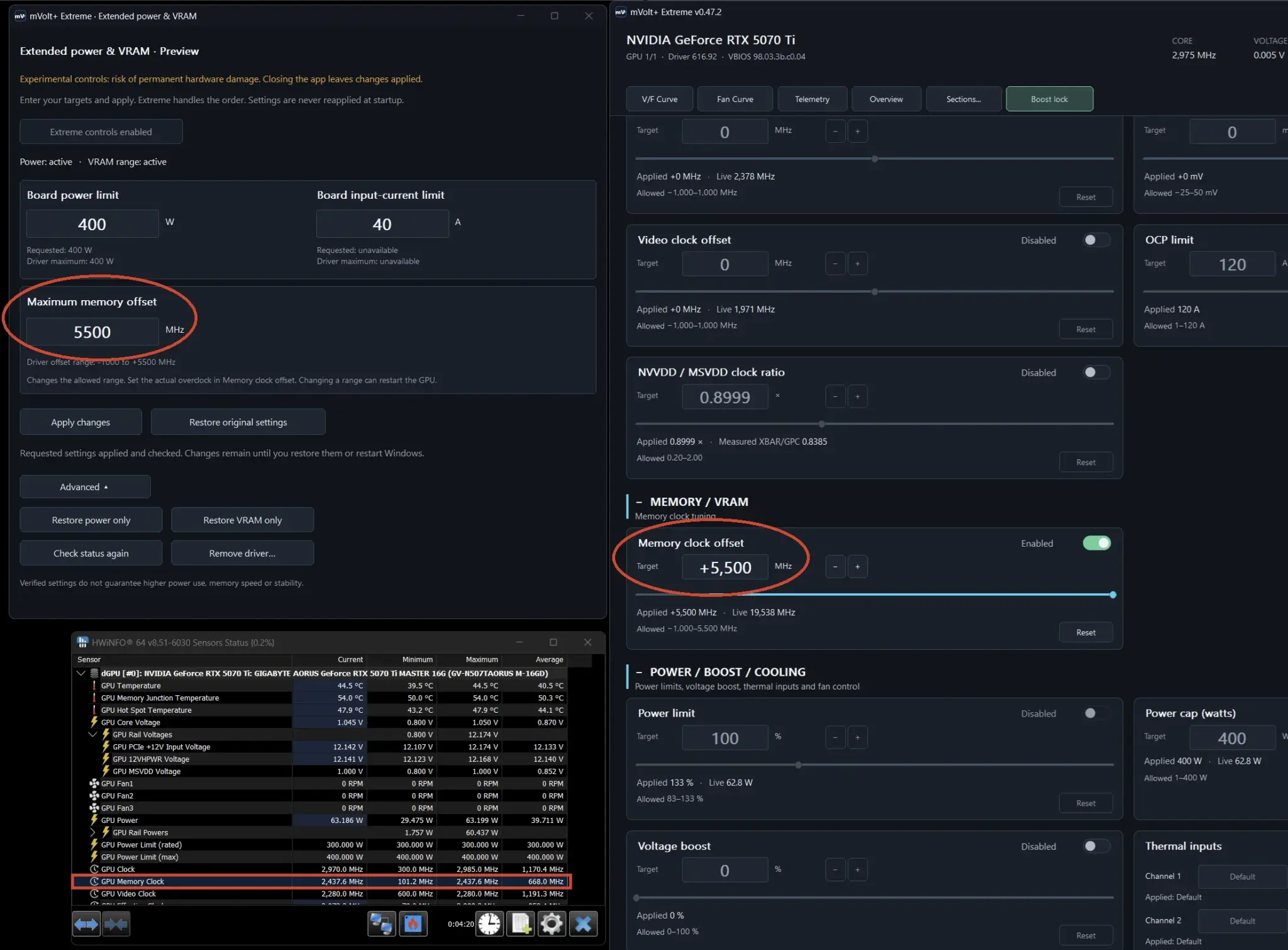
What remains unmeasured is the long-term wear, the exact module lot, and whether the 5090 ceiling comes from silicon, power, or driver policy. The post gives a speed, a failure point, and a warning, but not a reliability curve.
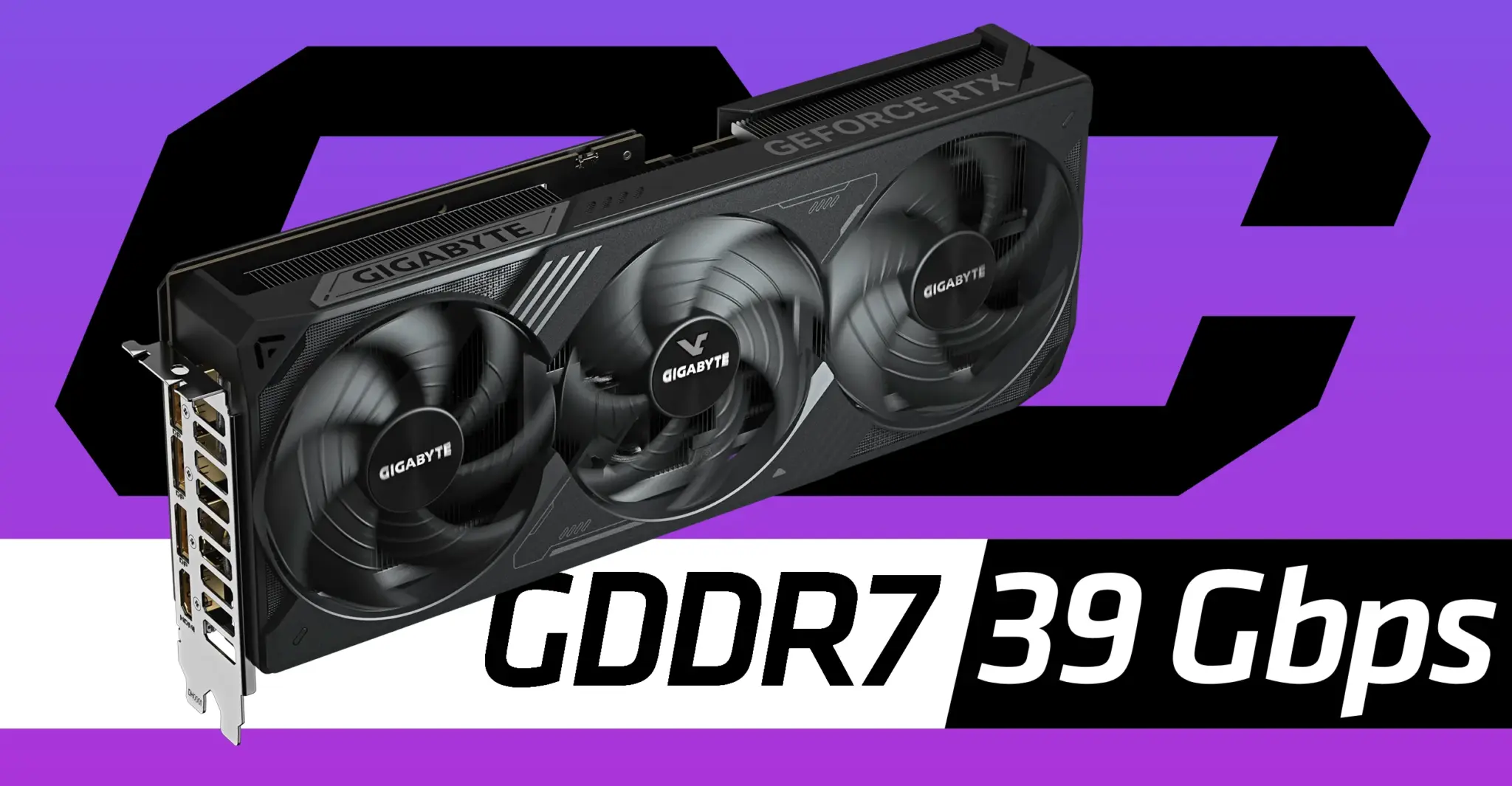
The 5070 Ti result is a per-card memory margin, not a guaranteed product spec. The 5090 ceiling shows that the same GDDR7 speed does not transfer across boards.
The document does not measure long-term wear, module lot variation, or the cause of the 5090 ceiling.
Treat 39 Gbps as a per-card stress margin, not a rated memory speed. The 5090 result shows the same GDDR7 headroom does not transfer across boards.
39 Gbps · +5500 MHz · +6000 MHz · 28 Gbps · RTX 5070 Ti · Samsung G7
After videocardz.com. We did not report this. The pictures, if any, are theirs.