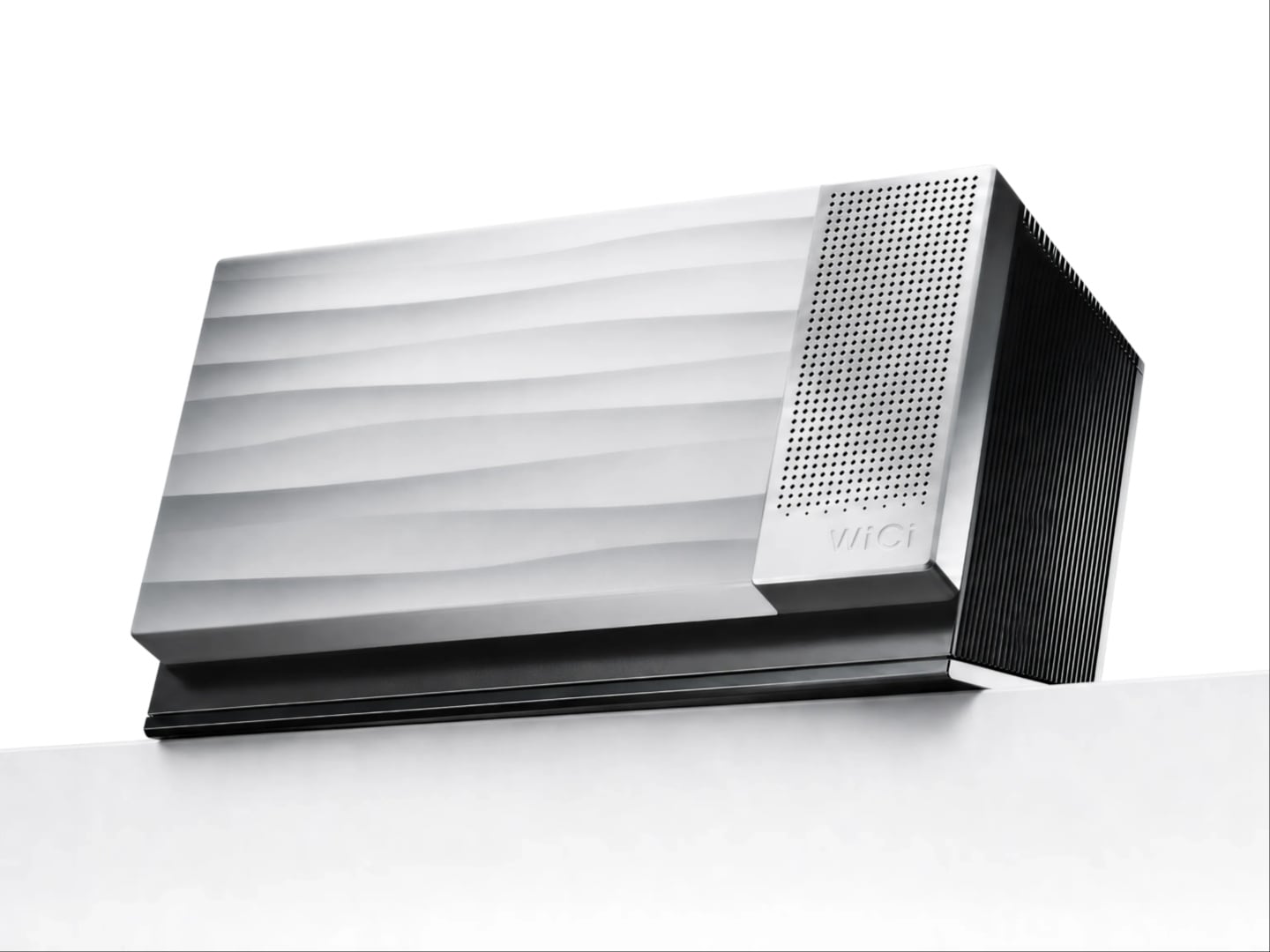
WiCi One puts an RTX 5090 behind a Wi-Fi 7 wall
WiCi One pairs an RTX 5090 with a Wi-Fi 7 4×4 MIMO radio and claims shared GPU access for nearby laptops and phones.
That VRAM figure on the RTX 5090 edition does not prove the Wi-Fi 7 path can sustain an AAA frame without visible input lag. The document lists a 4×4 MIMO, 320 MHz radio and a 32 GB GDDR7 GPU, but it fails to publish a measured throughput, latency, or frame-time budget for the wireless link.
Die Brief reads the constraint as the air interface, not the silicon. A buyer who needs a local GPU for inference gets a shared endpoint, but a gamer gets a claim that still needs a measured frame-time under contention. The fab question is whether the host CPU and NVMe paging can hide transfer stalls when several devices share the same radio.

It still leaves the actual Wi-Fi 7 throughput, per-device latency, and TurboStream paging behavior unmeasured for a busy multi-device home network. No multi-device contention test appears.
The constraint is the air interface, not the GPU die. A buyer gets shared local compute, but a gamer still needs measured frame-time under contention.
The document does not measure Wi-Fi 7 throughput, per-device latency, or frame-time under multi-device contention.
The bottleneck is the Wi-Fi 7 path and scheduler, not the RTX 5090. Validate throughput, latency, and paging stalls before treating it as a local eGPU.
NVIDIA RTX 5090 · 32GB GDDR7 · Wi-Fi 7 · 4×4 MIMO · 320MHz · Intel Core Ultra 7 255H · NVMe 5 · 4TB · Turbo Stream weight paging · Kimi K3 · 2.8T · 5 tok/s
After Wccftech Hardware. We did not report this. The pictures, if any, are theirs. Also filed by Tom's Hardware, computerbase.de.