Apple Newsroom names Siri AI architecture but not the silicon that runs it
Apple's Norwegian newsroom page dated 8 June 2026 announces Siri AI as a rebuilt assistant on next-generation Apple Intelligence, with testing open from that date and a user beta later in the year.
| Siri AI | |
|---|---|
| Announcement date | 8 June 2026 |
| Architecture | unique new architecture, next-generation Apple Intelligence |
| Testing availability | from 8 June 2026 |
| User beta | later in the year |
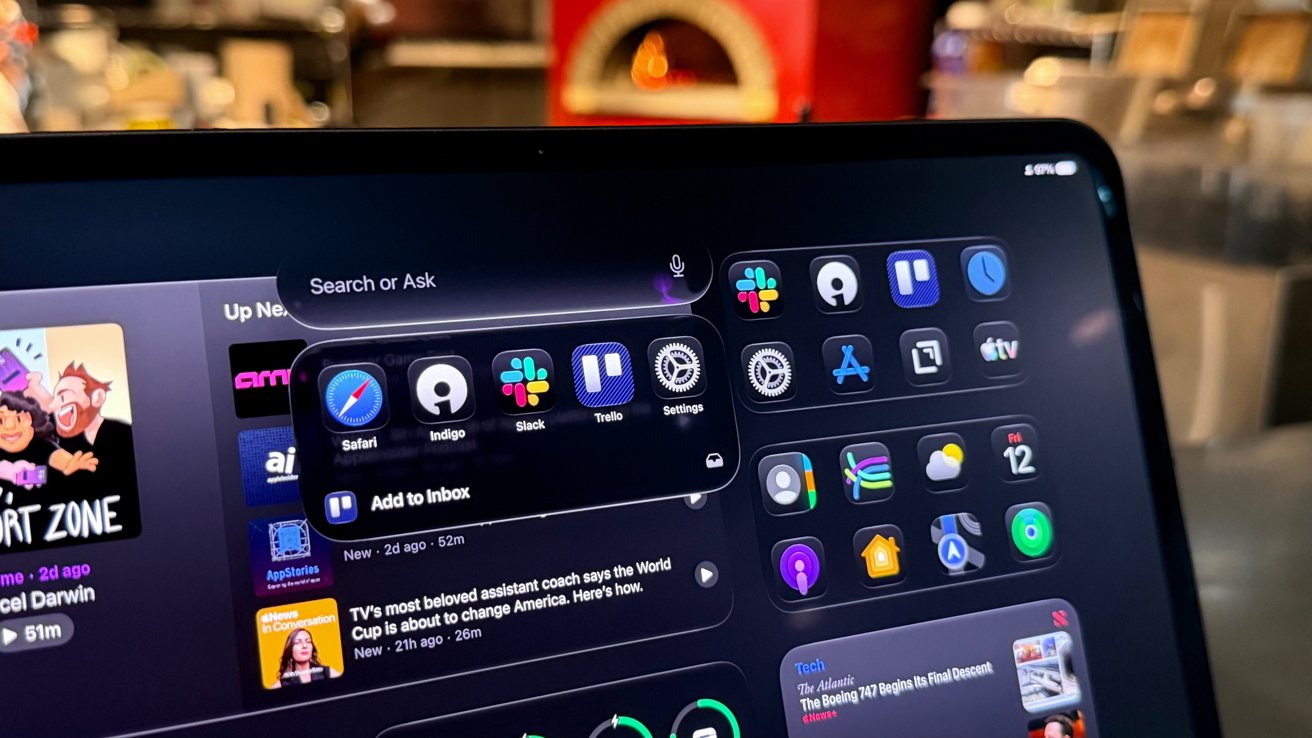
| iPhone activation | Dynamic Island swipe or side button |
| iPad / Mac integration | Spotlight, system-wide context menus |
| Vision Pro activation | spatial 3D visualization, gaze + speech |
| Watch activation | wrist or Smart stack suggestion |
The Apple Newsroom page dated 8 June 2026 states that Siri AI is a completely new version of Siri, powered by next-generation Apple Intelligence, and that features are available for testing from that date with a user beta later in the year. Craig Federighi, Apple's head of software development, is named as the presenter. The document describes a standalone app where conversations resume across devices, spatial processing with a placeable 3D visualization on Vision Pro, and integration into Spotlight and system-wide context menus on iPad and Mac. iPhone activation is by swiping down from the Dynamic Island or pressing the side button; Apple Watch users start a conversation from the wrist or via a new Smart stack suggestion.
The table carries what the page states. What it does not prove is which silicon runs the new architecture. The document says "unique new architecture" and "next-generation Apple Intelligence" but names no chip, no minimum device model, and no operating-system version number. The wire headline's claim about iCloud+ tiers and usage limits does not appear on this page. The document is a capability announcement, not a release schedule with hardware gates.
Die Brief's judgment: Apple has shipped a new assistant that is architecturally separate from the prior Siri, and the document is explicit that it was rebuilt from the ground up with a new architecture designed for privacy. But the constraint for the buyer is not capability – the page lists screen-aware answers, cross-app personal context, and system-wide actions like drafting an email or editing a photo set – it is hardware eligibility. That gap is the one that matters at purchase time, and it is the gap the wire headline papers over by attaching a version number the page never states.
The document names no performance figures, no latency numbers, no supported languages beyond the Norwegian text, and no third-party apps that have integrated with Spotlight for personal context. "Extended Visual Intelligence" appears as a label with no description of what it does or how it works. The page is a capability announcement, not a release schedule with hardware gates or a pricing sheet. What is still unmeasured is whether the next-generation architecture requires a specific Neural Engine generation, and whether cross-device conversation resumption works over iCloud or over a local network.
The page is a capability announcement that names no chip, no OS version, and no pricing tier, so the buyer cannot confirm hardware eligibility from this document alone.
No minimum chip generation, no OS version number, no pricing tier, no usage cap, and no performance or latency figure appears in the document.
Apple's 8 June 2026 newsroom post describes a rebuilt Siri architecture with privacy-specific design, cross-device conversation continuity, and system-wide actions, but provides no minimum silicon requirement, no OS version gate, and no pricing structure. The absence of a hardware floor means the document cannot answer whether the full architecture runs on existing A-series or M-series chips or requires a new generation.
After apple.com. We did not report this. The pictures, if any, are theirs. Also filed by 9to5Mac, MacRumors, AppleInsider.