Voltage fault injection unlocks 80 GB of HBM on the CMP 170HX
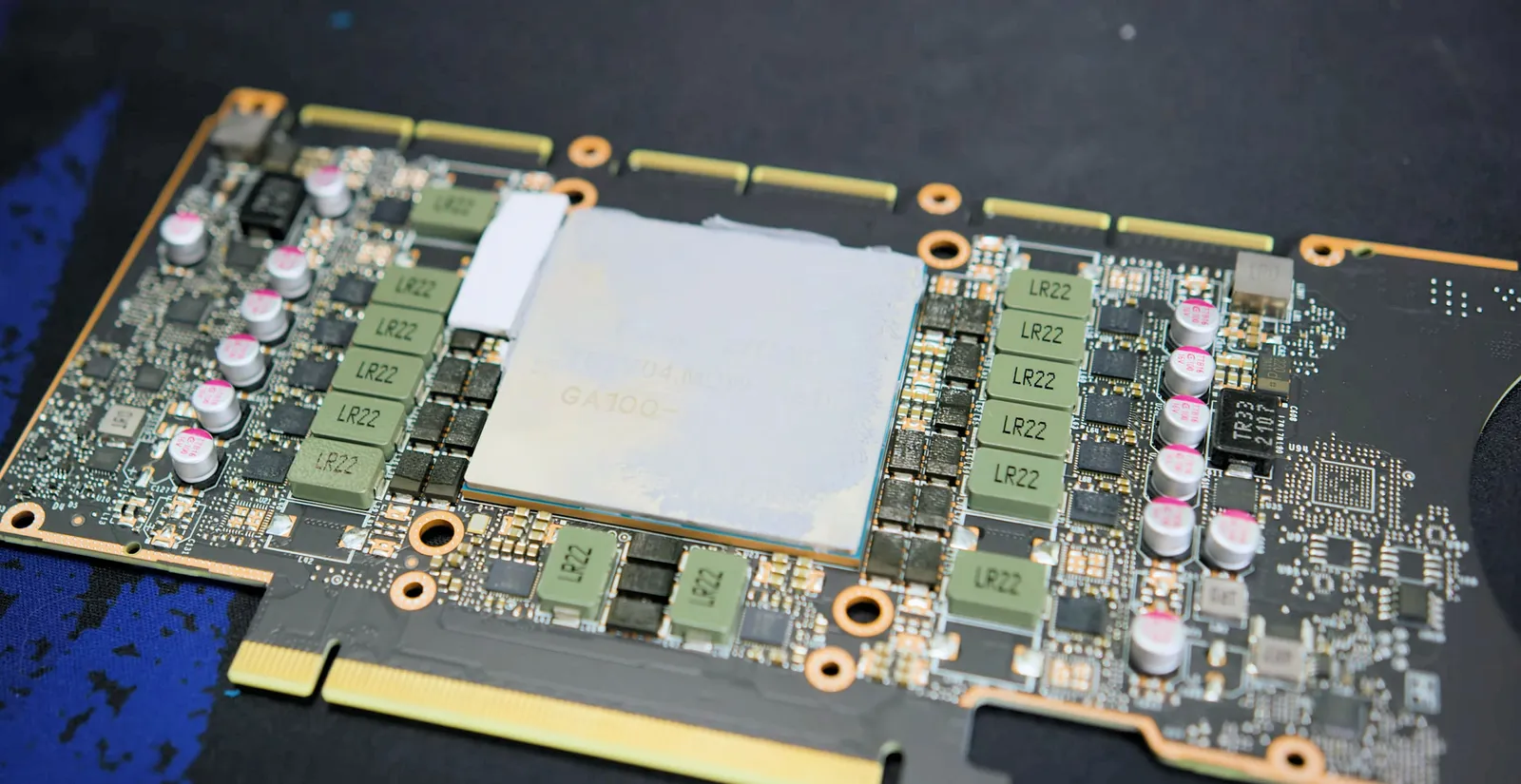
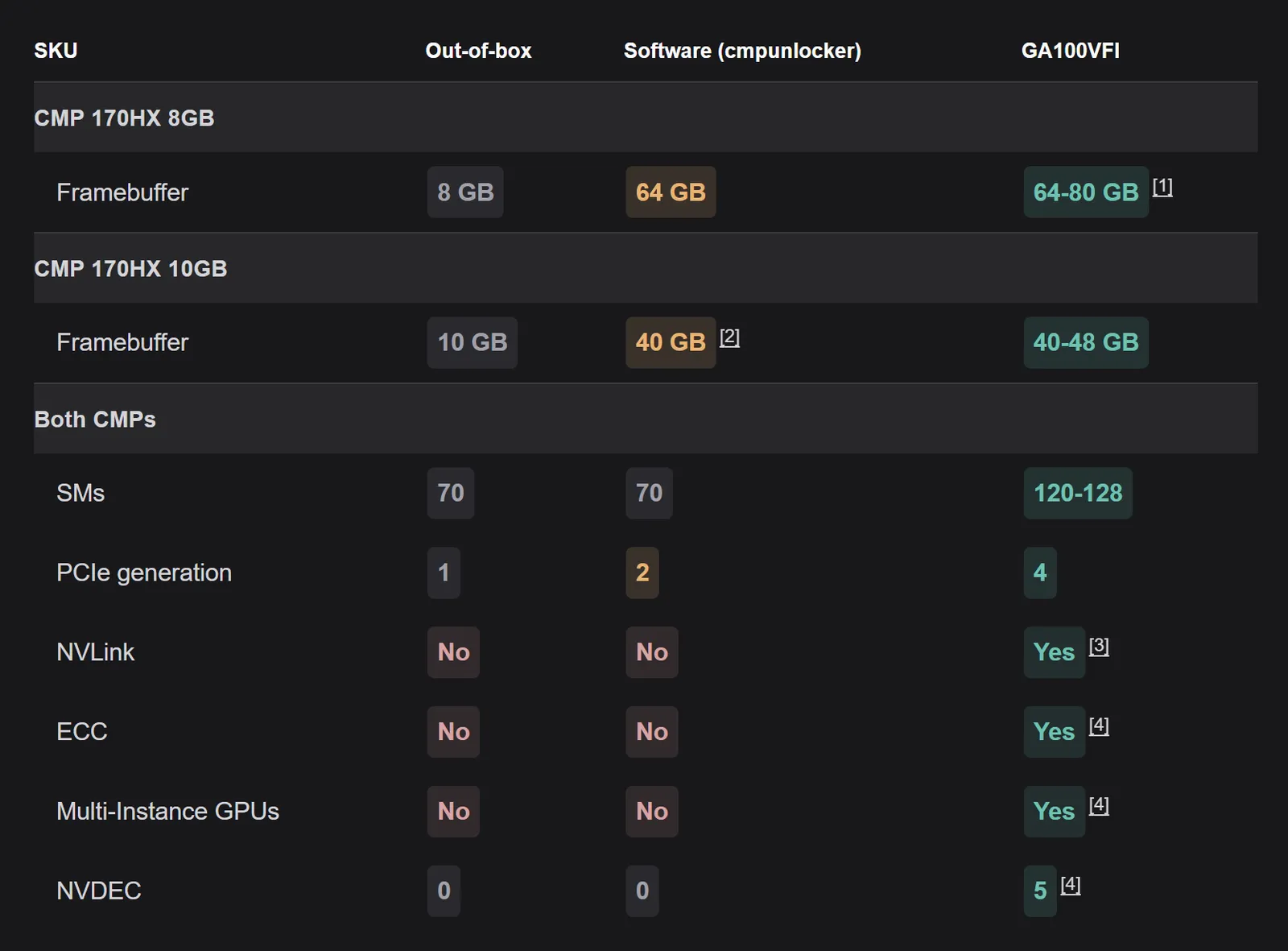
A microcontroller-driven voltage glitch during startup permanently reprograms the fuses on an 8 GB CMP 170HX, exposing 80 GB of HBM and 124 streaming multiprocessors that NVIDIA left disabled.
| CMP 170HX (unlocked) | |
|---|---|
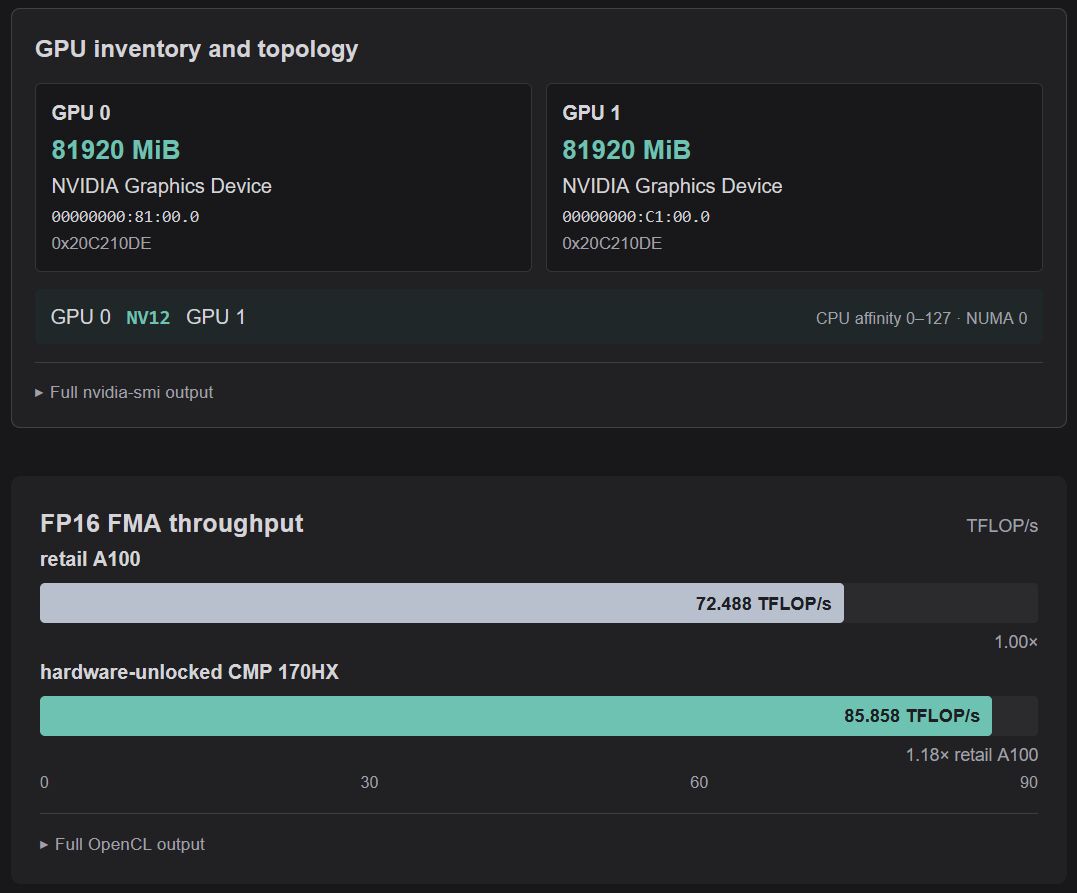
| memory | 81920 MiB |
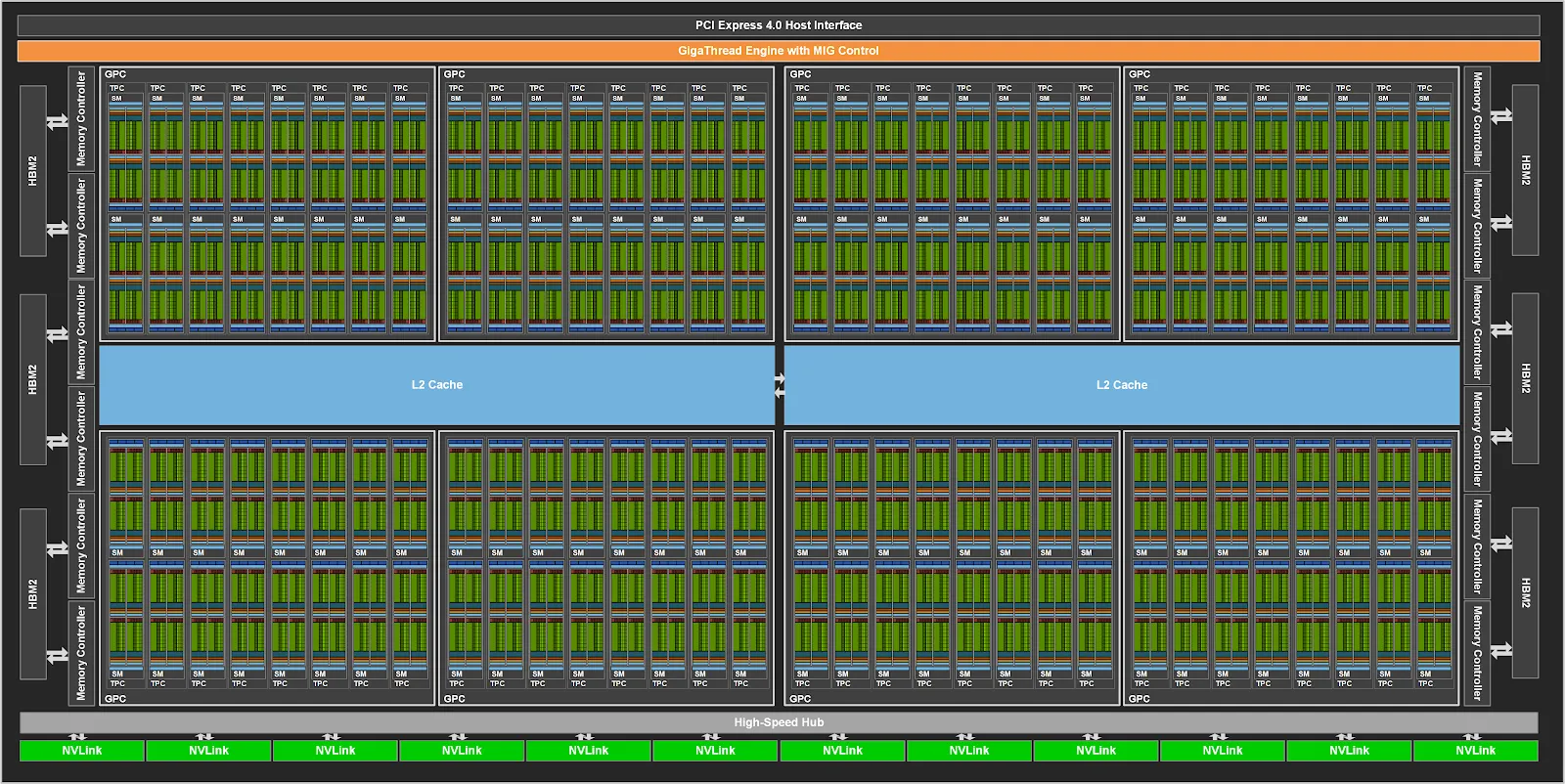
| compute units | 124 at 1410 MHz |
| cores | 7936 |
| FP16 FMA | 85.858 TFLOP/s |
| FP32 | 22.781 TFLOP/s |
| FP64 | 11.287 TFLOP/s |
| PCIe send | 13.10 GB/s |
| price (10 GB variant) | $4,000 |
Kate's technical report documents the method: a microcontroller manipulates GPU voltage at boot to bypass fuse-programming restrictions. No additional memory chips are added; the HBM was already on the package.
The SM count in the raw OpenCL output reads 124 compute units, 7,936 cores, at 1,410 MHz. VideoCardz rounds that to "approximately 120-126," which is the die-lottery spread across cards, not the reading on the tested silicon.
FP16 FMA throughput hits 85.86 TFLOP/s against 72.49 on a retail A100. That 1.18× figure comes from a single OpenCL loop, not a sustained workload.
Nine of the ten 8 GB cards Kate tested had enough functional memory for the full 80 GB. The tenth topped out at 64 GB. The 10 GB variant, by contrast, reaches only 40 to 48 GB.
PCIe Gen4 and NVLink connectivity were also demonstrated, though both require additional board modifications beyond the fuse work.
The packet contains no power-draw readings, no thermal data, and no sustained-load benchmarks. Whether the blown fuses survive months of continuous operation is not addressed in any document.
Kate has published the hardware designs, firmware, and supporting tools on GitHub. The process is not a software patch; it demands physical modification, repeated voltage glitching, and permanent fuse programming.
The lede leads with the mechanism (voltage glitch) rather than a price or a count, which sets it apart from the other briefs. The SM-count paragraph isolates the VideoCardz rounding as a die-lottery spread, which the draft had buried. The closing paragraph keeps the GitHub release and the physical-modification caveat together so the reader understands the mod is not a firmware update.
After @JoeGuglielmucci. We did not report this. The pictures, if any, are theirs.