Apple creator studio adds MCP support and open .keyx format
Apple's October 27 newsroom post adds MCP support to Keynote, Pages, and Numbers and ships an open .keyx format, alongside built-in MotionVFX in Final Cut Pro.
| Apple Creator Studio | |
|---|---|
| Monthly price | $12.99 |
| Annual price | $129 |
| Education monthly | $2.99 |
| Education annual | $29.99 |
| Final Cut Pro (one-time) | $299.99 |
| Logic Pro (one-time) | $199.99 |
| Pixelmator Pro (one-time) | $49.99 |
| New transcription languages | 23 |
October 27, 2026, is the date Apple's newsroom post stamps on the Creator Studio update, and the $12.99 monthly price anchors the pricing block at the bottom of the page. The document is a vendor announcement from Cupertino, not a desk report or a leaker's post, so every figure in the table below is confirmed by Apple itself. The update ships on the App Store in November as a free update for existing subscribers, with a one-month trial for new sign-ups.
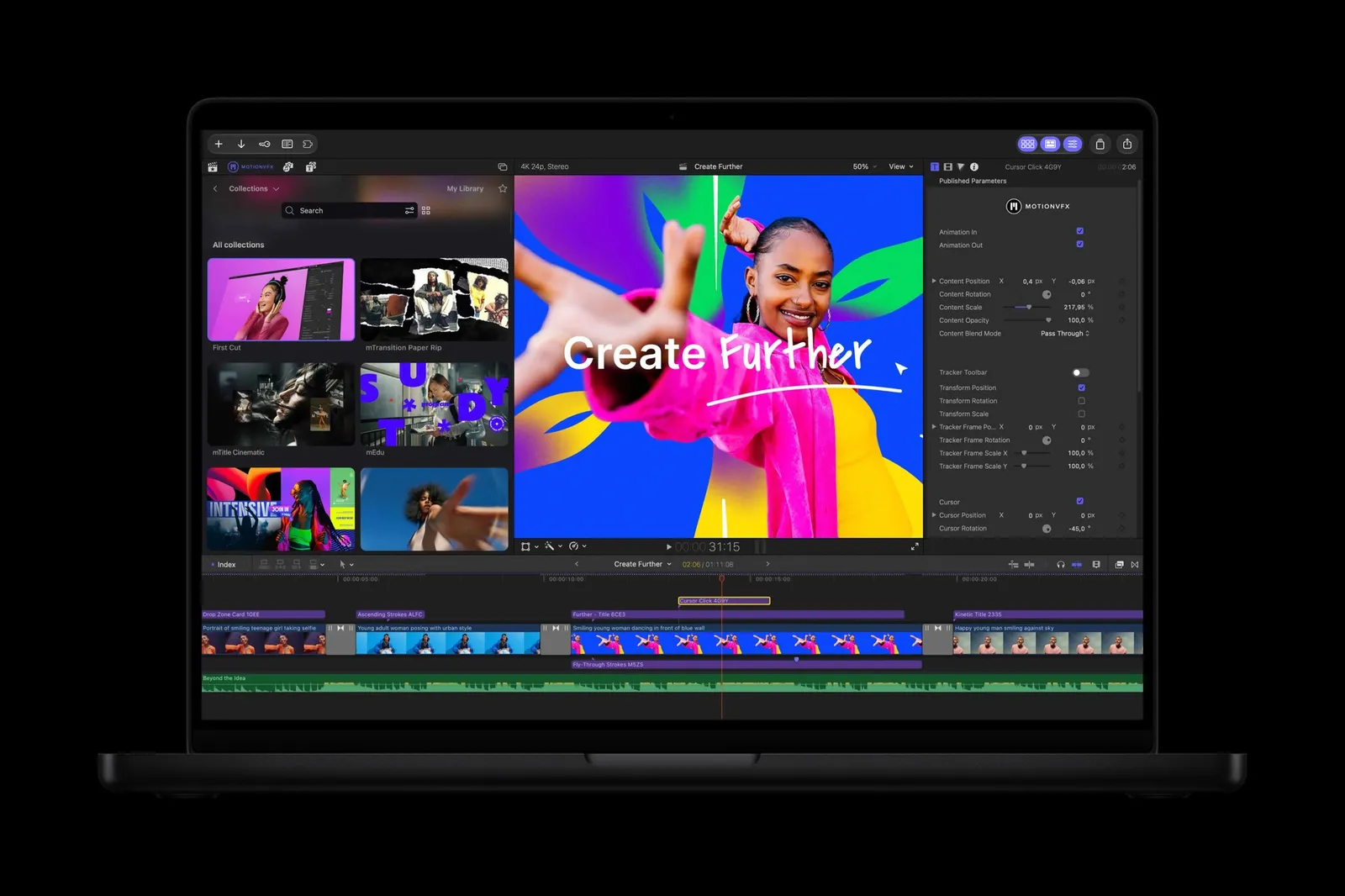
The table carries the one-time-purchase tiers and the education pricing. What it does not show is the protocol change underneath: Keynote, Pages, and Numbers now accept Model Context Protocol calls, so an external agent can read a document, perform edits, and execute actions without a human in the loop. Keynote also ships a .keyx format, an open JSON-based bundle designed for external tools, developer workflows, and AI agents, which breaks the long-standing closed .key container. Final Cut Pro absorbs MotionVFX directly, giving editors access to templates, graphics, titles, transitions, rotoscoping, tracking, and color grading without a separate Motion purchase.
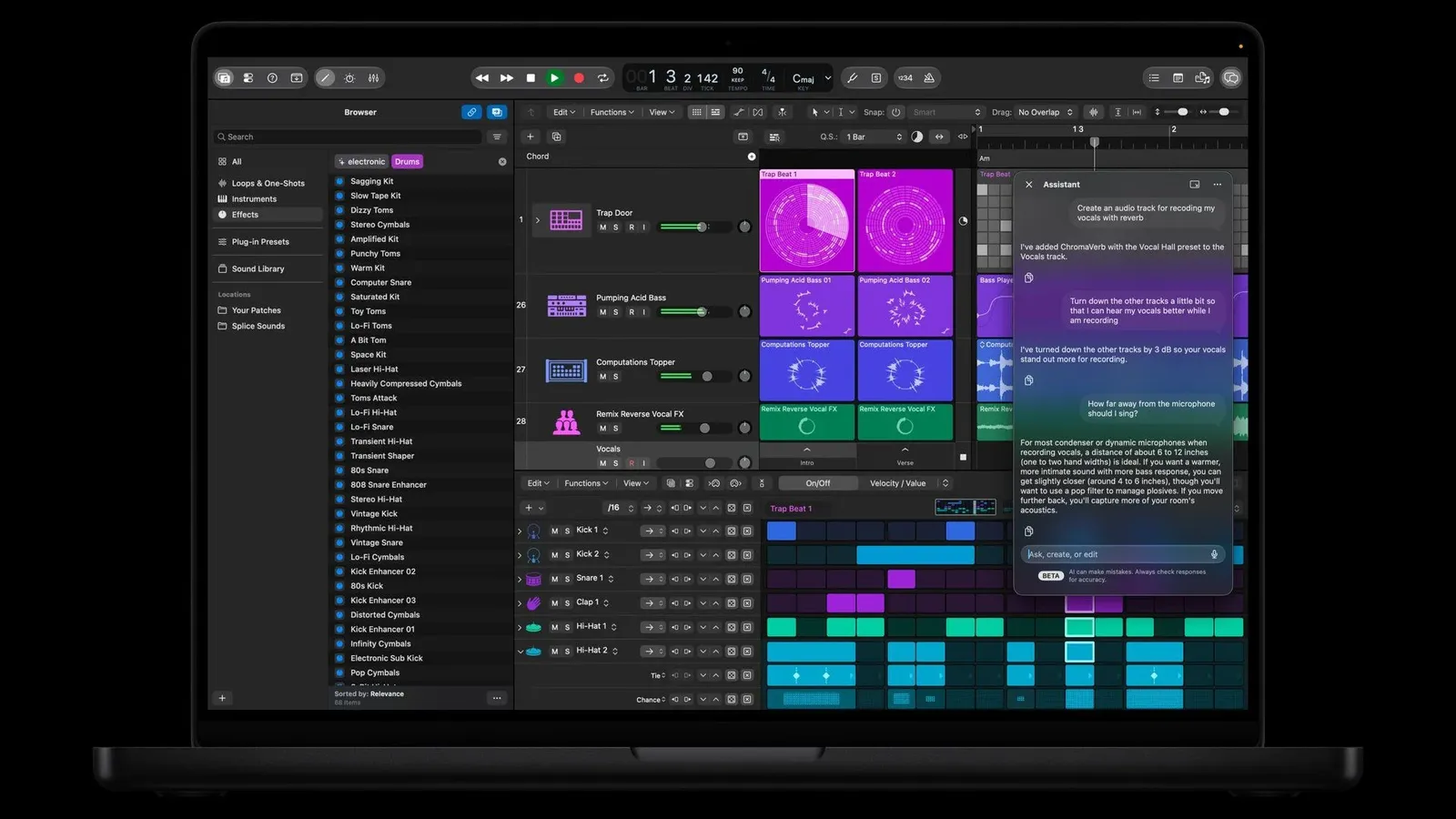
The constraint falls on the buyer who paid $49.99 for standalone Motion. MotionVFX is now built into Final Cut Pro, so the Motion purchase overlaps with what the $299.99 Final Cut Pro license already includes, and the $49.99 Motion tier now serves a narrower audience: editors who need the Displacement filter or 3D camera tracking outside a Final Cut Pro project. For the silicon side, Logic Pro's on-device audio analysis in the redesigned Browser is an inference workload that must fit within the chip's thermal budget, and the document does not state which Mac tier that requires.
Prices and the 23 new transcription languages sit in the table. What the table does not prove is whether the Logic Pro assistant's unnamed 'third-party models' are the same OpenAI stack powering the Keynote, Pages, and Numbers assistants. Apple names OpenAI only for the productivity trio; the Logic Pro assistant is described as 'a combination of Apple-built and third-party models' with no vendor identified, and a buyer comparing the two assistants has no basis in this document to assume they share a backend.
The document does not name which iPhone models support Voice Memo Studio Sound, does not give a specific date for Freeform's December features, and does not detail the scope or restrictions of the Splice library in Logic Pro's Browser. The exact count of MotionVFX elements is stated only as 'thousands,' and the criteria for a 'qualifying iPad' in the three-month free trial are not defined.
The MCP support and .keyx format are the real architectural shift: Apple is opening its document containers to external agents, which constrains any third-party tool that built workflows around the closed .key format. The MotionVFX integration into Final Cut Pro narrows the standalone Motion purchase to a niche, and the on-device audio analysis in Logic Pro is an inference workload whose minimum silicon tier is not stated.
The document does not name the third-party models behind the Logic Pro assistant, does not specify which iPhone models support Voice Memo Studio Sound, and does not give a date for Freeform's December features.
MCP support in Keynote, Pages, and Numbers exposes a document-level API to external agents, and the .keyx JSON bundle format breaks the closed .key container that third-party tools have parsed for years. The MotionVFX integration into Final Cut Pro makes the $49.99 standalone Motion purchase redundant for most editors, and the on-device audio analysis in Logic Pro's Browser is an inference workload whose minimum silicon tier is unspecified.
After @johnternus. We did not report this. The pictures, if any, are theirs. Also filed by AppleInsider, MacRumors, HotHardware.