IPad mini 8 OLED at $699 with binned A20 Pro
The iPad mini 8 launches Friday at $699 for 128 GB with a binned A20 Pro, 5.4 mm thickness, and a 60 Hz OLED panel that Apple stopped short of giving ProMotion.
| iPad mini 8 | |
|---|---|
| thickness | 5.4 mm |
| weight | 255 g |
| display | 8.5-inch OLED, 60 Hz |
| chip | A20 Pro (5-core CPU / 7-core GPU at 128 GB; 6-core CPU / 7-core GPU at 512 GB) |
| IP rating | IP67 |
| price | $699 (128 GB) |
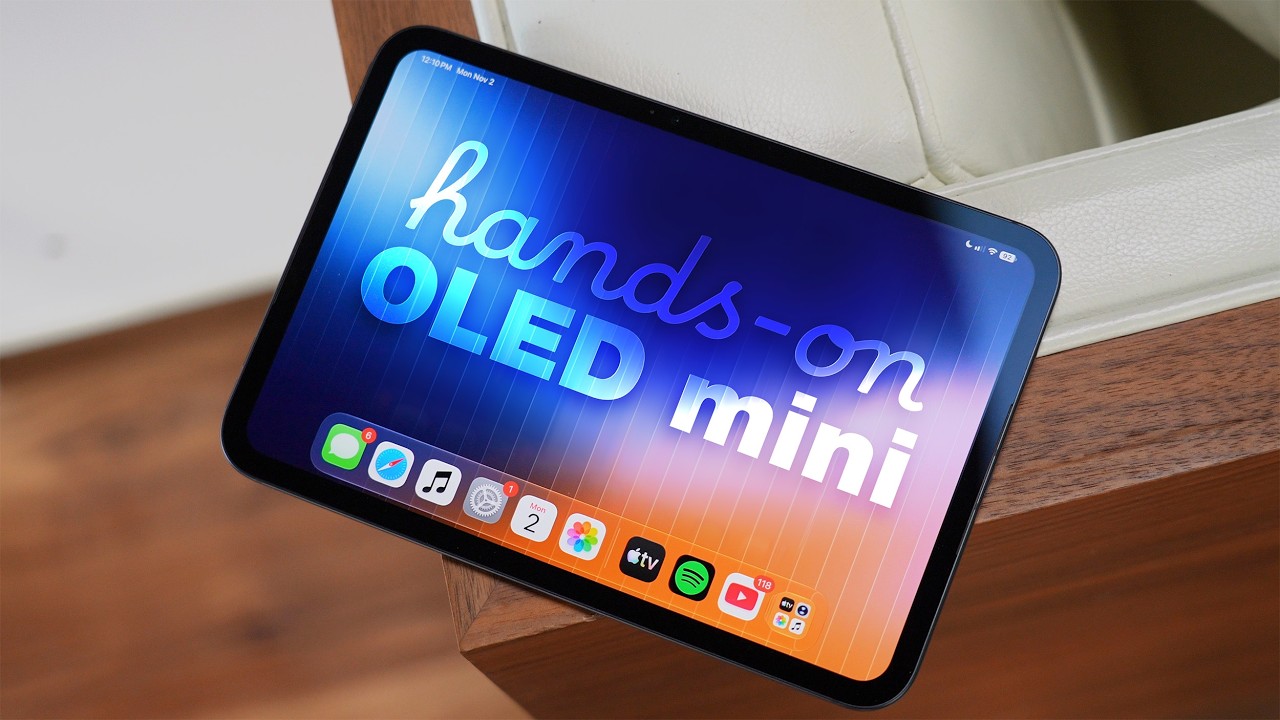
$699 buys 128 GB of storage and a binned A20 Pro with a 5-core CPU and 7-core GPU, which is the configuration the MacRumors hands-on names as the entry point for the iPad mini 8, launching Friday. The page is a videographer's week of use rather than a spec sheet, but it carries the numbers Apple's own store page would carry, including the $100 increase over the A17 Pro model and the $200 increase over pre-June pricing for the same tier. The buyer is paying for three changes at once: the OLED panel, the thinner body, and the IP67 rating.
The headline number in the hands-on is the 512 GB model, which gets the unthrottled A20 Pro with a 6-core CPU and the same 7-core GPU that appears in every tier. No page in the packet lists a price for the 256 GB or 512 GB tiers, so the stretch between the two configurations is unpriced but architecturally real, and the binning means the buyer at $699 is getting a deliberately slower processor than the one the product page would point to. The videographer calls even the binned version "overkill for most tasks on a tablet this small," which is a fair assessment but does not answer whether the one-core difference is measurable in sustained workloads.
The display is 8.5 inches, OLED, and capped at 60 Hz with no ProMotion, which means the theoretical peak of the panel is whatever the OLED substrate allows at maximum refresh while the measurement the hands-on reports is a flat 60 Hz that the videographer says is visible as a drop when every other device in the stack runs at 120 Hz. The panel is brighter than the prior generation, and the hands-on describes deep blacks that make colors stand out and HDR content that looks more true to life. No page in the packet states a peak brightness in nits or a contrast ratio, so the "brighter than before" claim remains relative rather than absolute.
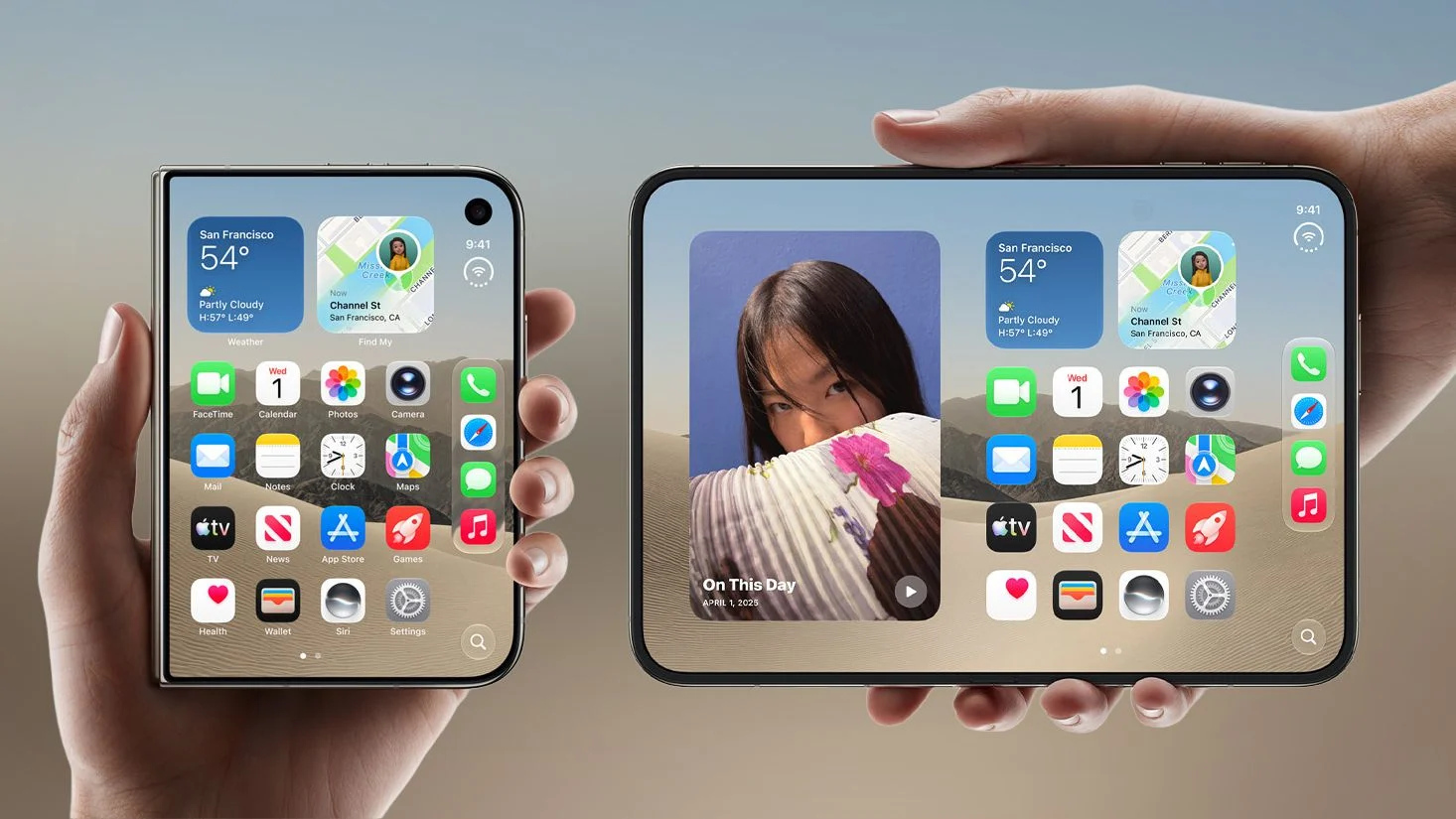
At 5.4 mm thick and 255 grams, the iPad mini 8 is the lightest iPad Apple has made, down from 293 grams on the prior model and 0.2 mm thicker than the iPhone Duo when unfolded. The thickness is almost a full millimeter less than the iPad mini 7, and the bezels are slimmer while the display grew from 8.3 to 8.5 inches with the overall footprint roughly unchanged. The line is fourteen years old, and this is the biggest update it has received in that span.
The acoustic system is sealed with no speaker holes, and tweeters sit under the glass while woofers drive through it in a configuration Apple calls the Acoustic Display. The videographer rates the sound on par with the iPad mini 7, with clearer highs and deeper bass in some cases, and the upgraded microphones make FaceTime calls and recordings sound cleaner. The sealed enclosure is what enables the IP67 rating, and the IP67 rating is what makes the sealed enclosure necessary, so the two are the same engineering decision viewed from two directions.
The IP67 rating is new for the iPad line, tested at one meter of submersion for thirty minutes, and no other iPad has carried this rating. The videographer is careful to say this is not an underwater camera, but it will survive a pool, a bathtub, or rain. The practical consequence is that the mini can be used in environments where the other iPads would be at risk, which is a small but real expansion of where the device can go.
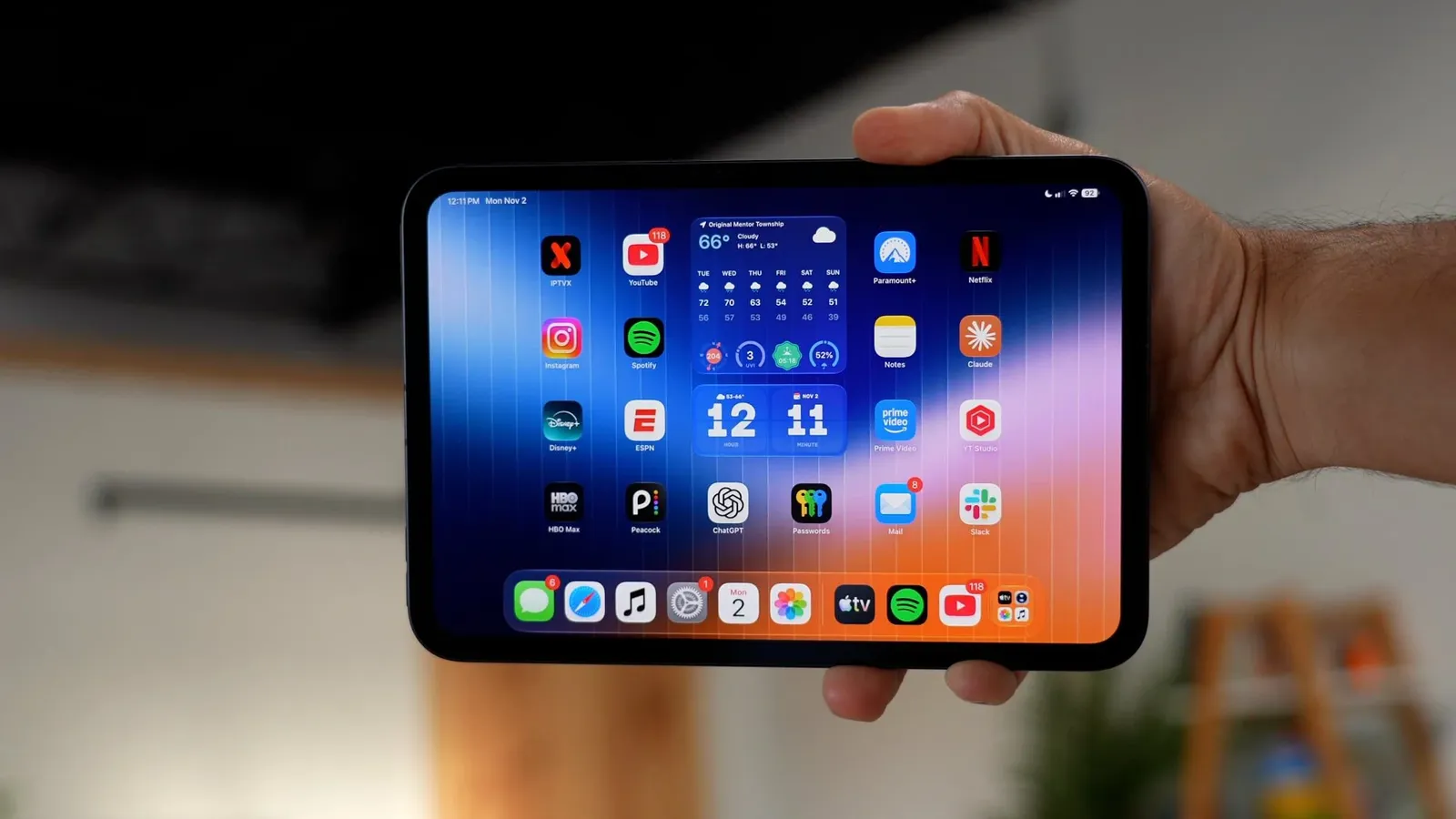
9to5Mac and ComputerBase both filed on the same launch, but the MacRumors hands-on is the only page in the packet that names the binning detail—the 5-core versus 6-core CPU split by storage tier—while the other desks reported the chip as "A20 Pro" without the qualifier. That omission collapses a meaningful architectural decision into a single name, and a buyer comparing the 128 GB model to the 512 GB model on a spec sheet would see the same chip name and assume identical performance. They would be wrong by one CPU core, and the binning is the kind of detail that only appears in a hands-on because it is not on the marketing page.
Nano-texture glass is available on higher-end models to cut glare, and it is the first time the option appears in a mini, while colors are limited to midnight and starlight and Touch ID is the biometric, consistent with the iPad Air and the iPhone Duo. Wi-Fi and Wi-Fi plus Cellular models are both available, and the hands-on does not name a specific SKU or model number beyond "iPad mini 8." The A20 Pro is the same chip as the iPhone 18 Pro, which means the mini is running phone silicon in a tablet body, and the binning is the only way Apple differentiates the tiers without changing the die.
At $699, the buyer is constrained by the binned chip and the 60 Hz ceiling simultaneously, and the 60 Hz is not a chip limitation but a product decision Apple made while putting ProMotion in the Air and the Pro, so the buyer who already owns a 120 Hz iPhone or MacBook will feel the gap every time they scroll. What the document does not prove is whether the OLED panel's peak brightness or contrast ratio justifies the $100 price increase over the A17 Pro model, because "brighter than before" without a number is a relative claim, not a measurement. The fab question is whether the A20 Pro binning is a yield decision or a product-tier decision, and the document does not say which, so the 128 GB buyer may be subsidizing a yield loss or buying a deliberately slower chip under one name.
The OLED MacBook Pro at 14 or 16 inches runs ProMotion at 120 Hz on the same panel technology.
What is still unmeasured: peak brightness in nits, contrast ratio, battery capacity in mAh, battery life rating, the price of the 256 GB and 512 GB tiers, and the exact release date beyond "this Friday." The week of use is not a lab report, and the numbers it carries are the ones Apple chose to put in the box, not the ones a photometer would pull from the panel. The buyer who wants to know whether the OLED panel is actually better than the LCD it replaces, in absolute terms, has to wait for a measurement that no page in this packet provides.
The 60 Hz ceiling is a product decision, not a silicon limitation, and the buyer who owns a 120 Hz iPhone will feel the gap on every scroll. The binning by storage tier means the $699 buyer is getting a deliberately slower A20 Pro than the 512 GB model, and the document does not say whether that is a yield decision or a pricing lever.
No page in the packet states peak brightness in nits, contrast ratio, battery capacity, battery life, or the price of the 256 GB and 512 GB tiers.
The A20 Pro binning splits the CPU core count by storage tier while the 7-core GPU is shared, which is a yield-management pattern rather than a performance-tier pattern. The 60 Hz cap on an OLED panel that could run higher is a product decision that leaves the panel's peak refresh unused, and the absence of a measured brightness figure means the $100 price increase over the A17 Pro model is not yet justified by a number.
After apple.com.cn. We did not report this. The pictures, if any, are theirs. Also filed by MacRumors, 9to5Mac, ComputerBase.