OpenAI frontier models enter Google Cloud Model Garden
OpenAI's vendor page dated October 21, 2026 confirms frontier models and Codex workflows will be purchasable through Google Cloud Marketplace, with general availability in the coming weeks.
| OpenAI on Google Cloud | |
|---|---|
| Platform | Google Cloud Model Garden |
| Transaction | Google Cloud Marketplace |
| GA timing | coming weeks |
| Primary cloud partner | Microsoft |
| Additional surfaces | Google Antigravity, Gemini Agent |
October 21, 2026 is the date stamped on openai.com/index/openai-models-google-cloud, the vendor page where OpenAI confirms that its frontier models and Codex agentic workflows will enter Google Cloud's Model Garden. The page is a partnership announcement, not a product sheet. It names no model, no parameter count, no context window, no benchmark. What it does name is the transaction path: Google Cloud Marketplace, with existing GCP spend commitments drawable against these purchases. Greg Brockman and Thomas Kurian are quoted, but neither quote contains a figure.
A distribution channel, not a new capability. Google Cloud customers buy OpenAI models the same way they buy any Marketplace listing. Enterprises already under a GCP commitment can offset the cost against existing spend, which means the marginal cost of adding OpenAI to a workload is a line item, not a new contract. The page positions this as giving teams access to OpenAI's frontier models within the environment where they already work. It also notes that OpenAI models will appear in Google Antigravity and the Gemini Agent, giving enterprise buyers a second surface beyond the Model Garden. Microsoft remains OpenAI's primary cloud partner, a line that reads like a boundary marker rather than a footnote.
The table below carries what the page states. What it does not prove is which models are in scope. "Frontier models" is a category label, not a SKU. A buyer reading this page cannot tell whether the unit of purchase is GPT-5, a smaller variant, or a rotating set that changes with each release cycle. The Codex agentic workflows are named but not specified: no tool-call schema, no token budget, no concurrency figure, no latency target. The page treats the technical layer as a given and focuses entirely on the commercial one.
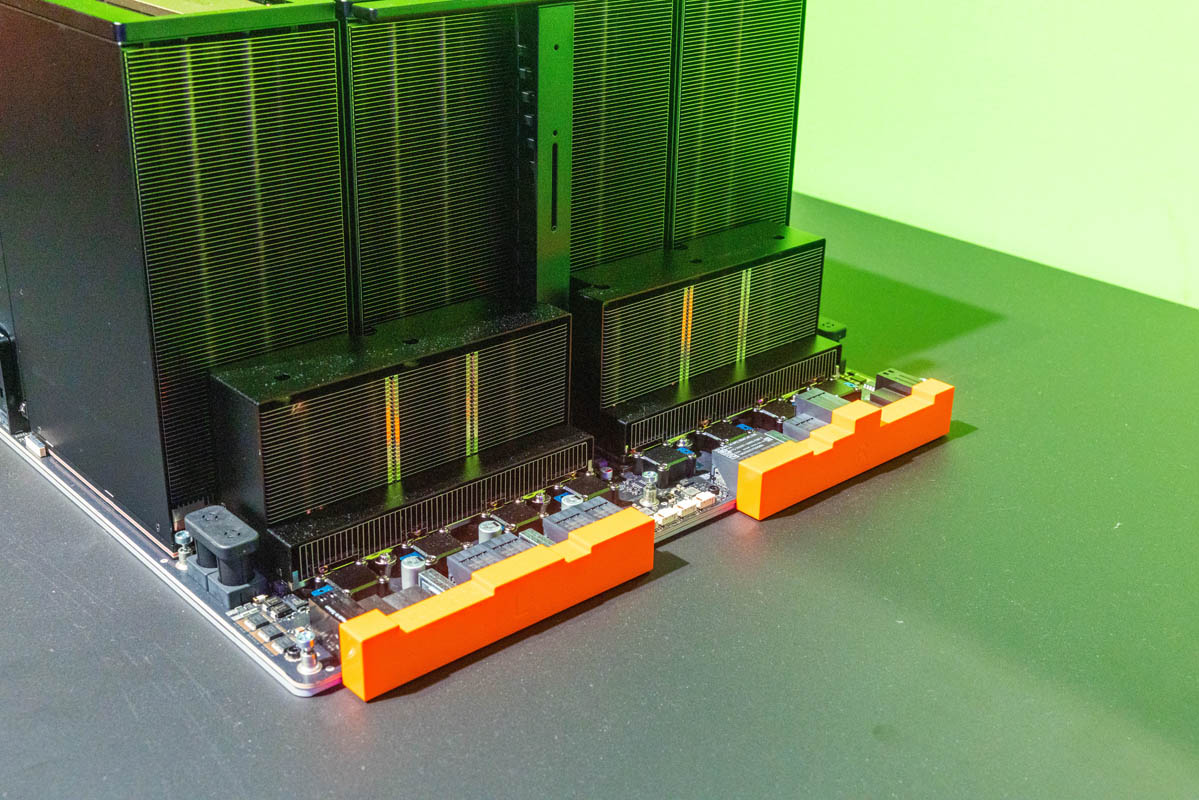
Die Brief reads this as a latency and data-residency play for regulated buyers, not a capability announcement. The architectural consequence is that OpenAI inference now runs on Google's infrastructure, which changes the data-flow story for enterprises that cannot route traffic through Azure. But the page does not say which inference layer handles the requests, whether Codex executes on Google's TPU fleet or on OpenAI's own hardware, or what the per-token cost structure looks like against a GCP commitment. For the fab, the question is whether Google's TPU fleet absorbs the inference load or whether OpenAI ships its own silicon into Google's data centers. The constraint falls on the buyer: you get model choice across two clouds, but you do not get a spec sheet to compare them.
No GA date beyond "coming weeks." No pricing. No data retention terms. No performance benchmark. The page is a handshake between two CEOs, and the spec sheet has not been filed yet.
This is a distribution channel, not a capability announcement. The buyer gets model choice across two clouds but no spec sheet to compare them, and the inference hardware question remains open.
No model names, no pricing, no GA date, no data retention terms, and no performance figures appear in the document.
The page confirms commercial access to OpenAI frontier models via Google Cloud Marketplace with GCP commitment offset. No model names, no performance figures, no GA date. The inference layer and data-residency terms are unspecified.
After openai.com. We did not report this. The pictures, if any, are theirs. Also filed by AppleInsider, 9to5Mac, The Verge AI.