Mercury 3 shifts the constraint to the serving stack
The missing independent check is the first fact, and the benchmark win is eight of 12 tests.
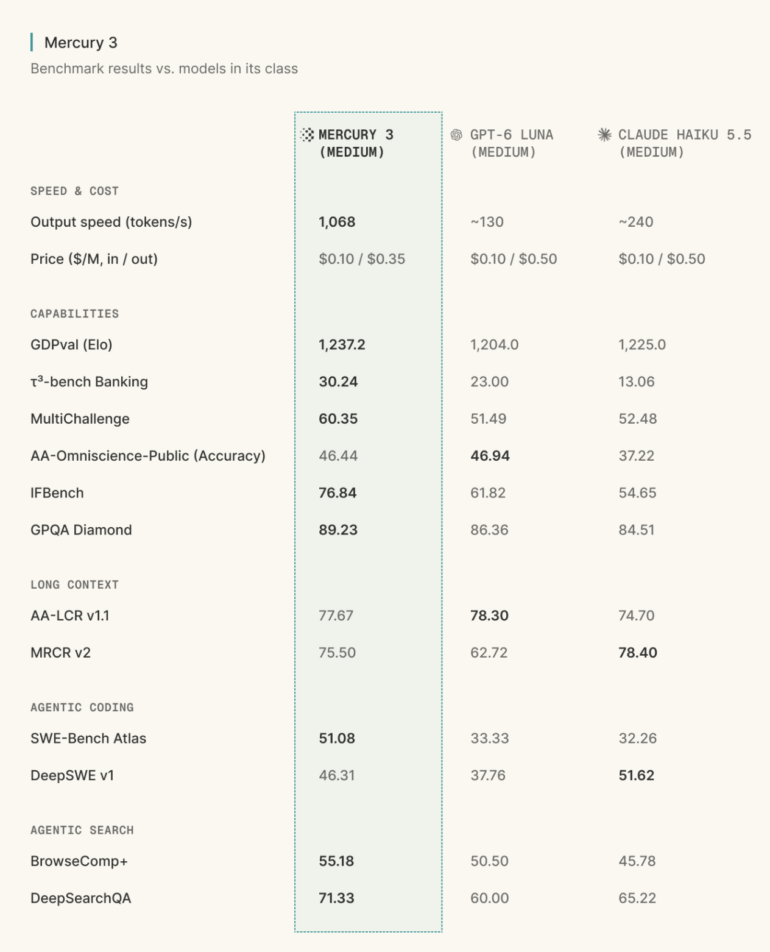
| Mercury 3 | GPT-6 Luna | Claude Haiku 5.5 | |
|---|---|---|---|
| speed | 1,068 tokens per second on NVIDIA GPUs | ||
| relative speed | 4-8x faster | ||
| context | 1M tokens | ||
| input price | $0.20 per million input | ||
| output price | $0.70 per million output | ||
| launch input price | $0.10 per 1M input | ||
| launch output price | $0.35 per 1M output | ||
| cached tokens | 90% off input price |
The benchmark table is the narrow part. Inception's launch post claims a win in eight of 12 tests against GPT-6 Luna and Claude Haiku 5.5.
Instruction following is where the gap is widest.
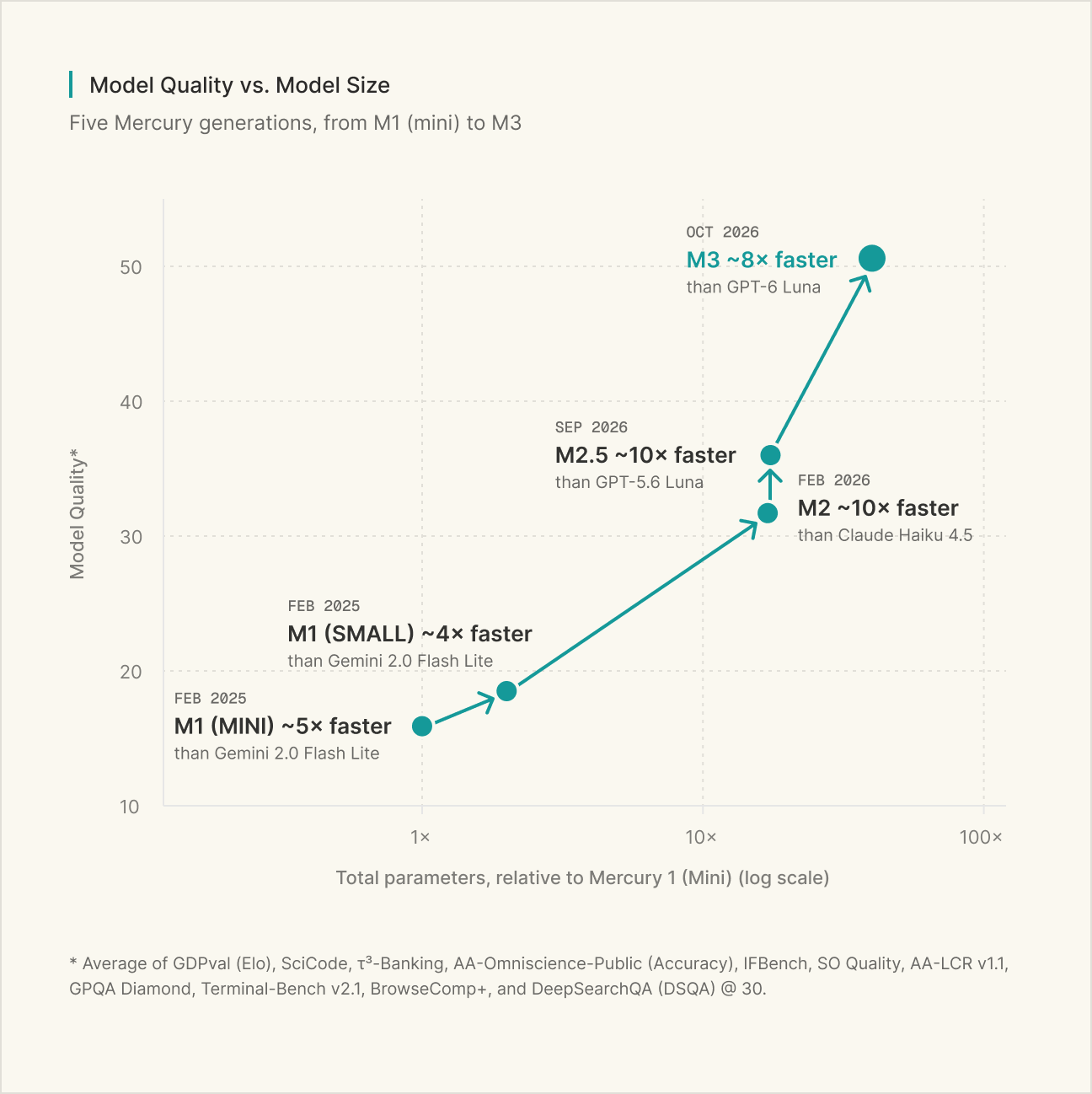
The launch price is $0.10 per 1M input and $0.35 per 1M output, and cached tokens are 90% off.
The serving stack, not the chip, carries the speed claim, because the API is OpenAI-compatible and the model runs on Nvidia GPUs.
Agents, search, and support are where the latency budget matters at 1,068 tokens per second.
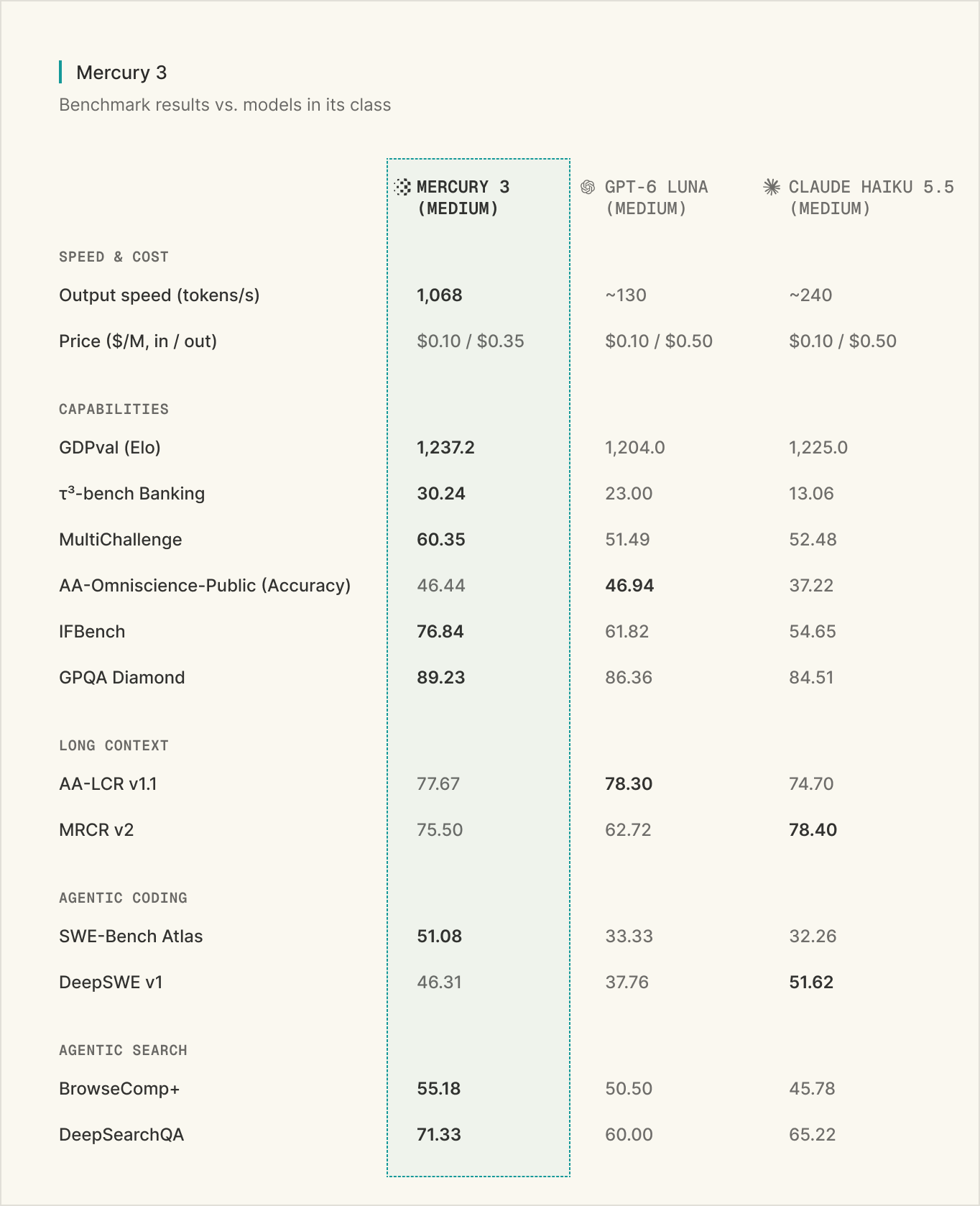
The speed figure, the 1M context, and the benchmark wins lack outside reproduction, and the exact parameter count is still missing.
The quality lead stays inside Inception's table, and the discount has no end date.
The piece should lead with the missing independent check, and the price and API are the buyer's constraints.
After inceptionlabs.ai. We did not report this. The pictures, if any, are theirs.