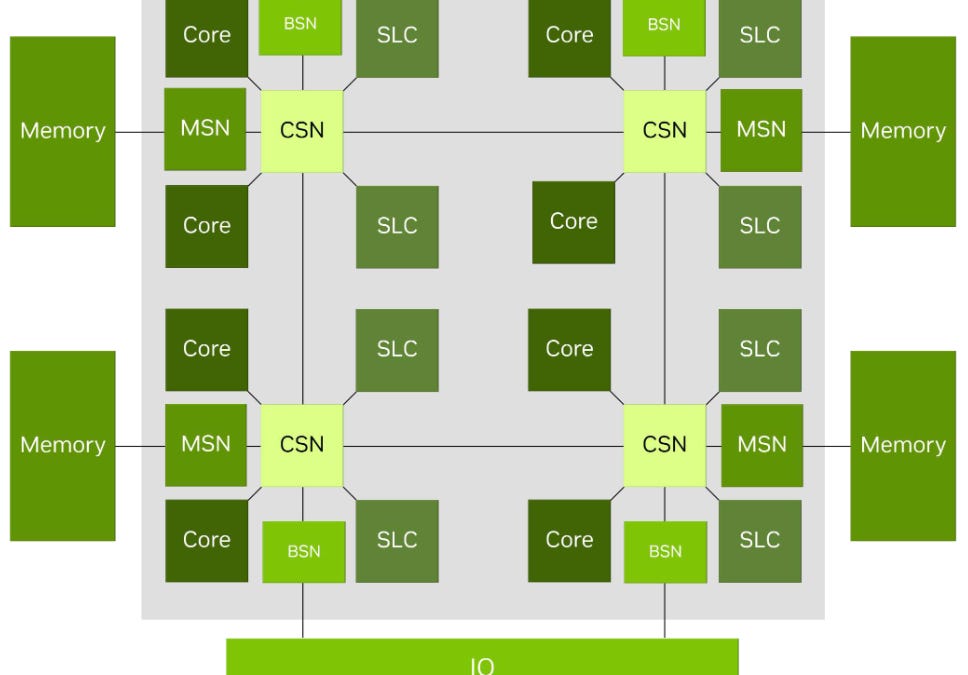
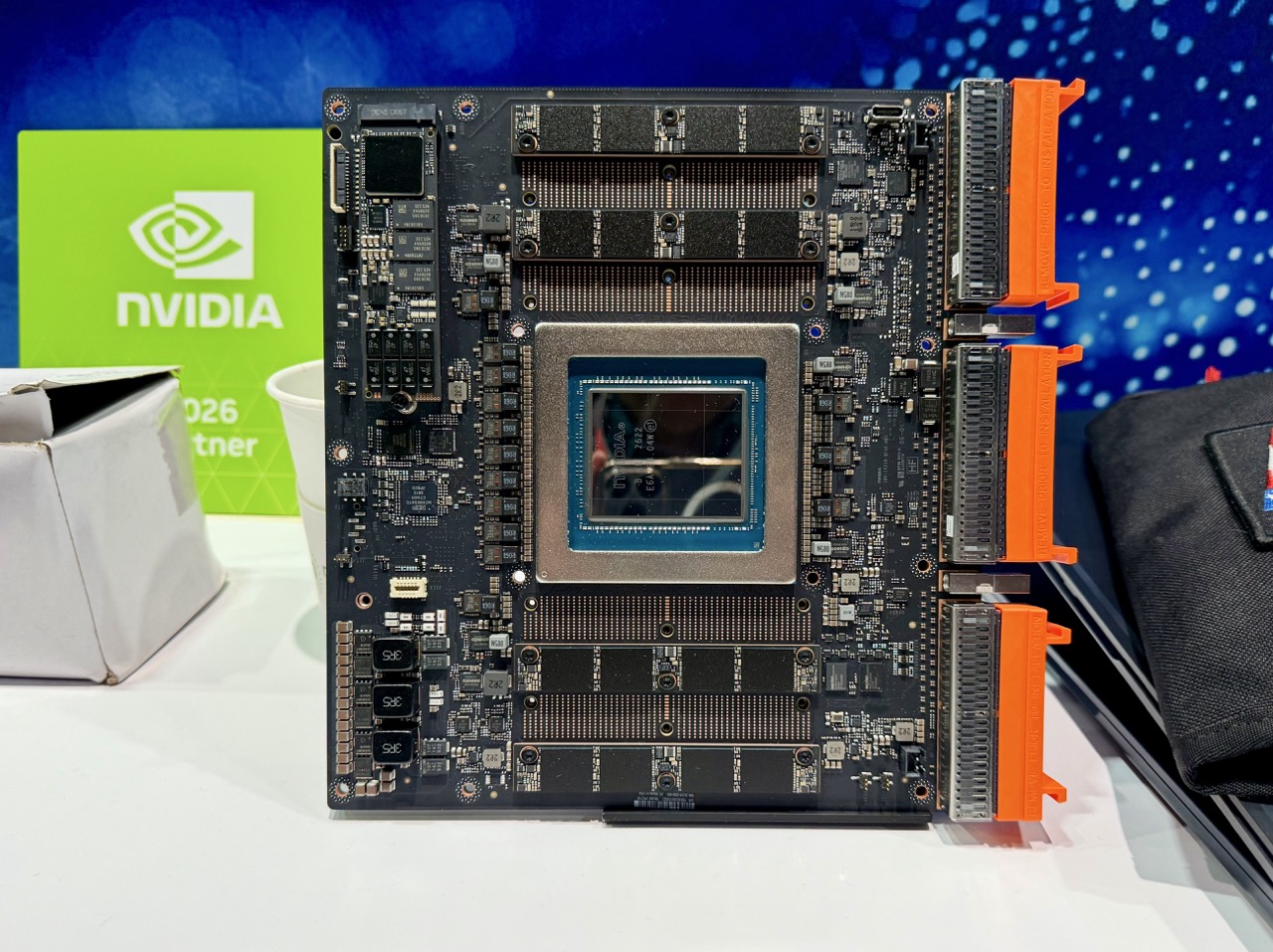
Modal's Vera claim changes the sandbox benchmark to concurrency
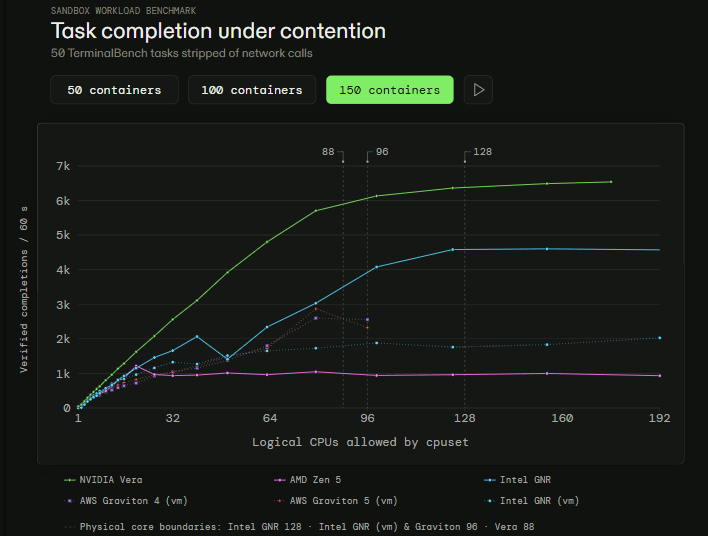
Sandbox throughput under load is the change, and Modal's Vera test counts verified tasks while extra work arrives.
| NVIDIA Vera CPU | |
|---|---|
| architecture | Arm-compatible |
| platform | Vera Rubin GPU platform |
| throughput | 2x increase |
| availability | standalone CPU server |
Modal built the Agentless Agent Bench from 50 Terminal-Bench solutions and verifiers. It covers compilation, file searching, Git operations, and device emulation.
Modal reports up to twice the throughput of an equivalent Intel Granite Rapids system. The advantage grows as more workloads arrive.
Modal ties the gain to memory bandwidth. NVIDIA's Vera offers up to 1.2 TB/s of LPDDR5X, against about 844 GB/s for Granite Rapids and 576 GB/s for Zen 5-based EPYC.
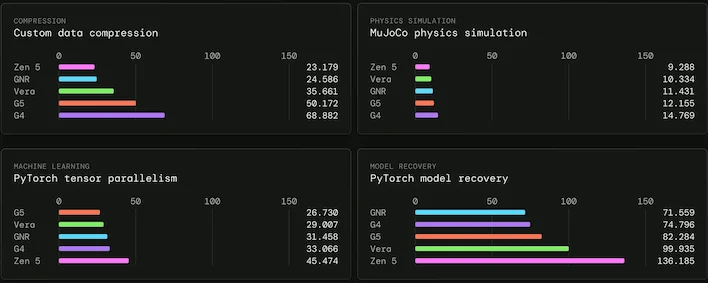
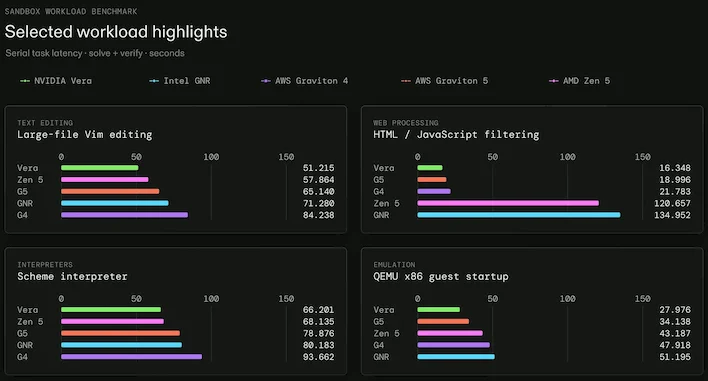
That bandwidth lets more sandbox workloads run per core without the degradation seen on competing systems. The serial latency results are mixed, with Vera sometimes finishing first but not winning every test.
The benchmark does not settle cost per sandbox, mixed-tenant degradation, or whether the gain holds outside Modal's chosen tasks.
The claim is a concurrency case for Modal's sandbox stack, not a general CPU win.
After modal.com. We did not report this. The pictures, if any, are theirs.