Spaceborne Computer 4 moves from benchmark claim to lunar power limits
FLIP's radiator budget, not a benchmark claim, sets the silicon ceiling for HPE Spaceborne Computer 4.
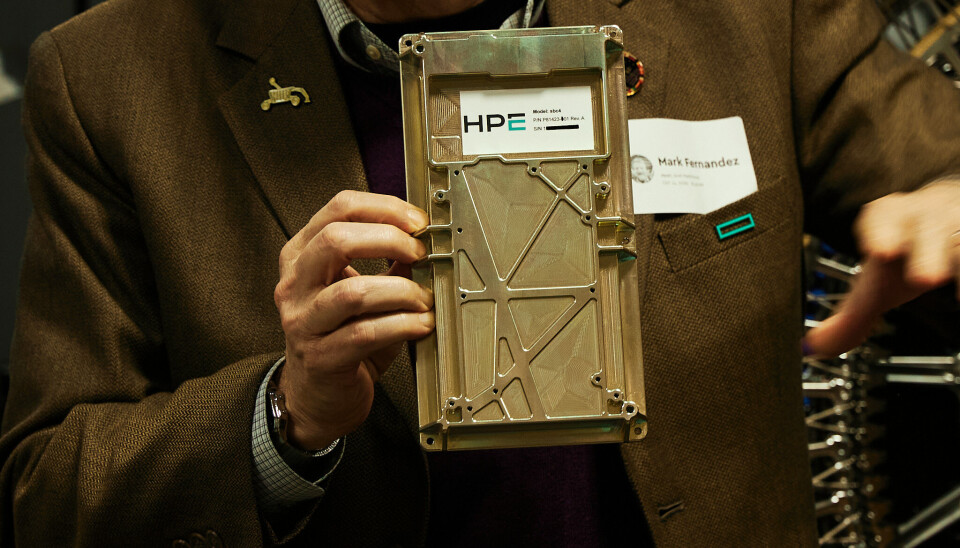
| HPE Spaceborne Computer 4 | |
|---|---|
| CPU | low-power central processing unit |
| GPU | graphics processor |
| Storage | 1 TB mirrored Kioxia SSDs |
| Size | 5x10 inches, about an inch thick |
| Launch | before the end of the year |
| Mission | year-long FLIP rover mission |
| Benchmarks | HPL and HPCG |
Mirrored Kioxia storage gives the payload 1 TB, but it does not prove the unnamed CPU or GPU can run LLM workloads.
The module's 5 by 10 inch dimensions and one inch thickness must fit FLIP's radiator budget, so power bounds the silicon choice rather than benchmark ambition.
HPE's buyer is NASA, Astrolab, and Deloitte, not a datacenter, so the fab question is whether Kioxia NAND and an unnamed low-power CPU/GPU survive lunar radiation.
The document leaves the CPU, GPU, clock, process, power draw, model size, and radiation dose unmeasured, so the lunar benchmark claim remains a launch plan rather than a silicon result.
The radiator budget, not the benchmark claim, decides the silicon.
After servethehome.com. We did not report this. The pictures, if any, are theirs.