Minisforum S5 Puts Five NVMe Slots and a 15-TOPS NPU in a Fanless Chassis at $599
Minisforum's S5 NAS ships with five PCIe 4.0 M.2 slots, a 15-TOPS INT8 NPU, and a fanless copper-pipe cooler at an introductory $599.

| Minisforum S5 | |
|---|---|
| Processor | Intel Core 3 304 (Wildcat Lake) |
| NPU | 15 TOPS INT8 |
| Memory | 12GB LPDDR5X-7467 (soldered) |
| Storage slots | 5x M.2-2280 PCIe 4.0 (up to 8TB each) |
| OS drive | 128GB UFS 3.1 |
| Price | $599 (introductory) |
Minisforum's S5 launches at $599, an introductory price the HotHardware page dated October 16, 2026, ties to the bare chassis with no NVMe drives installed. The vendor page on minisforum.com calls it a "Fanless 5-Bay All-Flash NAS." The number 599 is not a street price. The page does not say when the introductory period ends, whether it holds outside the United States, or whether the price includes a power adapter. The S5 is a new product line, not a revision of an existing mini PC, and the $599 is the starting configuration.
The $599 buys the aluminum-and-copper enclosure, the Intel Core 3 304, 12GB of soldered LPDDR5X-7467, and a 128GB UFS 3.1 drive that carries the MinisCloud OS. The 40TB figure in the headline requires five 8TB M.2-2280 PCIe 4.0 drives that the buyer sources separately. The chassis arrives with all five slots empty, and the 128GB UFS drive is the only storage on the board at the point of unboxing. The gap between the $599 chassis and the 40TB configuration is the entire cost of the storage, and the spec sheet names no recommended drive model, a per-slot price, or a total system price with drives installed. A buyer who wants the full 40TB must add the cost of five drives to the $599, and the document does not state what that total is.
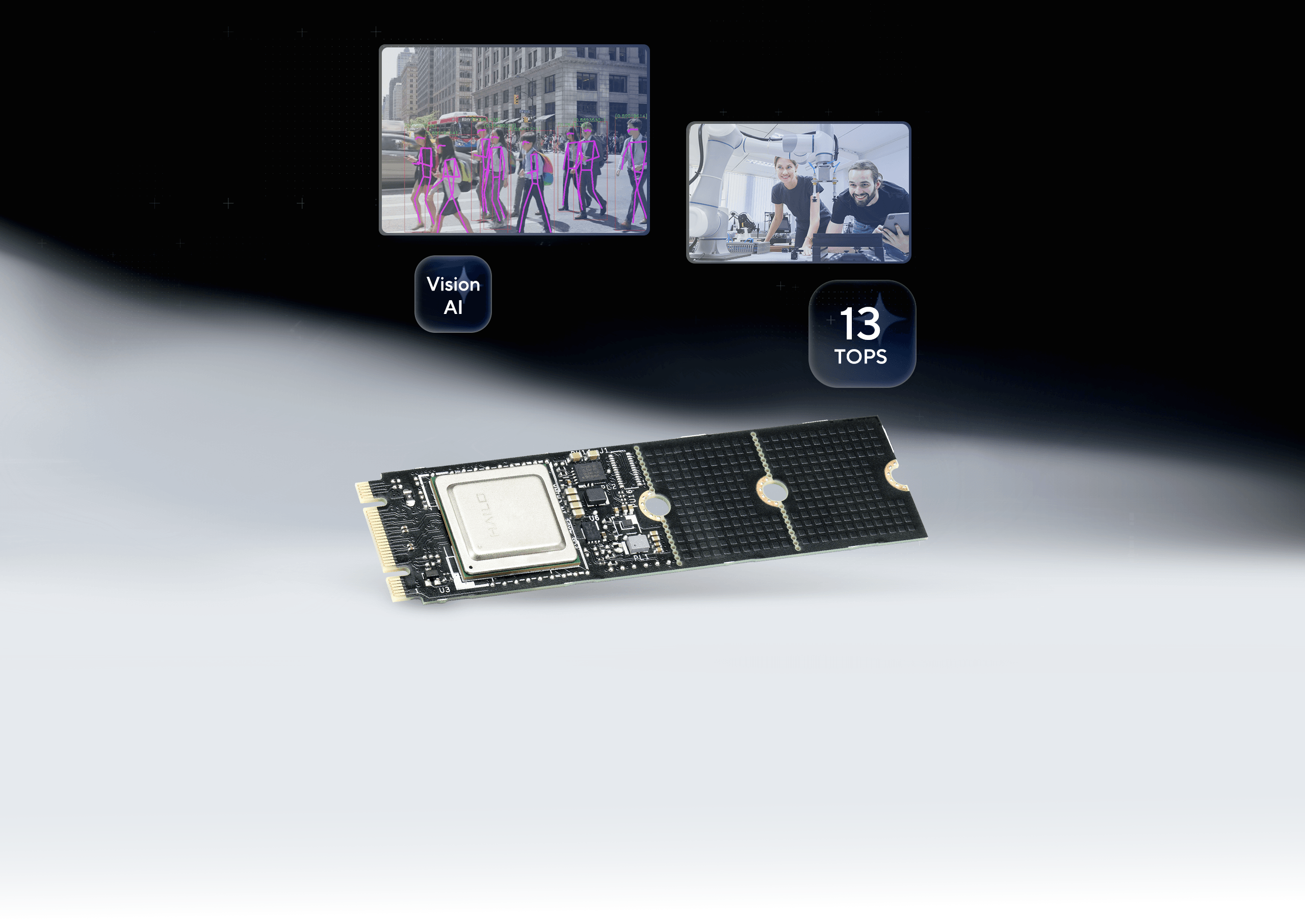
The NPU is rated at 15 TOPS INT8, a theoretical peak Intel publishes for the Wildcat Lake die. No measurement of sustained throughput appears in the packet. The 15 TOPS figure is a peak, not a sustained rate, and the page does not say whether the NPU can run a model end-to-end without falling back to the CPU or the integrated graphics at 2.3GHz. The peak is stated as INT8, which is the quantization format, and no separate figure for FP16 or FP32 inference is given.
Cooling is passive. Copper heat pipes and aluminum fin arrays carry heat from the processor and the M.2 slots to the chassis walls. No thermal design power, maximum sustained load, or noise figure in decibels appears in the packet. A fanless NAS that runs five PCIe 4.0 drives simultaneously will generate more heat than the processor alone, and the document does not say whether the fin arrays are sized for that combined load or only for the CPU. The absence of a fan means the thermal ceiling is fixed by the chassis geometry, and no maximum ambient temperature or derating curve is reported.
The 128GB UFS 3.1 drive is soldered to the motherboard and is not one of the five M.2 slots. It exists to carry the operating system and the MinisCloud software stack, keeping the NVMe slots free for user data. The separation is a design choice: the OS drive will see random I/O from the system, while the NVMe slots will see sequential or large-block I/O from the NAS workloads. No read or write speed for the UFS drive appears in the packet, and the page does not say whether the UFS lane shares bandwidth with any of the PCIe 4.0 M.2 lanes. If it does, the OS I/O could contend with the data path under load.
The network stack is asymmetric: one 10Gbps port and one 2.5Gbps port. The 10Gbps port is the primary uplink for the NAS, and the 2.5Gbps port is secondary. Two USB4 ports at 40Gbps provide an alternative high-bandwidth path for direct-attached workstations, and two USB 3.2 Type-A ports plus an internal USB 3.2 Type-A port cover peripheral and backup needs. HDMI 2.1 is present for display output. Wi-Fi 7 and Bluetooth 6.0 are on the board but are not the primary data path for a NAS. The 10Gbps port is the bottleneck for a five-drive array: five PCIe 4.0 drives can each sustain well over 10Gbps in sequential reads, so the network port will limit aggregate throughput before the drives do.
The Intel Core 3 304 is a Wildcat Lake part with one performance core clocked from 1.5 to 4.3GHz and four low-power efficient cores from 1.4 to 3.3GHz. Five cores, five threads. This is not a server-class processor. It is a low-power mobile die repurposed for a storage appliance, and the thread count limits how many concurrent file operations the system can service before the CPU becomes the bottleneck rather than the drives. The 12GB of LPDDR5X-7467 is soldered and cannot be expanded, which caps the amount of metadata, cache, and model weights the system can hold in memory.
The HotHardware page describes the S5 as a "local AI NAS," a phrase that implies the NPU can run inference workloads locally. The 15 TOPS INT8 figure supports small models, but the 12GB of soldered LPDDR5X-7467 is the memory ceiling for any model that runs on this board. A 7B-parameter model at 4-bit quantization needs roughly 4GB of weights plus KV-cache, which fits. A 13B model at 4-bit needs about 8GB, which leaves little room for context. No supported model, benchmark score, or latency figure is named. The "local AI" label is a marketing descriptor, and the document does not prove that the NPU sustains its peak under a real inference workload.
For contrast, Minisforum's MS-S1 Max-P495 lists at $2,919.90 with an AMD Ryzen AI Max+ 395, 128GB of RAM, and a 2TB SSD, a machine aimed at a different buyer entirely.
The buyer who wants 40TB of local storage at a fixed price is constrained by the fact that the $599 is a chassis price, not a system price. The document does not prove that five 8TB drives will fit thermally in a fanless enclosure, that the NPU sustains 15 TOPS under a real workload, or that the 10Gbps port can saturate five PCIe 4.0 drives simultaneously. What changes for the buyer is the entry point: a fanless, five-bay, all-flash NAS at $599 is a price that did not exist in this form before, and the constraint is now the storage cost and the thermal ceiling, not the chassis. The fab question is whether Wildcat Lake's power envelope allows five drives to run at full speed without the fin arrays hitting their limit.
The packet does not state the S5's dimensions, weight, power draw, noise level, or a SKU number. It does not report a single benchmark score, a sustained NPU throughput, or a total system price with drives installed. The 40TB figure is a capacity ceiling, not a measured throughput, and the 15 TOPS figure is a peak, not a sustained rate. The buyer who orders the S5 at $599 will receive a chassis, a processor, and an OS drive, and will have to measure the rest.
The $599 is a chassis price, not a system price, and the document does not prove that five drives run thermally in a fanless enclosure or that the NPU sustains its peak. The buyer's constraint is now storage cost and thermal ceiling, not the chassis itself.
The document does not state dimensions, weight, power draw, noise level, a SKU number, a benchmark score, or a total system price with drives installed.
The S5 decouples the storage chassis from the storage media, making the $599 a floor rather than a system price. The 10Gbps port is the aggregate throughput ceiling for five PCIe 4.0 drives, and the 12GB soldered memory caps the model size for local inference. The fanless design fixes the thermal budget at the chassis geometry, and no derating curve is published.
After proshop.no. We did not report this. The pictures, if any, are theirs.