Bee Frontier launches at $74.99 with a 14-day memory window
Bee Frontier is $74.99, a wrist-worn or clothing-pinned AI note-taking device from Amazon's Bee, with a 14-day memory window and an $11.99 monthly Pro tier.

| Bee Frontier | |
|---|---|
| price | $74.99 |
| form factor | wrist-worn or pinned to clothes |
| button count | 1 |
| memory window | 14 days |
| subscription | $11.99/month |
| colors | Onyx, Lavender, Sage |
Bee Frontier is $74.99, and the TechCrunch article published October 15, 2026 is the page that names it. It is the next-generation device from Bee, the personal AI wearable maker Amazon acquired last year, and it can be worn on the wrist or pinned to clothes. The article is the earliest source reporting the launch, and it carries no vendor press release, no spec sheet, and no benchmark.
The device has one button. It comes in Onyx, Lavender, and Sage. There is no second control, no dial, no screen mentioned in the document. The form factor is deliberately minimal, and the article does not explain what the single button does beyond implying it starts or stops a recording session. No dimensions, no weight, no description of the button's travel or actuation force appears in the packet.
The function is conversation capture. Bee listens to everyday speech and turns it into to-dos, summaries, and insights. If a user discussed making plans with friends, the device remembers the date and time and creates a calendar invite. It can take lecture notes in class or capture a care plan discussed with a doctor, and the document frames this as a memory aid rather than a transcription tool. No example of a summary output, no sample to-do, and no screenshot of the interface appears in the packet.
The free tier gives 14 days of memory and conversation summaries and recaps at no cost. That is the configuration the $74.99 price buys. The stretch is the Bee Pro subscription at $11.99 per month, which adds unlimited conversation summaries, integrations with Amazon.com and Alexa+, and third-party application connections. Pro users also receive suggested to-dos, daily memories, a personal chat assistant, and conversation templates. The free tier is not a trial period; it is a permanent configuration with a rolling 14-day window, and the document does not say what happens to data after that window closes.
The security architecture is the part of the document that reads like a spec sheet. Bee devices use what the article calls a "private computing security architecture" that does not store raw audio. Audio is processed in real time and then deleted. Transcripts are encrypted using keys that the device creates and controls, which means no one else, including Amazon employees, can access those files unless the user manually and intentionally shares them. No encryption algorithm, no key length, no processing location is named.
The integrations extend beyond the device itself. Bee works with Gmail, Google Calendar, and Microsoft Outlook to draft emails, set up meetings, and surface action items. Users can upload photos or connect the device to Apple's HealthKit to add wellness data into the insights. An optional connection to Alexa allows an Echo device to use Voice ID to recognize when the user is speaking and record conversations for Bee's insights, and Amazon notes that this aspect is optional and that users can delete transcripts and summaries at any time. Whether these integrations require the Pro subscription or are available on the free tier is not stated.

The competitive set is narrow. Plaud Note is $159, Plaud Note Pro is $189, and the Pocket AI device is $129. Bee Frontier undercuts all three by a wide margin, and the document does not attempt to explain why the price gap exists. Plaud describes itself as the world's No.1 AI note-taking brand, and its Free Starter Plan offers 300 minutes of transcription per month, which is a different unit of measurement than Bee's 14-day rolling window.
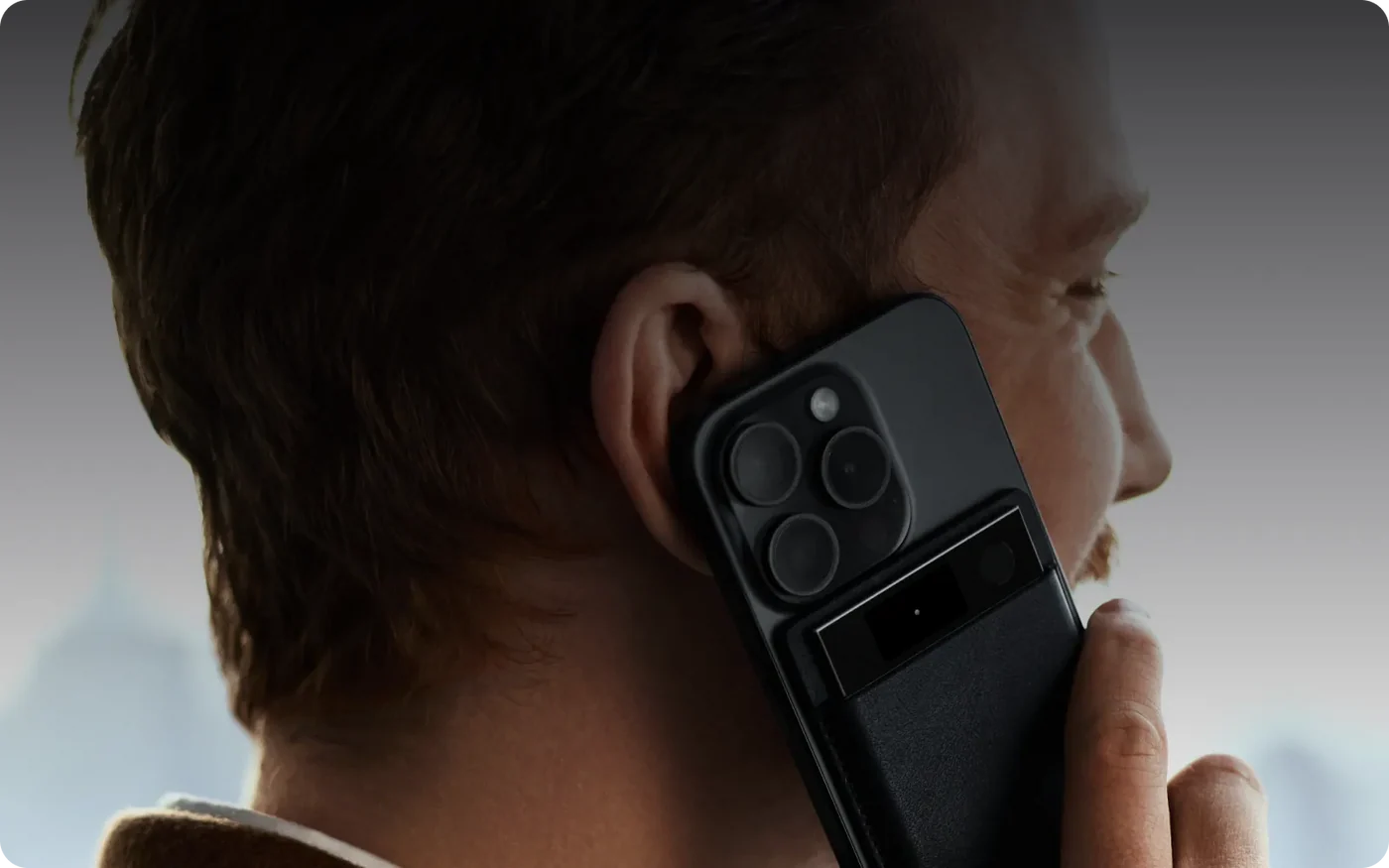
The Bee Eclipse, at $99.99, is a credit-card-sized device that magnetically attaches to the back of a smartphone. It is the other machine in this launch, and it gets its own article.
The buyer at $74.99 is constrained by a subscription model that gates the most useful features behind $11.99 per month. The free tier's 14 days of memory is a rolling window, not a storage specification, and the document does not say what happens to transcripts after that window closes. The security architecture is described in terms of what the device does not do, which is a meaningful distinction from a description of what it does. The real-time processing location is not proven to be on-device rather than in the cloud, and the phrase "private computing security architecture" is a vendor term, not a measured property. A buyer comparing this to the Plaud Note at $159 or the Pocket AI device at $129 cannot do so on any axis other than price and form factor, because the document publishes no performance figure, no latency number, and no accuracy metric. The acquisition by Amazon last year gives the device a distribution channel that Plaud does not have, but whether Bee Frontier will be sold through Amazon.com or through Bee's own store is not stated. The buyer who wants to know whether the device can handle a two-hour lecture or a four-hour meeting has no number to work with.
What is still unmeasured: battery life, weight, dimensions, storage capacity, charging time, and SKU. The document names no chip, no process node, no power figure. The gap between a launch announcement and a spec sheet is the entire story of what is missing.
The buyer at $74.99 is constrained by a subscription model that gates the most useful features behind $11.99 per month, and the document does not prove that the real-time processing happens on-device rather than in the cloud. The phrase "private computing security architecture" is a vendor term, not a measured property, and the absence of any performance figure means the buyer cannot compare Bee Frontier to Plaud Note or Pocket on any axis other than price.
The document does not state battery life, weight, dimensions, storage capacity, charging time, or SKU.
The document is a launch announcement, not a spec sheet. No chip, no process node, no power figure, no latency number, no accuracy metric. The security architecture is described in terms of what the device does not do. The 14-day memory window is a rolling window, not a storage specification. The buyer cannot evaluate this device against competitors on any technical axis.
After plaud.ai. We did not report this. The pictures, if any, are theirs.