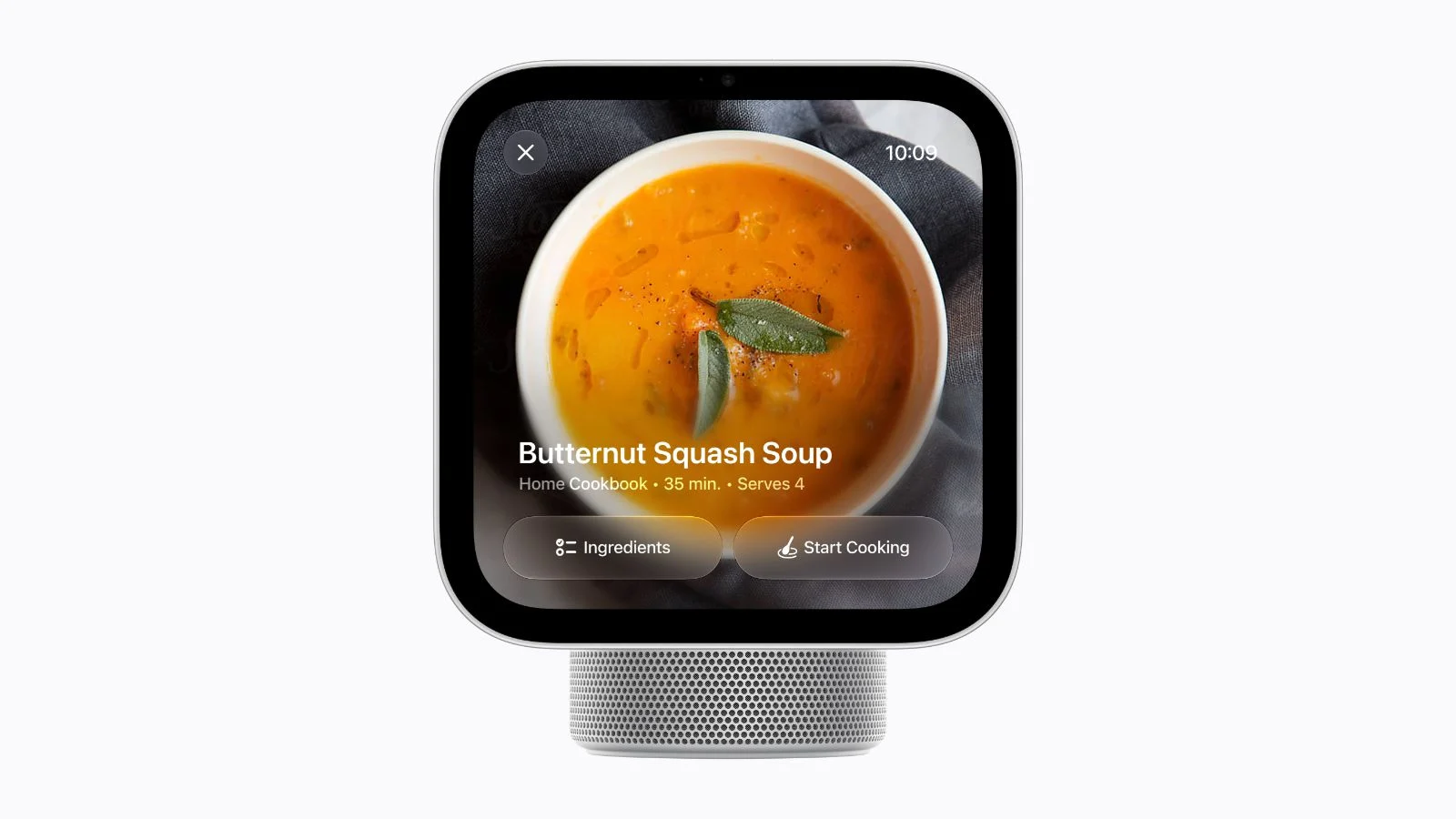
Apple HomeView ships at $299 with a 7-inch display and six-person face recognition
Apple HomeView is $299, per the Apple Newsroom press release dated October 13, 2026, and it pairs a 7-inch Liquid Retina display with facial recognition for up to six people.
| HomeView | |
|---|---|
| Display | 7-inch Liquid Retina |
| Brightness | 500 nits to 0.3 nits |
| Facial recognition | up to six people |
| Price | $299 |
| Availability | November 13, 2026 |
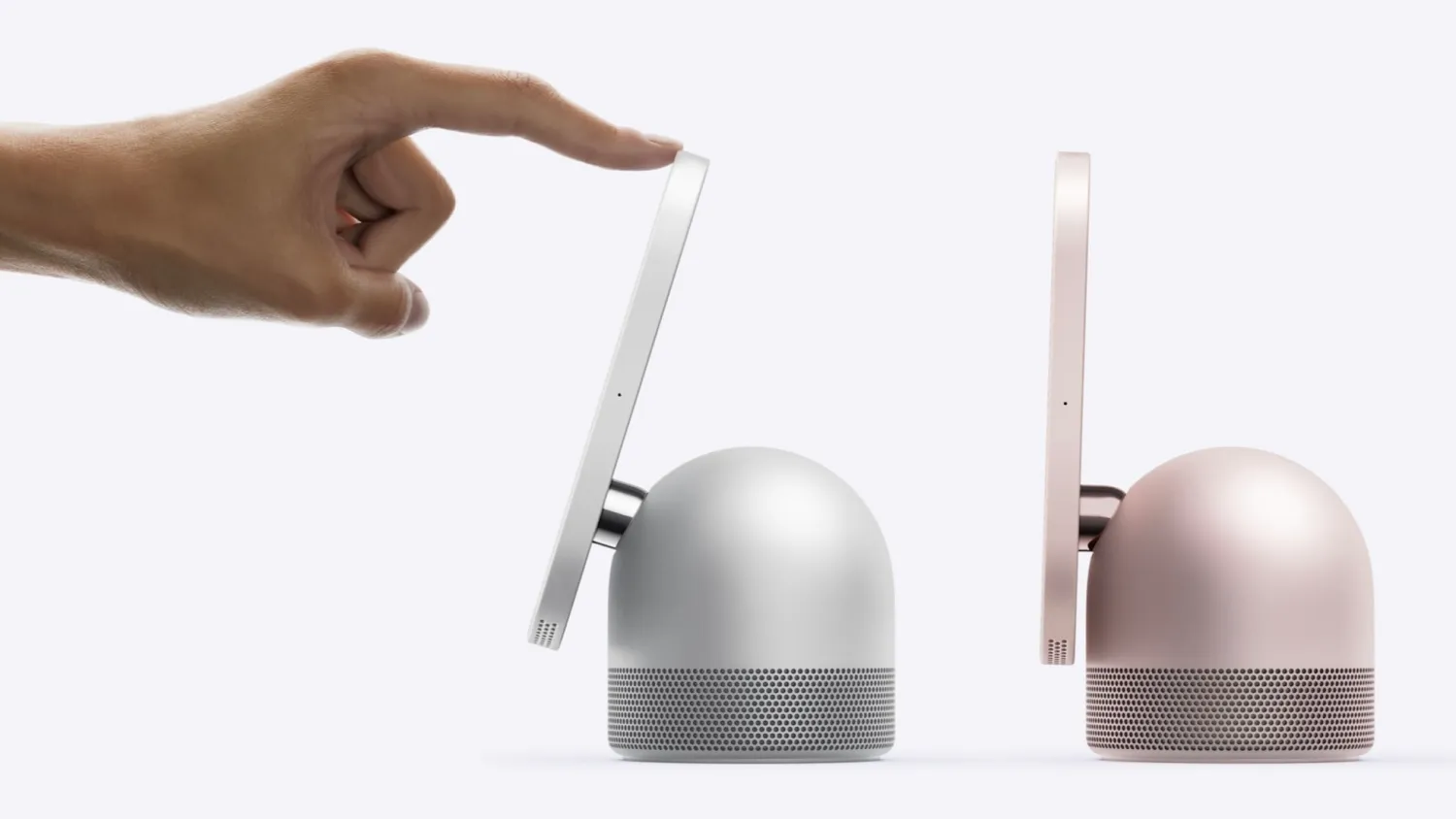
| Finishes | silver, starlight, rose pink, space gray |
Apple's HomeView is $299, per the Apple Newsroom press release dated October 13, 2026. That price buys a 7-inch Liquid Retina display, a domed speaker base, a stainless steel hinge, facial recognition for up to six people, and a Center Stage camera for FaceTime. Pre-orders opened the same day; first units ship November 13. The document names four finishes: silver, starlight, rose pink, and space gray, each with a matching cable.
The display is the most specified component in the document. It is a 7-inch square Liquid Retina panel with True Tone. Automatic brightness ranges from 500 nits at the top to 0.3 nits at the floor. The 0.3-nit floor is the number that matters for a nightstand placement, and Apple calls it out explicitly in the release. The document does not state the resolution, the refresh rate, or the panel technology beyond the name Liquid Retina.
The chassis is aluminum. A domed speaker base connects to the display through a stainless steel hinge that provides a smooth tilt. The document does not state the weight, the dimensions, or the speaker count. The USB-C cable is color-matched to the finish. The document does not say whether the cable is detachable or fixed to the base.
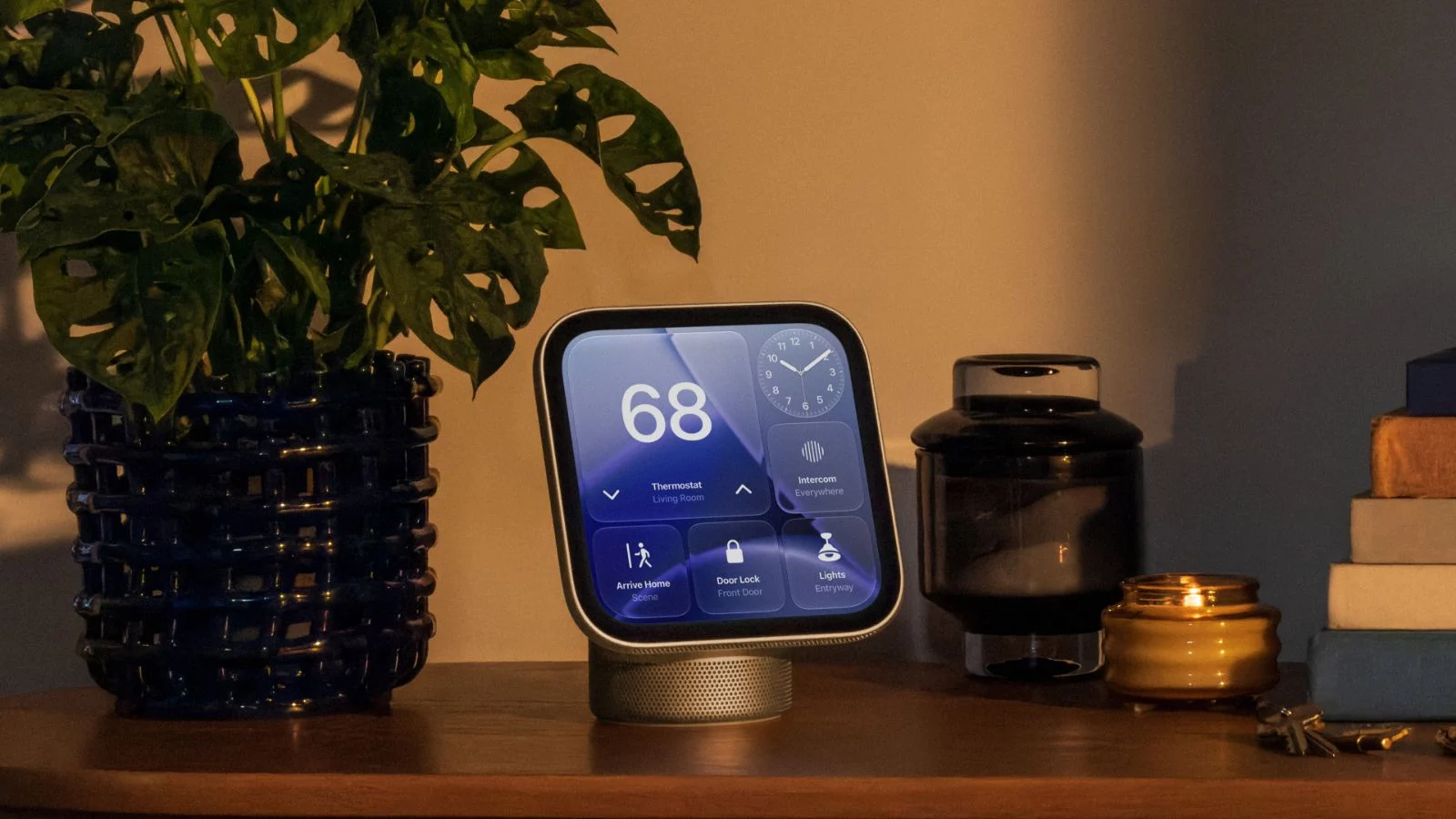
Facial recognition is the defining interaction. HomeView recognizes up to six people and shifts the interface to their personal content in Messages, FaceTime, Calendar, Reminders, and Find My. Each person gets their own Home Screen, apps, and widgets. The document does not name the camera resolution, the recognition method, or the latency of the face match. It says only that HomeView recognizes users by their faces.

Siri AI is the software layer. Apple describes it as an entirely new version of Siri that is profoundly more capable and conversational, with broad world knowledge that powers richer music discovery and onscreen awareness. When paired with an Apple Intelligence-enabled device, it draws on personal context from Calendar, Messages, and relevant information across apps. The document does not specify which chip runs this on HomeView. The processor is not named anywhere in the release.
The interface adjusts based on the user's distance. From across the room, it shows simpler information that is viewable from a distance. Up close, it shows more detail. This is a proximity-based UI, not a fixed layout. The document does not state the sensing method, the distance thresholds, or whether the adjustment is continuous or stepped.
Placement is tabletop or wall-mounted. The document names kitchen counter, nightstand, and side table as intended surfaces. The wall-mount option is for entryways and hallways. The hinge tilt is for tabletops of varying heights. The document does not state the wall-mount hardware or whether it is included in the box.
The Apple TV 4K (4th Generation) launched the same day at the same $299 price, with an A19 chip and a 50 percent faster CPU and 2x faster GPU over the previous model. That is the only other machine in the packet that shares the price point, and it is the only one with a named processor.
The 9to5Mac wire headline reads HomeView, Apple TV 4K, and more now available for Amazon pre-order. The wire treats HomeView as a pre-order event and bundles it with the Apple TV 4K and the HomePod mini 2. The Apple Newsroom document treats HomeView as a product introduction with a full configuration. The wire does not mention the 0.3-nit floor, the six-person facial recognition, or the distance-based interface.
The buyer who pays $299 for HomeView gets a display, a speaker, and a face reader. What they do not get is a specification for the processor, the camera, the speaker array, or the microphone count. Apple has shipped a product whose compute layer is entirely unmeasured. The constraint is not the price. The constraint is that the document proves the display and the face recognition, but not the silicon that runs them. A buyer who needs to know whether HomeView can run a local model, or whether the camera feeds a neural engine, cannot answer that question from this page. The Apple TV 4K at the same price names its chip and its performance delta. HomeView names neither.
The processor, the camera resolution, the speaker count, the microphone count, the weight, and the dimensions are all absent from the document. None of these figures appear in the Apple Newsroom release or in any page in the packet.
Apple has shipped a product whose compute layer is entirely unmeasured. The document proves the display and the face recognition, but not the silicon that runs them, and a buyer who needs to know whether HomeView can run a local model cannot answer that question from this page.
The processor, camera resolution, speaker count, microphone count, weight, and dimensions are not stated in the Apple Newsroom release or in any page in the packet.
The HomeView press release specifies the display, the chassis, the facial recognition, and the software layer, but omits the processor, camera resolution, speaker count, microphone count, weight, and dimensions. The Apple TV 4K at the same price point names its A19 chip and states a 50 percent CPU and 2x GPU delta. HomeView names no chip. The architectural consequence is that the compute path for Siri AI and facial recognition is unverified from the primary document.
After apple.com. We did not report this. The pictures, if any, are theirs.