Nvidia's RTX page still lists the 5090 as active flagship
The nvidia.com GeForce RTX page lists the RTX 5090 in two 4K configurations and names no other 50 Series SKU, no halt, and no 24 GB 5080.
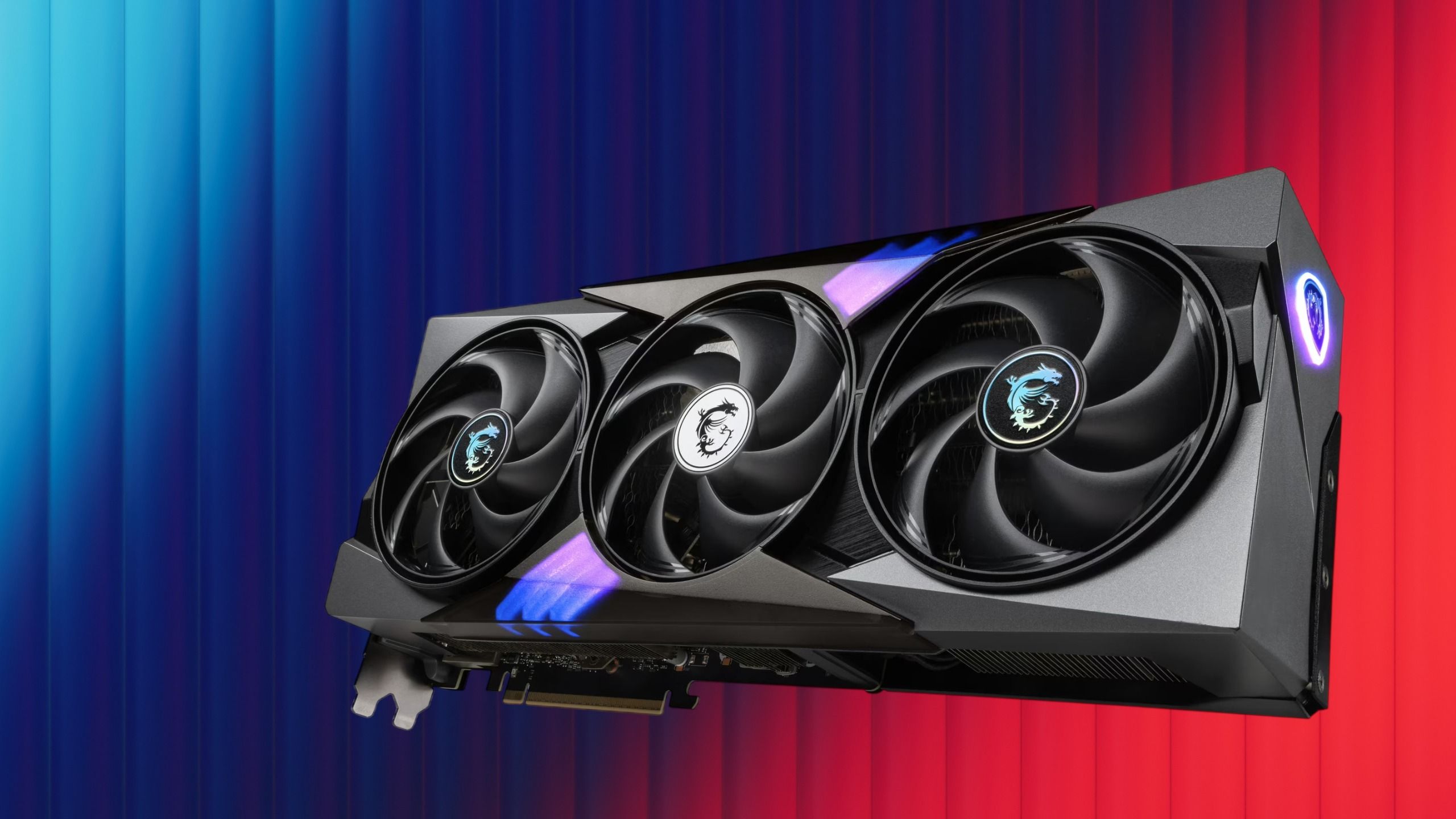
| GeForce RTX 5090 | |
|---|---|
| Architecture | Blackwell |
| RT Cores | Fourth-gen |
| Tensor Cores | Fifth-gen |
| Resolution (listed config) | 4K |
| Multi Frame Generation | Up to five frames per rendered frame |
| DLSS | DLSS 5 with 3D-Guided Neural Rendering |
The nvidia.com GeForce RTX page lists the GeForce RTX 5090 in two 4K configurations. The first pairs Max Settings with DLSS 3D-Guided Neural Rendering, Multi Frame Generation, and Super Resolution. The second pairs RT Overdrive with Multi Frame Generation in 6X Mode and Super Resolution in Performance Mode. That page is the origin for this event. It is a vendor storefront, not a supply-chain filing, and it does not mention a production halt, a supply shift, or any SKU other than the 5090.
The architecture is Blackwell. Fourth-gen RT Cores handle path tracing; fifth-gen Tensor Cores drive the neural rendering pipeline. DLSS 5 introduces 3D-Guided Neural Rendering, which the page describes as using AI to infuse game scenes with lifelike lighting and materials. Developers tune the final output for each game to bring their artistic vision to life, the page says. Dynamic Multi Frame Generation produces up to five frames per rendered frame. Super Resolution and Ray Reconstruction boost FPS by reconstructing high-resolution images from a lower resolution input. Over 1,000 titles and applications are listed as using RTX. The page names CONTROL, Gears of War: E-Day, Resident Evil Requiem, and 007 First Light as current RTX titles. CONTROL uses path tracing and DLSS 4.5. Gears of War: E-Day uses DLSS 4.5, Ray Tracing, RTX Mega Geometry, and Reflex. Resident Evil Requiem is the ninth title in the mainline series and uses path tracing and DLSS 4.
The page proves that Nvidia still markets the 5090 as the active flagship and that the 50 Series carries fourth-gen RT and fifth-gen Tensor hardware. The rumor, as filed by Tom's Hardware, names no fab node, no wafer allocation figure, and no date. The vendor page is silent on all three. If the halt is real, the constraint falls on the consumer buyer, not the fab. The 5090's two listed configurations both assume a 4K display and a full DLSS stack. A buyer who purchased on the assumption that the 5090 remains the ceiling for path-traced gaming would find the ceiling moved to a SKU the page does not name. The page's own language frames the 5090 as the current reference point for both configurations, which is a marketing posture, not a supply commitment.
No price, no wattage, no driver version, no release date, and no measured FPS benchmark appear in the packet. The page does not name any RTX 50 Series SKU other than the 5090. The fab question is whether Blackwell consumer wafers are being re-routed to data-center SKUs, but the page gives no yield, no power figure, and no TDP to test that against.
The vendor page is a marketing surface, not a supply document, and its silence on the halt is not evidence against it. The buyer's risk is that the 5090's two listed configurations assume a product that may no longer be in production, while the page still presents it as the reference point.
No price, no wattage, no driver version, no release date, no measured FPS benchmark, and no fab node appear in the packet.
The nvidia.com RTX page is a storefront. It confirms the 5090 is still listed with two 4K DLSS configurations and Blackwell architecture with fourth-gen RT and fifth-gen Tensor cores. It does not confirm or deny a production halt. The rumor from Tom's Hardware names no fab node, no wafer figure, and no date. The page gives no TDP, no yield, and no price to test the supply-shift claim against.
After nvidia.com. We did not report this. The pictures, if any, are theirs. Also filed by Wccftech, videocardz.com, Tom's Hardware.