ProArt GR1X: a mini PC with no price and no bandwidth
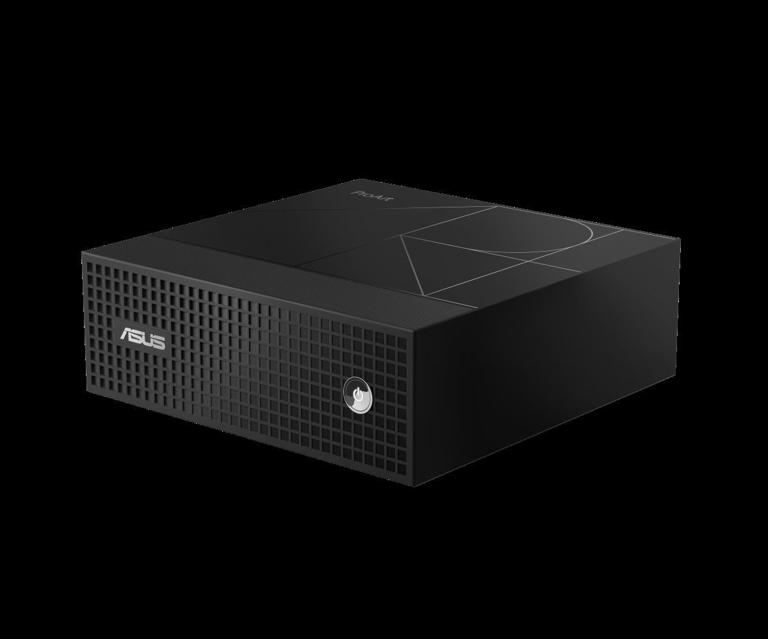
The TechPowerUp filing of October 7, 2026, names the ProArt GR1X as a compact mini PC on NVIDIA RTX Spark and lists no price, no dimensions, and no configuration tier.
| ProArt GR1X | |
|---|---|
| Form factor | mini PC |
| Platform | NVIDIA RTX Spark |
| GPU | Blackwell RTX, up to 6,144 CUDA cores |
| CPU | NVIDIA Grace, up to 20 cores |
| AI peak | up to 1 petaflop FP4 |
| Memory | up to 128 GB unified |
ProArt GR1X is the vendor number, and the TechPowerUp press release of October 7, 2026, lists no price for it. The filing names the GR1X as a "compact ProArt GR1X mini PC" powered by NVIDIA RTX Spark, alongside the P16 and P14 laptops. No configuration tier, no starting SKU, no dollar figure appears anywhere on the page. The buyer walks in with a product name and a platform, and nothing else. The ASUS global page confirms the GR1X exists as a product line, but the Canadian business pages that carry the P16 and P14 spec sheets have no equivalent page for the mini PC.
The RTX Spark superchip pairs an NVIDIA Blackwell RTX GPU with up to 6,144 CUDA cores against an NVIDIA Grace CPU with up to 20 cores. The two sit on a single package connected by NVLink-C2C interconnect, and the GPU carries fifth-generation Tensor Cores that accept FP4 data. The document does not name the exact GPU model or the exact CPU model. It calls them "Blackwell RTX" and "Grace" and stops there. The architecture is Arm-based, which the P16 page notes in passing when it describes the design as power-efficient. The GR1X inherits this Arm base, but the filing does not confirm whether the Grace core count in the mini PC matches the laptop ceiling of 20.
The headline number is one petaflop of FP4 AI performance. That is a theoretical peak, not a measurement. The ASUS product page for the P16 repeats the figure, and the TechPowerUp filing repeats it again, but no benchmark, no sustained-clock test, no thermal-throttle curve accompanies it. The document does not state whether the petaflop figure assumes sparsity, and it does not say what clock speed or power envelope produces it. A petaflop of FP4 on paper is a different object from a petaflop of FP4 under a constrained desktop fan. The filing says "up to 1 petaflop," which is the same hedging language ASUS uses for memory and core counts.
Up to 128 GB of unified memory is the other headline. The document says "up to," which means the GR1X may ship in a lower-memory configuration, but no lower tier is named. The memory bandwidth figure is absent from every page in the packet. Without it, the buyer cannot calculate tokens per second.
The stretch between the starting configuration and the headline number is undefined. The filing does not name a floor. It does not say whether the GR1X ships with 32 GB, 64 GB, or 128 GB of unified memory, or whether the 6,144-core GPU is the ceiling or the floor. The buyer who wants the petaflop and the 128 GB is buying the top of a range whose bottom is not printed.
The GR1X is the desktop form factor in a three-product launch. The P16 and P14 are laptops, 12.9 mm and 13.9 mm thin respectively, and they carry the same RTX Spark silicon. The mini PC drops the battery, the OLED panel, and the chassis constraints that define the laptop versions, but the filing gives no dimensions, no weight, no power draw for the GR1X specifically. The P16 page mentions a 99.9 Wh battery and a 4K OLED panel; the P14 page mentions a 90 Wh battery and a 3K OLED panel. The GR1X page does not exist in the packet.
The TechPowerUp filing is a press release, and it collapses three products into one announcement without differentiating the GR1X's specific configuration from the laptops. The filing quotes Dillon Rolnick of Nous Research and Yoland Yan of Comfy, both of whom speak about "ProArt RTX Spark PCs" as a single category. No desk in the packet isolates the GR1X's thermal envelope, its power connector, or its chassis volume. The filing treats the mini PC as a footnote to the laptops, and the ASUS global page reinforces that by listing all three under a single heading.
Die Brief's judgment: the buyer of a GR1X is constrained by the absence of a price, a configuration tier, and a memory bandwidth figure. It does not prove that the petaflop peak is achievable at the GR1X's power budget, because the power budget is not stated. The buyer cannot know whether the "up to" language means the GR1X starts at 64 GB or 32 GB, or whether the 6,144-core GPU is the ceiling or the floor. The fab question is whether NVLink-C2C bandwidth in a desktop chassis matches the laptop implementation, and the document does not address it.
What is still unmeasured: the GR1X's price, its exact GPU and CPU model names, its memory bandwidth, its power consumption, its chassis dimensions, and whether the petaflop FP4 peak assumes sparsity. The document left all of these out.
The GR1X is a platform demo with no price, no bandwidth, and no configuration floor, so the buyer cannot separate the ceiling from the starting SKU.
The GR1X's price, memory bandwidth, power draw, chassis dimensions, and whether the petaflop FP4 peak assumes sparsity are not stated in any page in the packet.
The filing treats the GR1X as a form-factor variant of the same RTX Spark package, but provides no GR1X-specific thermal, power, or memory-bandwidth data. Without bandwidth, the 128 GB unified memory figure is a capacity claim, not a throughput claim, and the petaflop FP4 peak is unverifiable at the desktop power envelope.
After bsky.app. We did not report this. The pictures, if any, are theirs. Also filed by TechPowerUp, ComputerBase, press.asus.com.