ProArt P16 carries 128 GB unified memory at no listed price
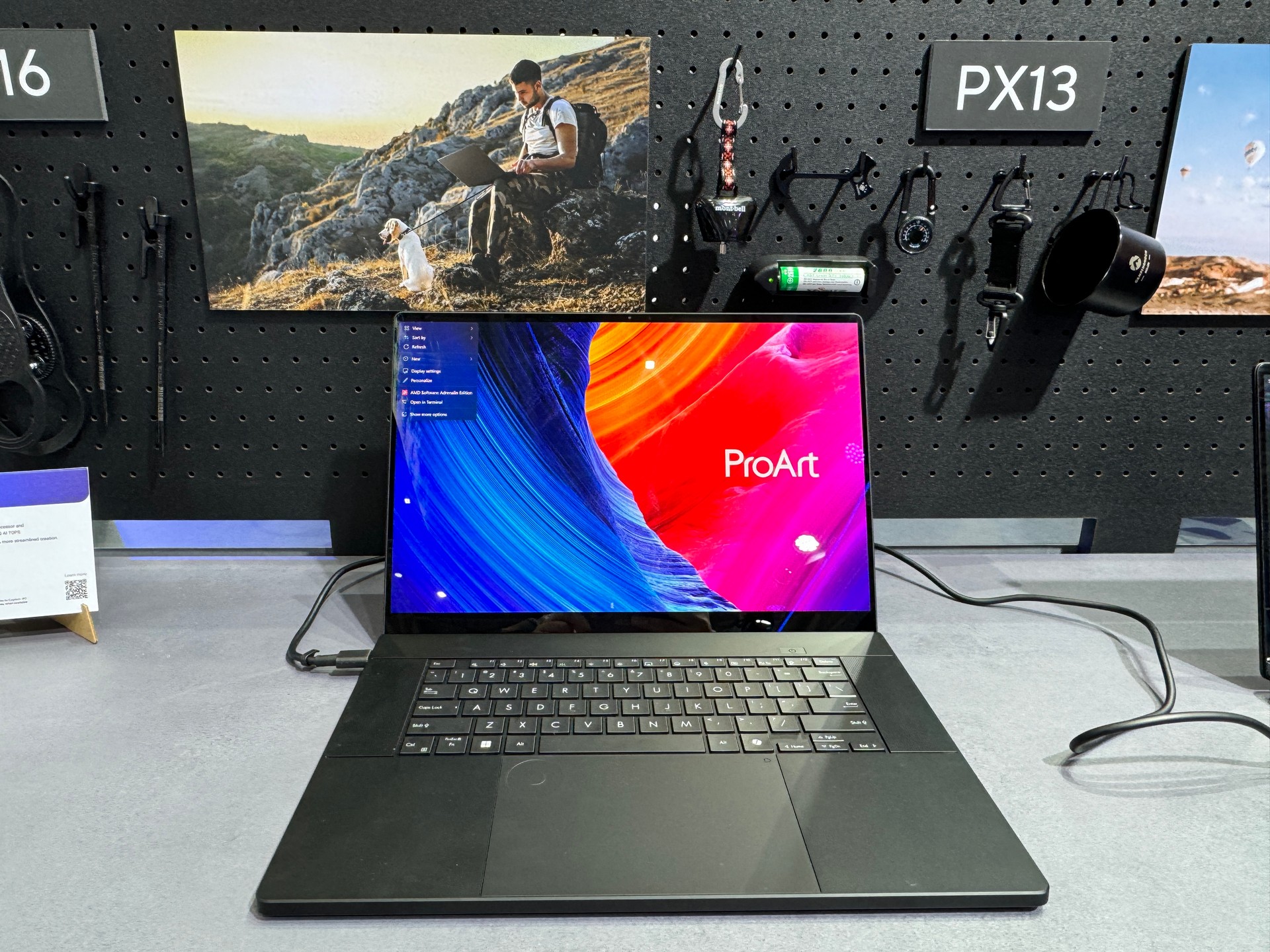
The ProArt P16 (H7607) lists up to 128 GB unified memory and a 1 petaflop FP4 peak on the ASUS Canada page, but carries no price and no base configuration.
| ProArt P16 (H7607) | |
|---|---|
| GPU | Up to 6,144 CUDA cores (Blackwell) |
| CPU | Up to 20 cores (Grace, Arm) |
| Memory | Up to 128 GB unified |
| AI peak | Up to 1 petaflop FP4 |
| Battery | Up to 99.9 Wh |
| Thickness | 12.9 mm |
| Weight | 1.77 kg |
| Display | 4K OLED (Lumina Pro) |
The ProArt P16, vendor number H7607, carries no listed price on the ASUS Canada product page where its full specification sheet is published. The page at asus.com/ca-en/laptops/for-creators/proart/proart-p16-h7607/ states the configuration ceiling but not the floor, and the absence of a price means the buyer cannot anchor a starting configuration against a headline number. The page names Windows 11 Home as the operating system and lists the unit as available in Nano Black and Neo White, but it does not name a SKU tier, a memory tier, or a launch date beyond the wire article's October 7, 2026 timestamp. It does, however, state that the unit is 14 percent thinner and 9 percent lighter than the previous generation, which is a relative claim that implies a prior product existed with measurable dimensions.
The headline figure is a theoretical peak: up to 1 petaflop of FP4 AI performance. The page does not qualify that peak with sparsity, a specific clock condition, or a sustained-load measurement. It is a silicon ceiling produced by the fifth-generation Tensor Cores, not a number a user will observe in a task manager or a benchmark suite. A measurement would require a fixed workload at a fixed clock, and the document provides neither. Without a clock value, the peak is a design target, not a measured throughput.
NVIDIA RTX Spark is the superchip designation that unites a Blackwell RTX GPU with up to 6,144 CUDA cores against a 20-core Arm-based Grace CPU. The two die halves are joined by NVLink-C2C interconnect, which replaces the PCIe path that normally separates a discrete GPU from system memory. The fifth-generation Tensor Cores are the unit that produces the FP4 peak, and the unified memory pool tops out at 128 GB, shared between CPU and GPU workloads rather than split into discrete frames. The architecture is power-efficient by design, which is why ASUS pairs it with a 99.9 Wh battery in a 12.9 mm chassis. The NVLink-C2C link is the same interconnect family NVIDIA uses in its data-center Grace Hopper and Grace Blackwell platforms, and its presence in a laptop is a packaging decision that moves the memory controller closer to the compute die. The Arm-based Grace CPU means the system does not carry a traditional x86 core complex, which changes the software compatibility story for applications that assume an Intel or AMD instruction set.
That 128 GB figure is the number that changes what a laptop can hold in memory. The page states that the ProArt P16 supports LLMs with up to 120 billion parameters and a 1-million-token context window. A 120-billion-parameter model at FP4 quantization occupies roughly 60 GB of weights, leaving headroom for KV cache and activations within the 128 GB pool. The page also references 1,000+ accelerated apps, tools, and games that run on the CUDA stack, which is the software layer that makes the unified memory addressable by both the Grace CPU and the Blackwell GPU without a copy. The practical consequence is that a creator can load a large model, a video pipeline, and a 3D scene simultaneously without swapping to disk. The wire article frames this as a replacement for cloud dependency, but the document does not measure inference throughput or latency, so the claim remains architectural rather than empirical.
The chassis is 1.77 kg, a 16-inch form factor ASUS describes as 14 percent thinner and 9 percent lighter than the previous ProArt generation. The display is a 4K OLED panel branded Lumina Pro, with a Delta E rating the page references but does not quantify in the visible text. The unit ships in Nano Black and Neo White, both finished with a sandblasting process the page calls fingerprint-resistant. The 99.9 Wh battery is the largest capacity ASUS has placed in a ProArt laptop, and it is the constraint that will determine whether the 6,144-core GPU can sustain its peak or must throttle under a sustained AI workload.
Every figure on the page carries the qualifier "up to." The 128 GB, the 6,144 cores, the 20 Grace cores, the 1 petaflop peak—all are ceiling values. The document does not state what the base configuration includes, what the starting SKU ships with, or whether a lower-memory variant exists at a lower price point. A buyer cannot tell from this page whether 128 GB is the only option or the top of a range. The absence of a price makes that ambiguity worse, because the buyer cannot estimate the delta between a 64 GB and a 128 GB configuration. The page functions as a capability statement, not a product listing.
The packet does not contain a filing from ComputerBase, the other desk that covered this launch, so Die Brief cannot say what that desk collapsed or misstated. The wire article from TechPowerUp, dated October 7, 2026, restates the same ceiling figures without adding a measurement or a price. It quotes Dillon Rolnick of Nous Research and Yoland Yan of Comfy, both of whom describe the memory capacity as enabling local model execution, but neither quote contains a benchmark or a price.
The judgment is this: the buyer is constrained by the absence of a price and the absence of a base configuration. The document proves that the silicon can reach 1 petaflop in FP4 and that the memory pool can hold 128 GB, but it does not prove that a consumer will receive both at the starting price. What changes for the fab is that NVLink-C2C in a laptop chassis is a packaging decision that has not been widely tested at scale in a mobile form factor, and the 99.9 Wh battery constraint will determine whether the 6,144-core GPU can sustain its peak or must throttle. The buyer still cannot know the thermal envelope, the sustained clock, or the price. The document is a capability ceiling, and the buyer is left to infer the floor.
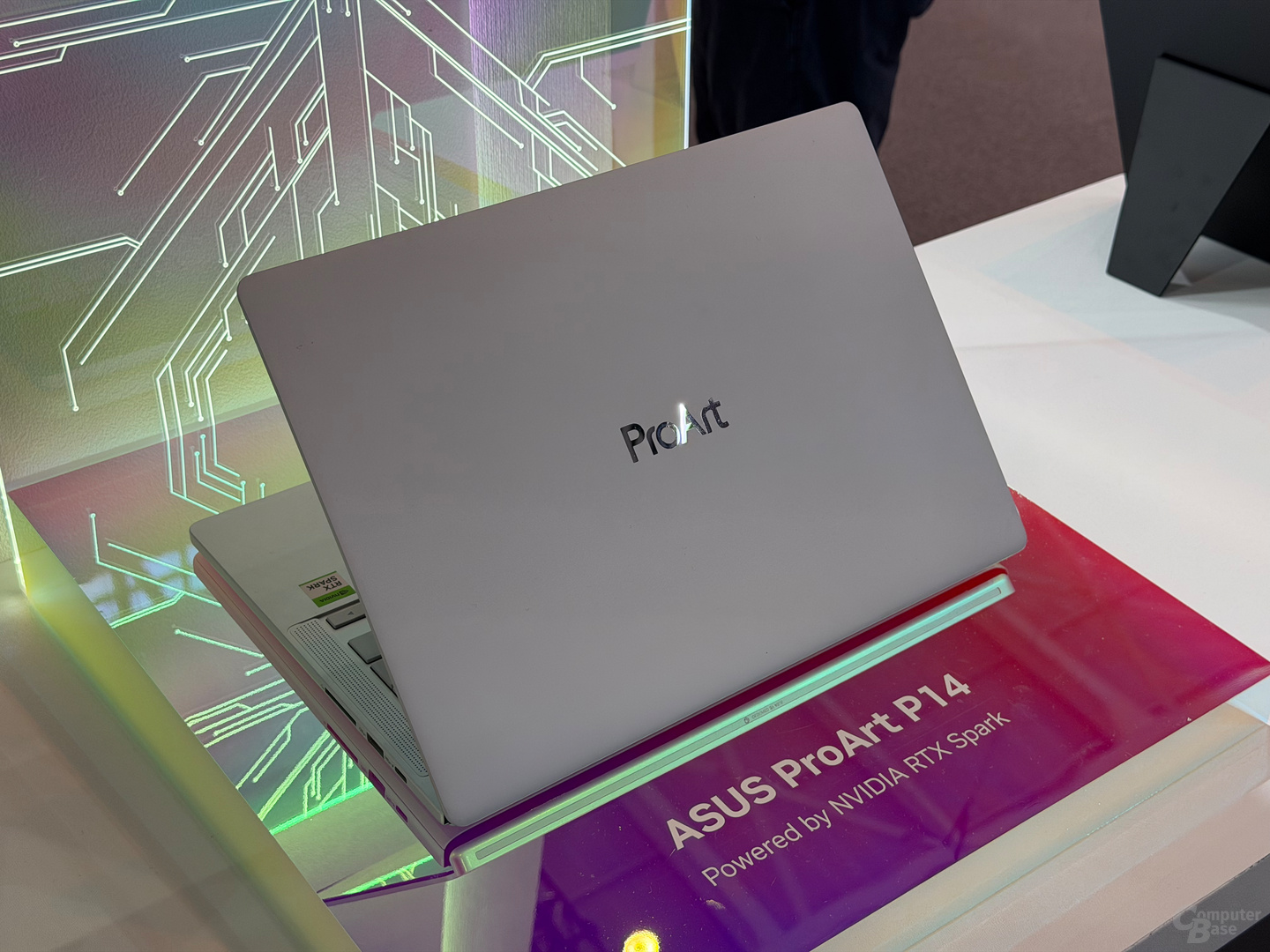
The ProArt P14, vendor number H7407, is the 14-inch sibling at 1.48 kg and 13.9 mm, but it is a separate machine and gets its own article.
What is still unmeasured: no sustained-clock benchmark, no thermal throttling data, no price, no base configuration, no Delta E value, and no power draw figure appear in any document in the packet. The 1 petaflop is a peak, the 128 GB is a ceiling, and the buyer is left to infer the rest.
The buyer is constrained by the absence of a price and a base configuration; the document proves a ceiling but not a floor. NVLink-C2C in a 12.9 mm chassis is a packaging decision whose thermal and power behavior remains unmeasured.
No sustained-clock benchmark, thermal throttling data, price, base configuration, Delta E value, or power draw figure appears in any document in the packet.
The 128 GB unified pool and 6,144-core Blackwell GPU are ceiling values. Without a sustained-clock benchmark or a price, the buyer cannot determine whether the starting SKU delivers the headline configuration or a lower tier.
After bsky.app. We did not report this. The pictures, if any, are theirs. Also filed by TechPowerUp, ComputerBase.