Nano Banana 2 Lite and Gemini Omni Flash named without figures
The DeepMind blog page names Nano Banana 2 Lite and Gemini Omni Flash and provides no parameters, no context window, no price, and no benchmark.
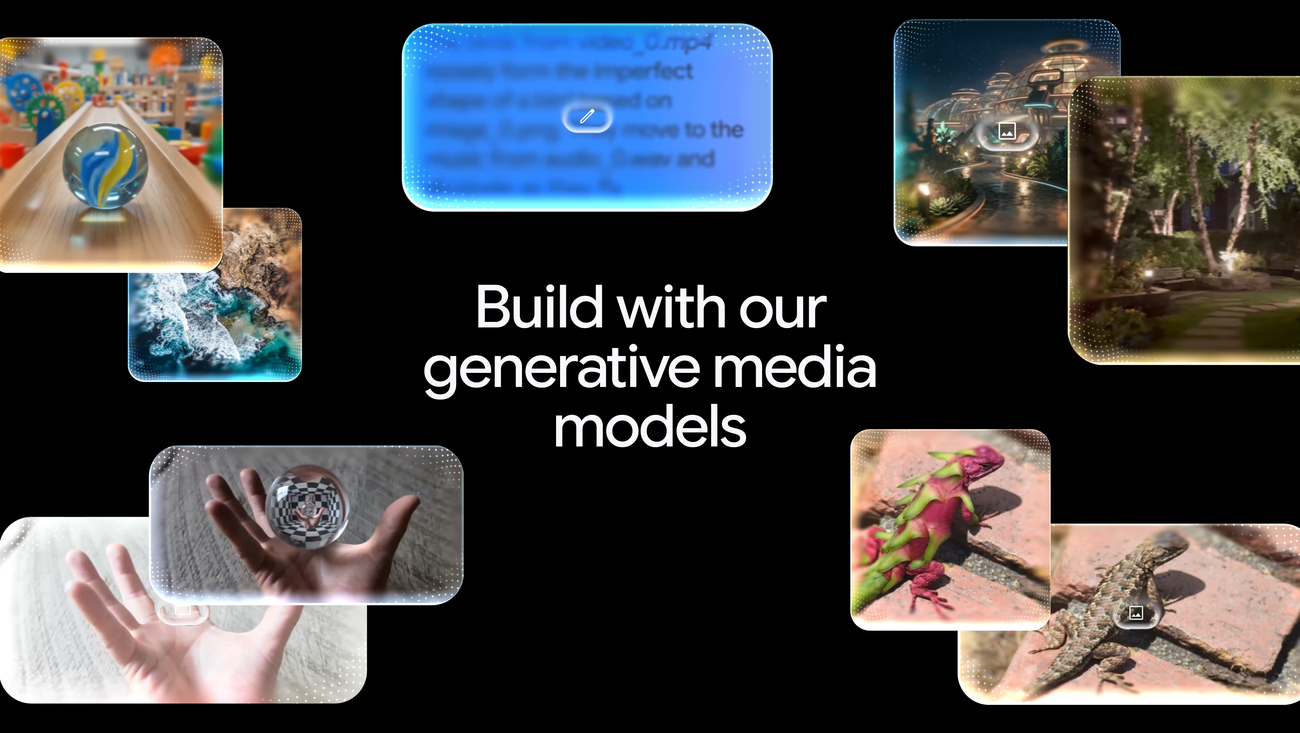
The DeepMind blog page "Start building with Nano Banana 2 Lite and Gemini Omni Flash" names two models and states no figures. It sits under the Innovation & AI section of deepmind.google, flanked by links to Google Research, Google Labs, and the Gemini models index. The share bar lists x.com, Facebook, LinkedIn, Mail, and Copy link. That is the full extent of what the document contains.
The title pairs a "Lite" variant with a "Flash" variant. In Google's naming convention, Lite signals a cost tier and Flash signals a latency tier. Nano Banana 2 Lite implies a second-generation model in a reduced footprint. Gemini Omni Flash implies a Gemini model optimized for speed. The "Omni" in the second name suggests multimodal scope, but the page does not enumerate which modalities are in or out. The page calls the reader to "start building," which is developer-facing language aimed at an API consumer. It does not say who the buyer is, what the endpoint looks like, or what the model does that the prior generation did not.
The constraint here falls on the reader, not the fab. A vendor page that names two models and provides no parameters, no context window, no price per token, and no benchmark leaves the buyer with a tier label and a generation number. The "Lite" and "Flash" suffixes are shorthand. They tell you the model is cheaper or faster than its sibling, but they do not say by how much, against what baseline, or at what quality trade-off. For an enterprise buyer deciding whether to route work tasks through Gemini Omni Flash versus a competitor's agent, this page is a placeholder, not a spec sheet. The wire desks that filed the same launch focused on the enterprise-agent surface, which is a different product layer. This page is about the models underneath, and it says almost nothing about them.
The spec table is empty because the document states no figure. No parameter count, no context window, no price, no benchmark, no ship date. The two product names are the only nouns the page commits to. Everything else is inference from the suffixes and the section it sits in.
What the page left out is everything an engineer needs to size a deployment. No benchmark against a prior generation. No API documentation link in the captured text. The page is a launch announcement in name only. It tells you the models exist and that you should build with them. It does not tell you what they are.
The page is a naming event, not a spec sheet. A buyer cannot size a deployment from two suffixes and a generation number.
No parameter count, context window, price per token, benchmark, release date, or API endpoint documentation appears in the document.
The document commits to two product names and nothing else. No parameter count, no context window, no price, no benchmark, no ship date. The Lite and Flash suffixes encode relative positioning within Google's own lineup but provide no absolute figure an engineer can use to compare against a competitor or to size a cluster.
Nano Banana 2 Lite · Gemini Omni Flash · Innovation & AI section · deepmind.google blog
After deepmind.google. We did not report this. The pictures, if any, are theirs. Also filed by TechCrunch AI, The Verge AI, The Decoder.