Gigabyte AORUS RTX 5090 water block cracks at day 21
A GIGABYTE AORUS RTX 5090 water block cracked after three weeks of operation, with no root cause, crack geometry, or thermal data published.
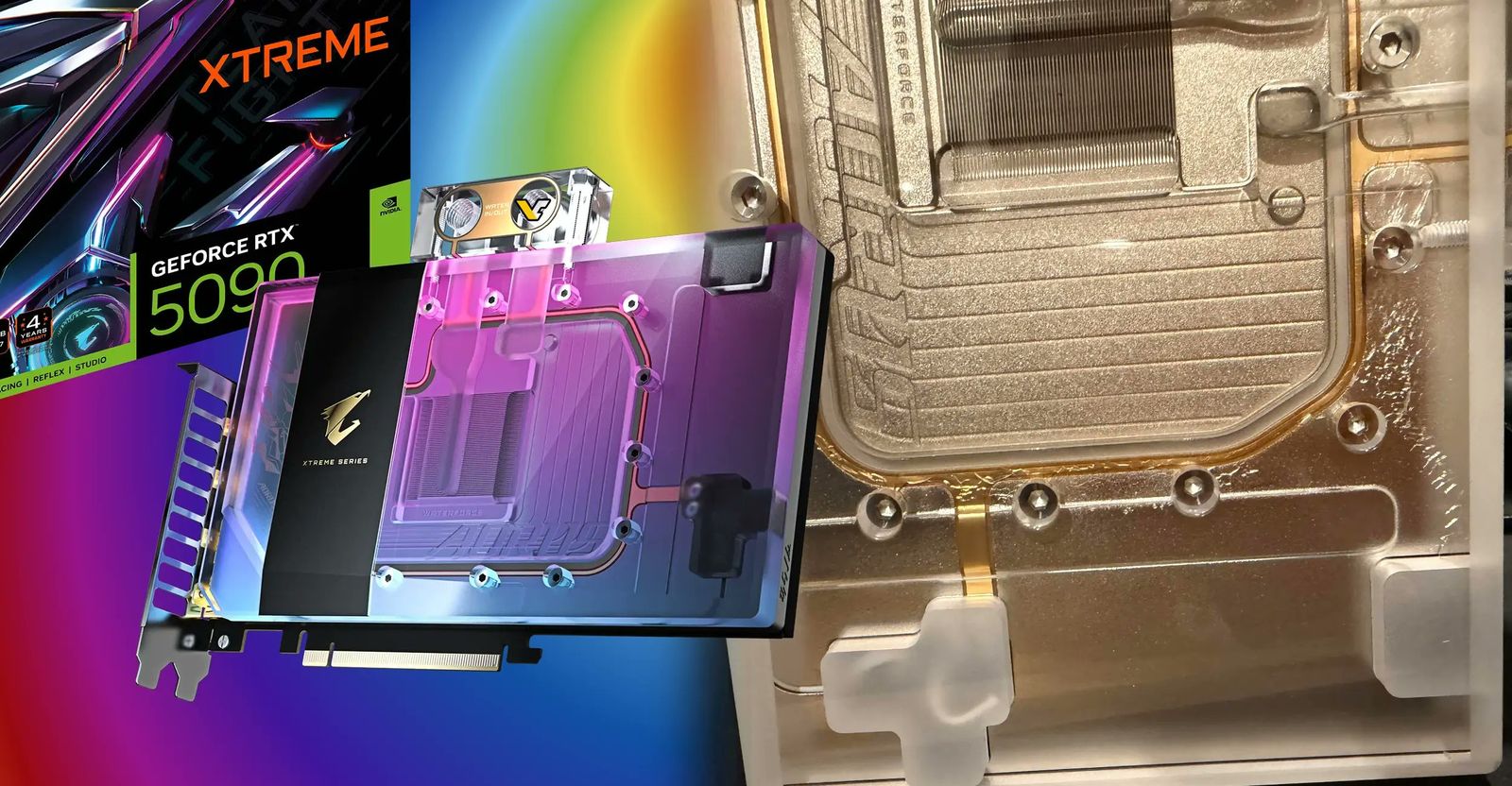
A water block on a GIGABYTE AORUS RTX 5090 cracked after 21 days of operation. That is the entire dataset VideoCardz published on September 30, 2026: a structural failure at the three-week mark, no crack geometry, no thermal log, no SKU beyond the product line name.
The post carries no photograph of the fracture, no measurement of crack length or width, and no statement from Gigabyte on whether the unit was under warranty or in a stress-test configuration. The only quantitative detail is elapsed time: three weeks from installation to failure.
Water blocks on high-TDP GPUs sit at the intersection of thermal cycling, coolant chemistry, and mechanical clamping force. A crack at day 21 could indicate material fatigue, a manufacturing defect in the base plate, or an assembly error in the mounting hardware. The document does not distinguish among these.
Die Brief's read: a single cracked block is a data point, not a trend. But the absence of any root-cause language means the buyer cannot assess whether this is a batch-level defect or an isolated incident. For a card in the RTX 5090 price tier, a cooling failure at three weeks is not a warranty conversation; it is a thermal-throttling and potential GPU-damage conversation if the leak reached the PCB.
What the post does not prove is that the crack originated in the block itself rather than at a joint or O-ring seat. Without a crack-location photograph or a metallurgical note, "water block cracked" is a user observation, not a failure analysis. The 8,058 views on the X post suggest limited initial traction, consistent with a single-unit report rather than a fleet-wide issue.
Watch for a Gigabyte service bulletin or a second report from a different retailer. If the crack recurs at the same location across multiple units, the constraint shifts from individual QC to the block's material specification. Until then, the three-week number is a single n=1 observation with no confidence interval.
A single cracked water block with no root-cause data does not establish a yield problem, but it does remove the buyer's ability to distinguish a batch defect from an isolated assembly error. The three-week failure window is short enough that thermal cycling fatigue is a live hypothesis, yet the document provides no temperature or load history to confirm or exclude it.
n=1 structural failure at 21 days on an AORUS RTX 5090 water block. No crack location, no material spec, no thermal log. Cannot separate base-plate fatigue from joint-seal failure without a fracture photograph. Buyer risk: undetected coolant leak onto PCB before visible drip. Fab risk: if batch-level, points to a clamping-torque or material-lot issue in the block assembly line.
GIGABYTE AORUS RTX 5090 water block · Cracked after three weeks of operation · Reported Sep 30, 2026, 6:40 AM · 8,058 views on the X post
After @VideoCardz. We did not report this. The pictures, if any, are theirs.