GDDR7 headroom on the 5070 Ti buys five frames, not a new tier
A +5500 MHz memory offset on a GIGABYTE RTX 5070 Ti lifts GDDR7 from 28 to 39 Gbps but adds roughly 5.5 FPS in a path-traced game.
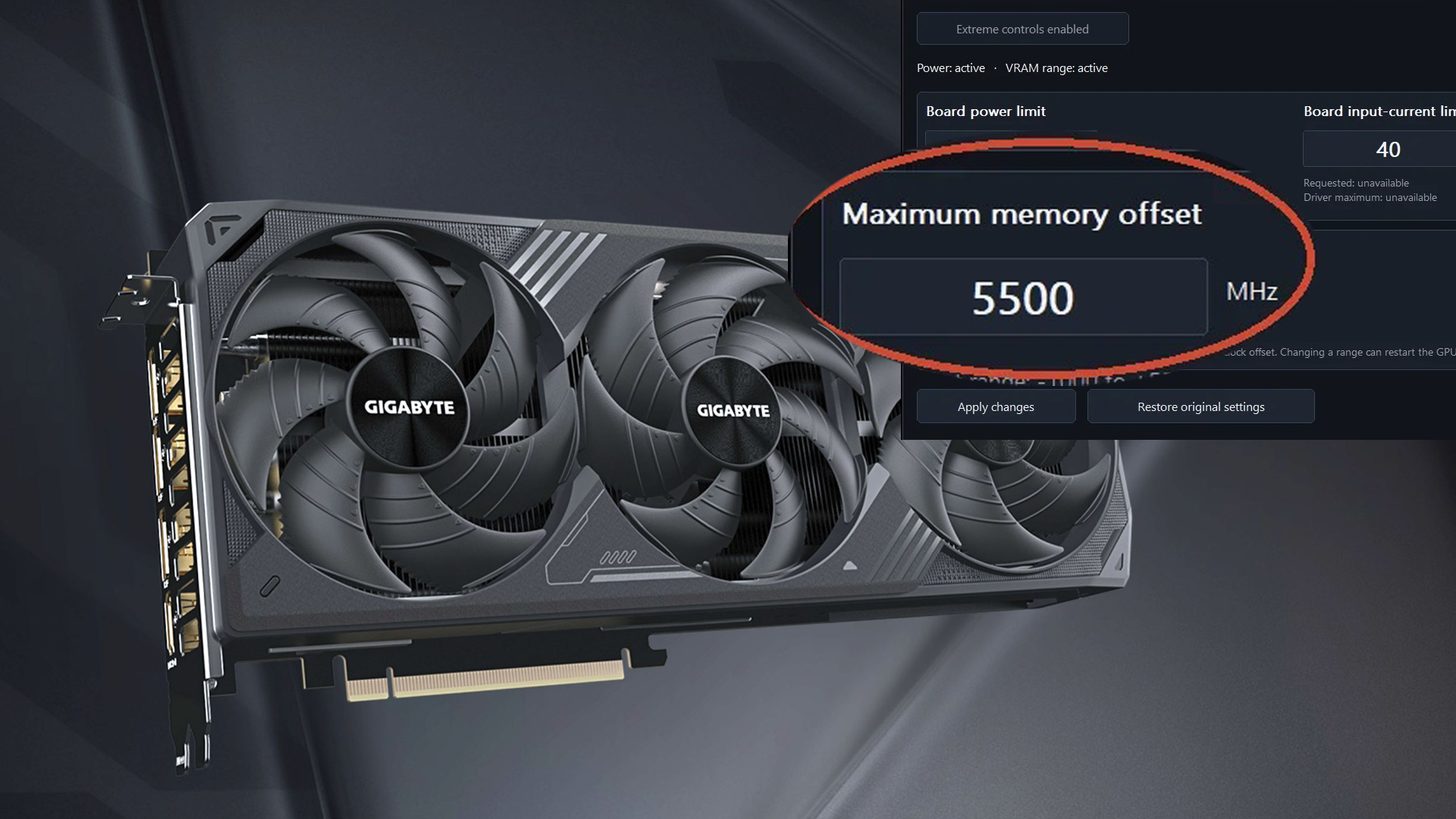
The buyer of a GIGABYTE GeForce RTX 5070 Ti just learned that the 16 GB of GDDR7 on the card runs at 28 Gbps stock and carries roughly 39 percent of headroom before the memory controller stops cooperating. That is the number that should make the person who paid for the memory subsystem uncomfortable. If the bus can run 39 Gbps and the frame rate barely moves, the compute pipeline was never waiting on the memory.
A +5500 MHz offset applied through mVolt+ Extreme, a utility the article notes can push past the +3000 MHz ceiling most conventional overclocking tools enforce. The offset lifts effective memory speed from 28 Gbps to 39 Gbps and aggregate bandwidth from approximately 896 GB/s to roughly 1248 GB/s. At +6000 MHz the driver crashes and the overclock resets, a limit a second user in the same Reddit thread confirmed.
In Cyberpunk 2077 with path tracing enabled, the reported gain is about 5.5 frames per second, which the overclocker translates to roughly one frame per 1000 MHz of added memory frequency. Steel Nomad, a synthetic benchmark, shows a 20 percent improvement. The gap between those two numbers is the entire story: a compute-bound workload extracts almost nothing from the extra bandwidth, while a bandwidth-bound synthetic test sees the full effect.
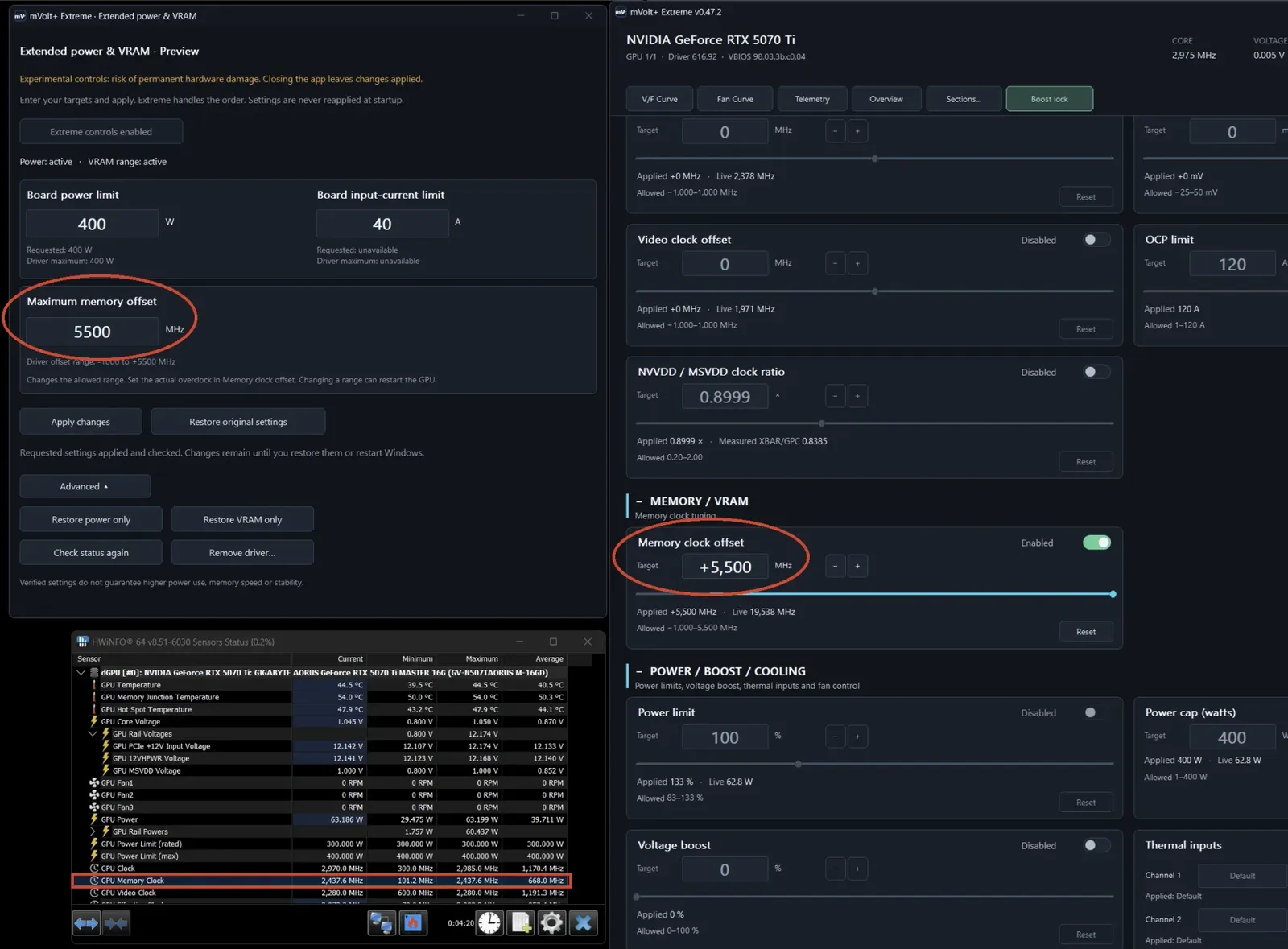
Die Brief's read: the document does not prove that GDDR7 is over-provisioned on the 5070 Ti, because no temperature, power draw, or stability duration was recorded, and no resolution or driver version was named. What it does prove is that in at least one path-traced game the memory bus was not the limiting factor at stock speed, which means the 28 Gbps specification was set with margin the silicon does not need. For the buyer, the practical consequence is that memory bandwidth is not the axis on which to compare the 5070 Ti against a card with a wider bus or faster clocks; the compute pipeline is.
What remains unmeasured: thermal behavior at 39 Gbps, sustained power draw under the offset, and whether the +5500 MHz figure holds across different GIGABYTE board revisions or is specific to one PCB layout. The article cites Reddit as its sole source and provides no independent verification. Watch for a follow-up that pairs the memory offset with a power-limiter test, because the 700 W TDP unlock mentioned in passing for the RTX 5090 suggests the tool can also shift the thermal envelope, and that variable is absent here.
The 39 percent bandwidth gain is real but the compute pipeline was already the bottleneck at stock speed, so the 28 Gbps GDDR7 spec was set with margin the silicon does not need. The buyer should not treat memory bandwidth as the differentiator when comparing the 5070 Ti to a card with a wider bus.
A 39% increase in aggregate bandwidth (896 to 1248 GB/s) yields 5.5 FPS in a path-traced title, implying the SM array and L2 cache are the rate-limiting stages, not the DRAM interface. The +5500 MHz offset is a valid stress test of the PHY, but the absence of thermal and power data means the 39 Gbps figure cannot be treated as a sustainable operating point. The 20% Steel Nomad result confirms the bandwidth path is functional; the 5.5 FPS result confirms it is not the bottleneck in real workloads.
16 GB GDDR7, stock 28 Gbps, GIGABYTE RTX 5070 Ti · +5500 MHz offset → 39 Gbps, ~1248 GB/s aggregate · ~5.5 FPS gain in Cyberpunk 2077 (path tracing) · +6000 MHz causes driver crash and OC reset
After Wccftech Hardware. We did not report this. The pictures, if any, are theirs.