OpenAI's Jalapeño inference ASIC has no spec sheet yet
OpenAI's hardware VP Richard Ho discussed the Jalapeño inference ASIC in an interview, but the transcript carries no node, power, or memory figures.
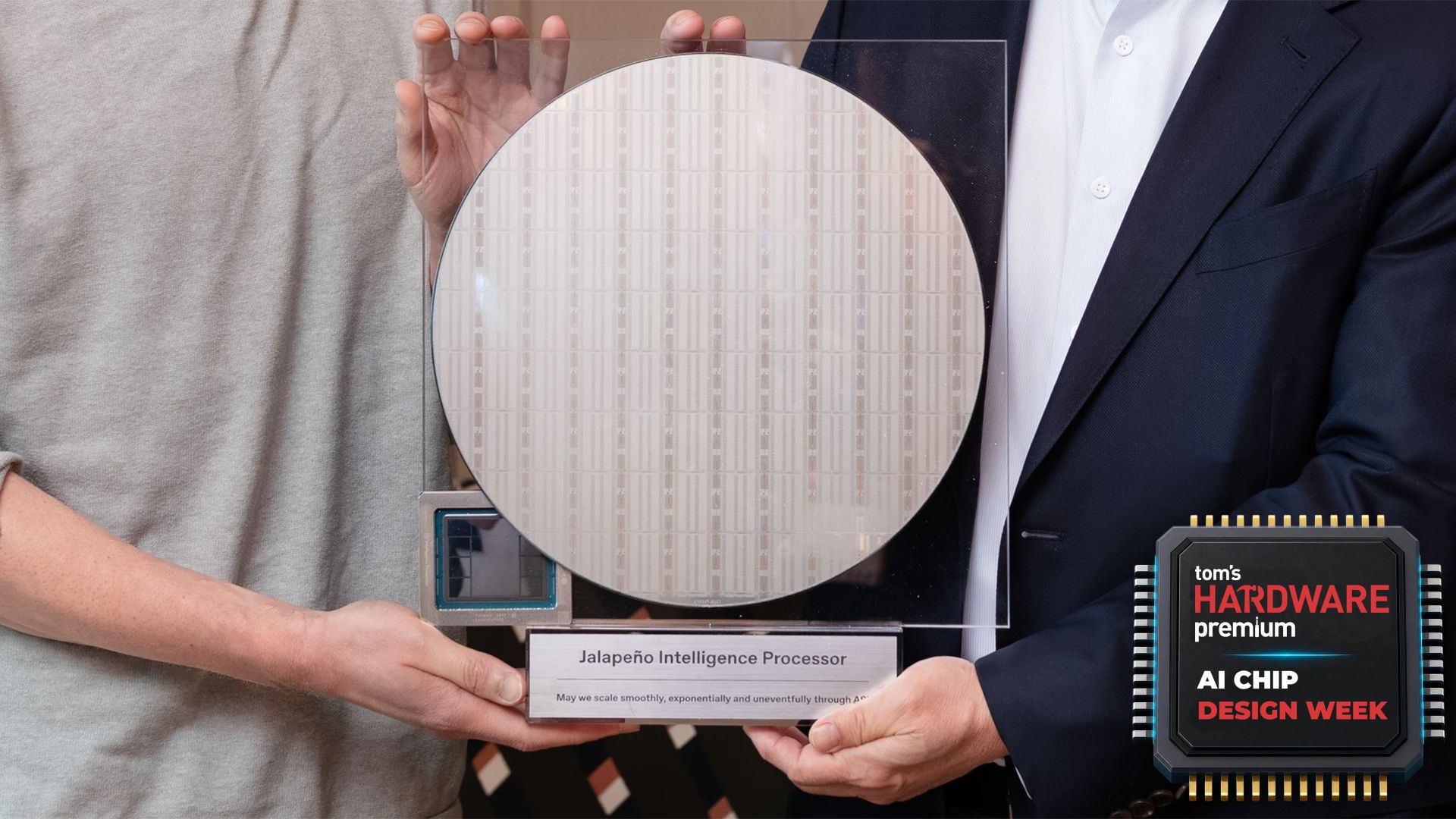
The scarce input in this story is the spec sheet itself. No process node, no thermal design power, no memory allocation, no yield figure, no packaging partner, no interconnect standard. What Tom's Hardware published is an interview transcript with OpenAI's hardware VP, and the transcript carries no silicon numbers of any kind. The constraint this story collides with is not power or pins or memory; it is the absence of any measurable constraint at all, which makes the supply-chain note impossible to write in the usual way.
What is on the record is narrow. OpenAI has an inference ASIC called Jalapeño. Richard Ho, who holds the hardware VP title at the company, sat down for an interview about its design. The transcript is described as unredacted, and the chip is called "chart-topping" without specifying which chart, which metric, or against which baseline. Those four facts are the entire factual surface of the source.
The stated focus of the interview is AI-assisted design for inference ASICs. That is a methodology question, not a silicon question. It tells a reader how the chip was specified, laid out, and verified, not what the die does at runtime or how much power it draws under load. In supply-chain terms, the story sits upstream of the wafer: it concerns the EDA flow, the design-for-test decisions, and the verification loop. None of those artifacts appear in a datasheet, and none of them constrain a foundry's capacity allocation.
An inference ASIC from a model company implies internal capacity planning that bypasses the commercial GPU market entirely. But the source names no foundry, no packaging house, no HBM vendor, no interconnect standard, no deployment date. The supply chain is invisible from this vantage point. Without a node or a package type, there is no way to estimate die size, power envelope, or unit cost. The chart-topping claim is unanchored because no baseline, no workload, and no comparison set are given.
The source is thin, and that is the honest summary. No clock, no FLOPS, no memory bandwidth, no TDP, no tape-out date, no deployment date, no price per unit, no yield percentage, no die area. The interview format means the information is filtered through a single speaker's framing, and the unredacted label does not substitute for a spec table or a benchmark run. What is not measured, not named, or not dated here is everything a process engineer would need to place the chip on a comparison chart or a capacity forecast.
Watch for a spec sheet, a foundry attribution, or a packaging-partner filing. If Jalapeño is real silicon in production, a memory vendor or a test house will eventually appear in a supply-chain document or a conference presentation. The chart-topping claim will either get a number attached to it or it will not. Until that happens, the chip exists as a name and a job title, not as a measurable object on a capacity curve.
The story is a design-methodology interview, not a silicon disclosure; no capacity, yield, or packaging data is present. Until a foundry or memory vendor is named, the chip cannot be placed on any supply-chain forecast.
Chip name: Jalapeño · Type: inference ASIC · Interviewee: Richard Ho, Hardware VP · Format: unredacted interview transcript
After Tom's Hardware. We did not report this. The pictures, if any, are theirs.