Qualcomm's first GAAFET mobile die pushes Oryon cores to 5GHz
Qualcomm's Snapdragon 8 Elite Gen 6 and Elite Extreme Gen 6 run Oryon V4 cores at 5.0GHz on TSMC's first GAAFET node, N2P, with LPDDR6 memory at 127.2GB/s.

A TSMC N2P wafer, the first GAAFET generation to ship in a mobile flagship, sits at the center of Qualcomm's September 2026 Snapdragon Summit announcement. The Snapdragon 8 Elite Gen 6 and Elite Extreme Gen 6 are the first Qualcomm SoCs built on that node, replacing the N3P FinFET process that carried the Gen 5 parts. The Wi-Fi radio also jumps from FastConnect 7900 to FastConnect 8800, moving from 2x2 MIMO to 4x4 MIMO on Wi-Fi 8.
The GAAFET transition matters most for SRAM density and clock headroom. Qualcomm pushed the Oryon V4 Prime cores to 5.0GHz, up from 4.6GHz on the V3 generation, and the performance cores to 4.0GHz from 3.62GHz. The GPU block gains matrix cores, a structural addition rather than a clock bump, and the NPU picks up what Qualcomm calls an Element Accelerator alongside a 50 percent increase in shared memory. The cellular modem moves from 3GPP Rel 18 to Rel 19, with downlink throughput rising from 12.5Gbps to 14.8Gbps.
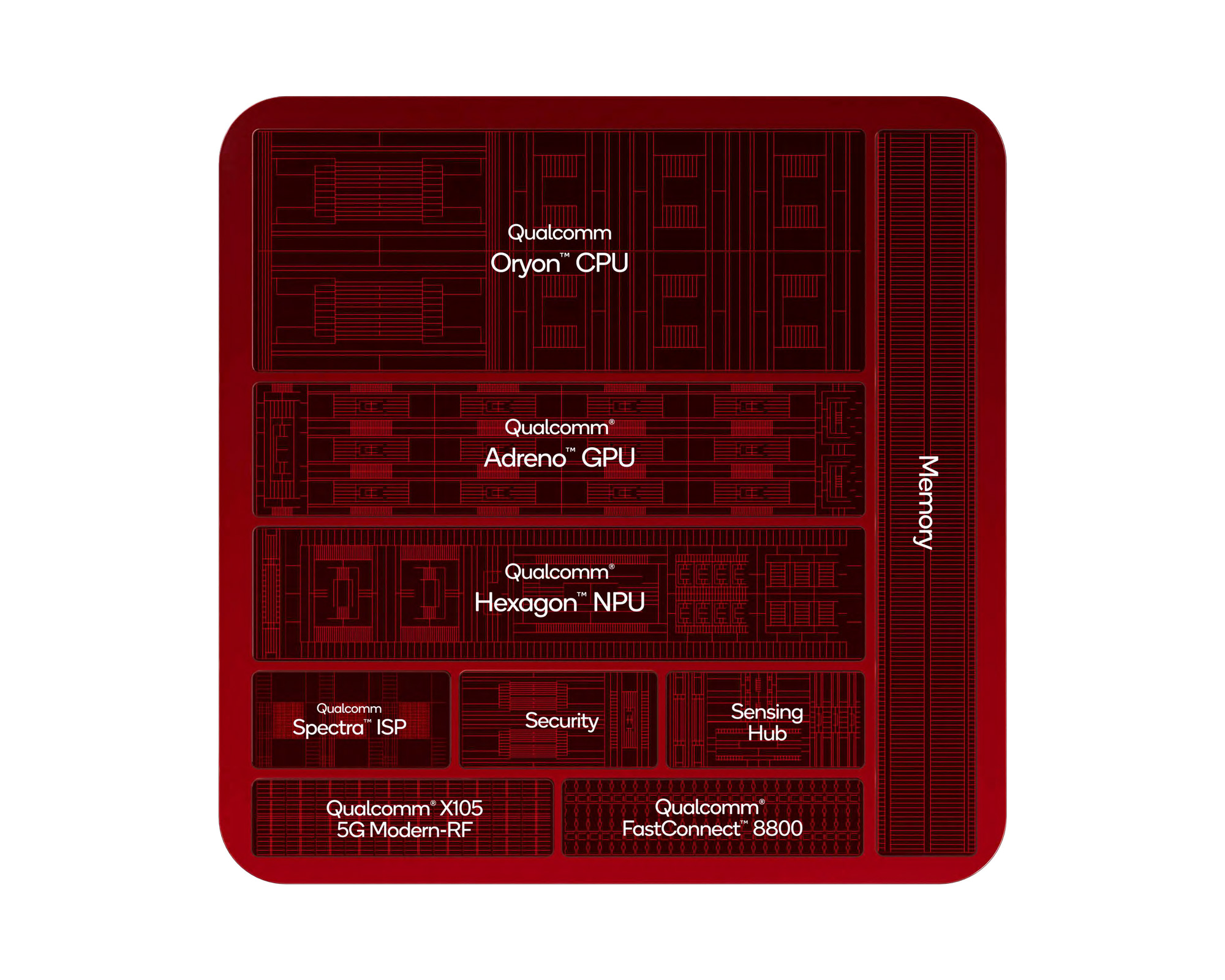
The memory controller is where the bandwidth story gets concrete. LPDDR6 runs at 4x 24-bit channels at 5300MHz, delivering 127.2GB/s, against 84.8GB/s on the LPDDR5X configuration. That is a 50 percent bandwidth increase at the same clock frequency, achieved purely through wider channels. The product tiering also shifts: the Elite Extreme Gen 6 differentiates on features, not raw performance, with 8K60 HDR capture and a 14.8Gbps 3GPP Rel 19 modem, while the standard Elite Gen 6 gets 8K30 and the same modem. Both chips share the same CPU and GPU configuration, which means the tier gap is entirely in the peripheral feature set.
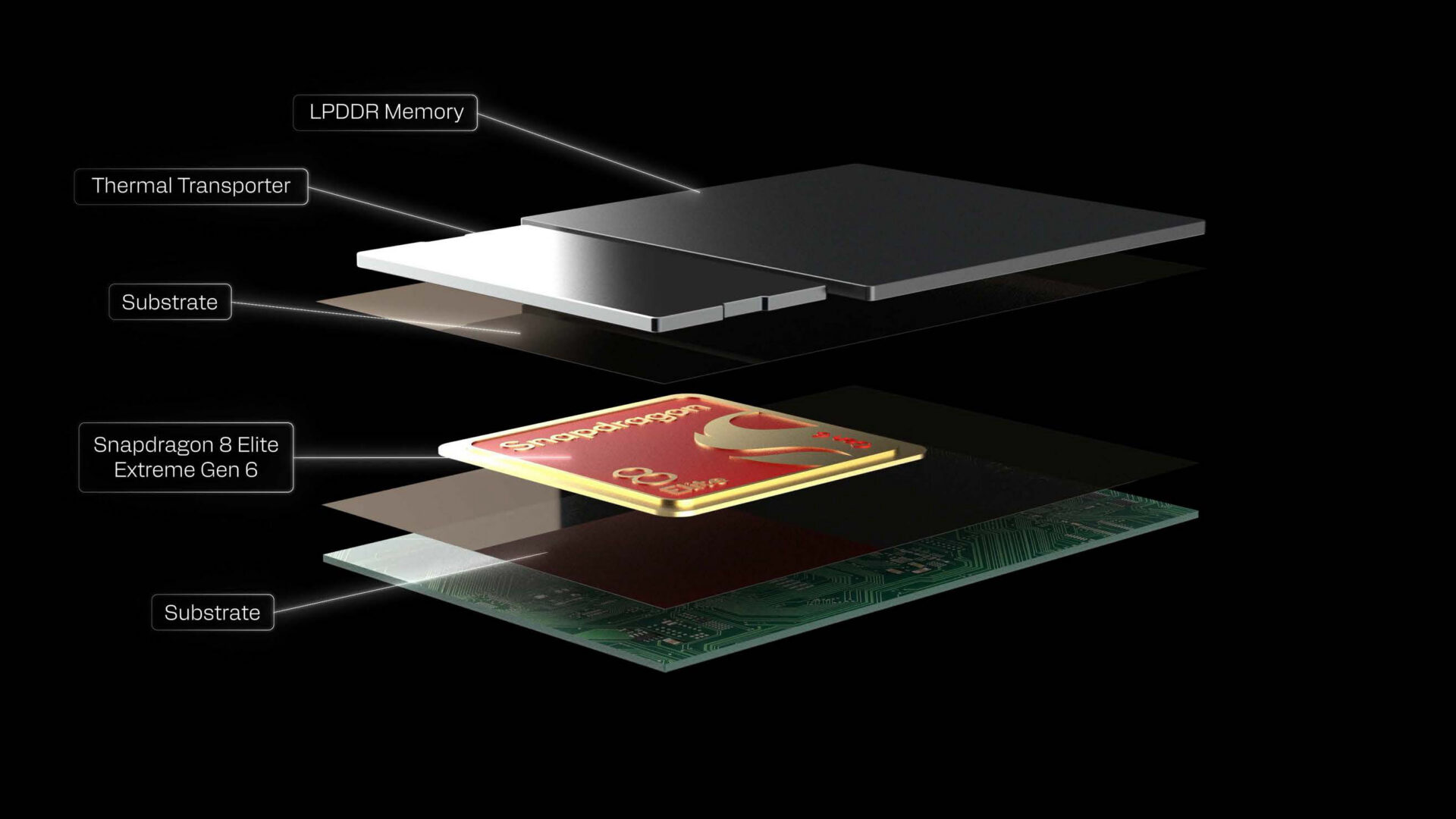
What the source does not give is a die size, a power figure, or a thermal envelope for the N2P parts. Qualcomm has not published a TDP or a sustained clock number for the Oryon V4 cores, and the 5.0GHz figure appears to be a peak specification rather than a sustained one. The Elite Extreme Gen 6's GPU matrix cores are described but not quantified in terms of throughput or core count, and the Element Accelerator on the NPU is named without a performance figure.
The next data point to watch is the PC chip direction. Qualcomm has stated that the Elite Gen 6 sets the stage for its high-end mobile offerings and gives a look at the direction for PC chips, but no PC SKU has been named or dated. The competitive question is whether Apple's next-generation A-series or M-series parts will match the GAAFET clock gains, and whether MediaTek's Dimensity line will adopt LPDDR6 in the same window. The feature-based tiering also raises the question of whether OEMs will push the standard Elite Gen 6 into mid-range devices, diluting the Extreme SKU's positioning.
The 5GHz Oryon V4 on N2P is a single-threaded performance jump that GAAFET SRAM density makes sustainable at mobile power budgets. The feature-based tiering between Elite and Elite Extreme changes how OEMs will segment their device lines.
Oryon V4 Prime @ 5.0GHz, Perf @ 4.0GHz · LPDDR6 4x 24-bit @ 5300MHz, 127.2GB/s · TSMC N2P GAAFET process · 3GPP Rel 19, 14.8Gbps DL
After ServeTheHome. We did not report this. The pictures, if any, are theirs.