GPT-6.2 Astra holds prior-request extraction at 0.2 percent
0.2 percent is the adaptive red-team success rate OpenAI reports for extracting protected reasoning from a prior request on GPT-6.2 Astra, down from 54.0 percent on GPT-6 Astra.

| GPT-6 Astra | GPT-6.2 Astra | |
|---|---|---|
| Prior-request ASR | 54.0% | 0.2% |
| Current-request ASR | 22.9% | 0.9% |
| Evaluation method | strong automated red-teaming | strong automated red-teaming |
| Attacker models | six (aggregated) | six (aggregated) |
The filing, dated November 20 and titled Combatting adversarial distillation, also measures current-request extraction at 0.9 percent on GPT-6.2 Astra versus 22.9 percent on GPT-6 Astra. The figures aggregate across six attacker models the document does not name.
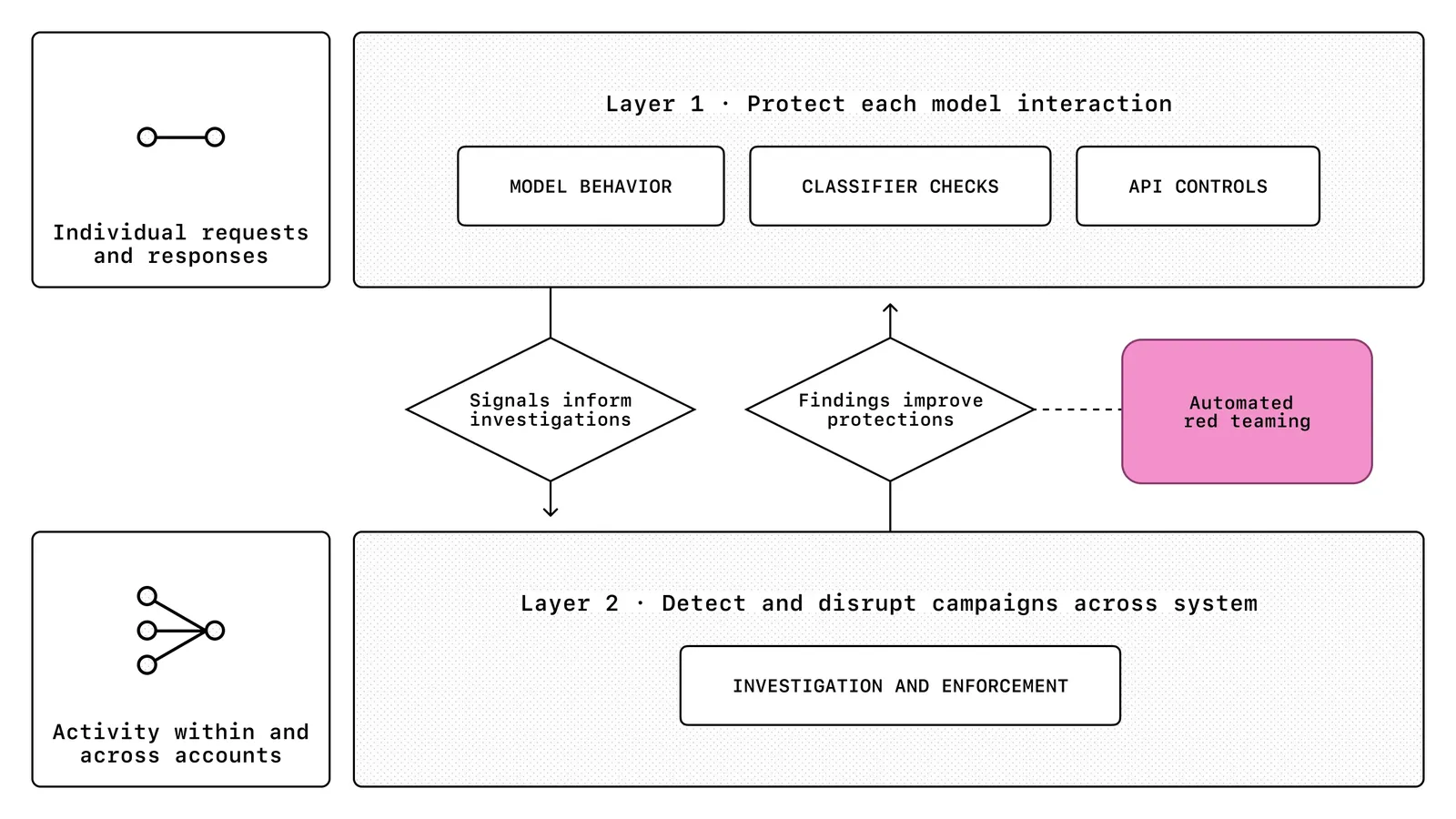
The defense stack behind the drop combines targeted training, input and output classifiers, and API blocks that stop older models from reading protected reasoning. OpenAI places this stack at the biology and cybersecurity tier.
The measurement lives inside one lab's own harness, against its own models, with its own attacker set. It does not guarantee that a third party running a different red-team configuration would reproduce the number.
GPT-6.2 Sol appears in the safeguard update but carries no ASR figure in the table. The weekly account-ban count is given as thousands to tens of thousands, without a specific number.
GPT-6 Astra is receiving selected improvements without enumeration, so the gap between the two Astra versions remains unquantified for a buyer pricing residual extraction risk.
The 54-to-0.2 figure is a single-lab, single-harness measurement. It bounds OpenAI's internal threat model under its own adaptive red-team configuration and does not generalize to an independent evaluation. The unquantified retrofit on GPT-6 Astra means a buyer cannot yet price the residual extraction risk on the older model.
After openai.com. We did not report this. The pictures, if any, are theirs. Also filed by The Decoder.