Diamond Rapids splits 256 cores across three process nodes
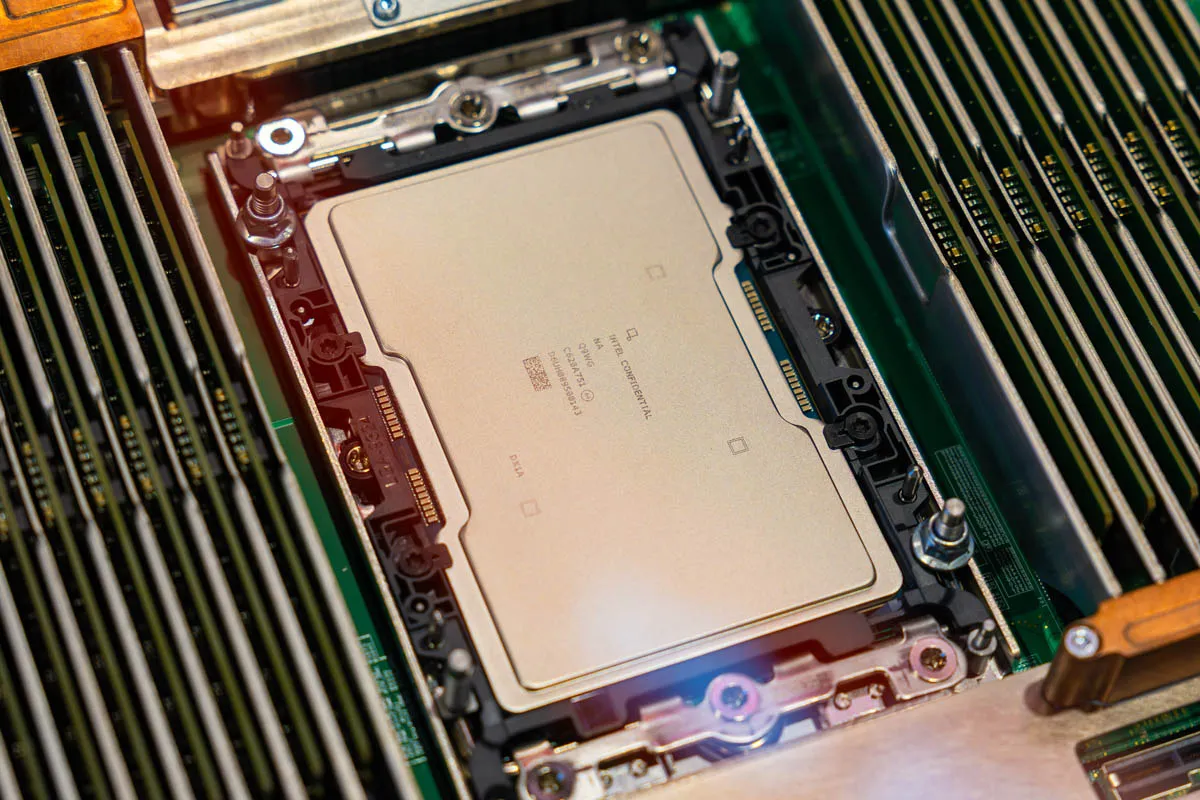
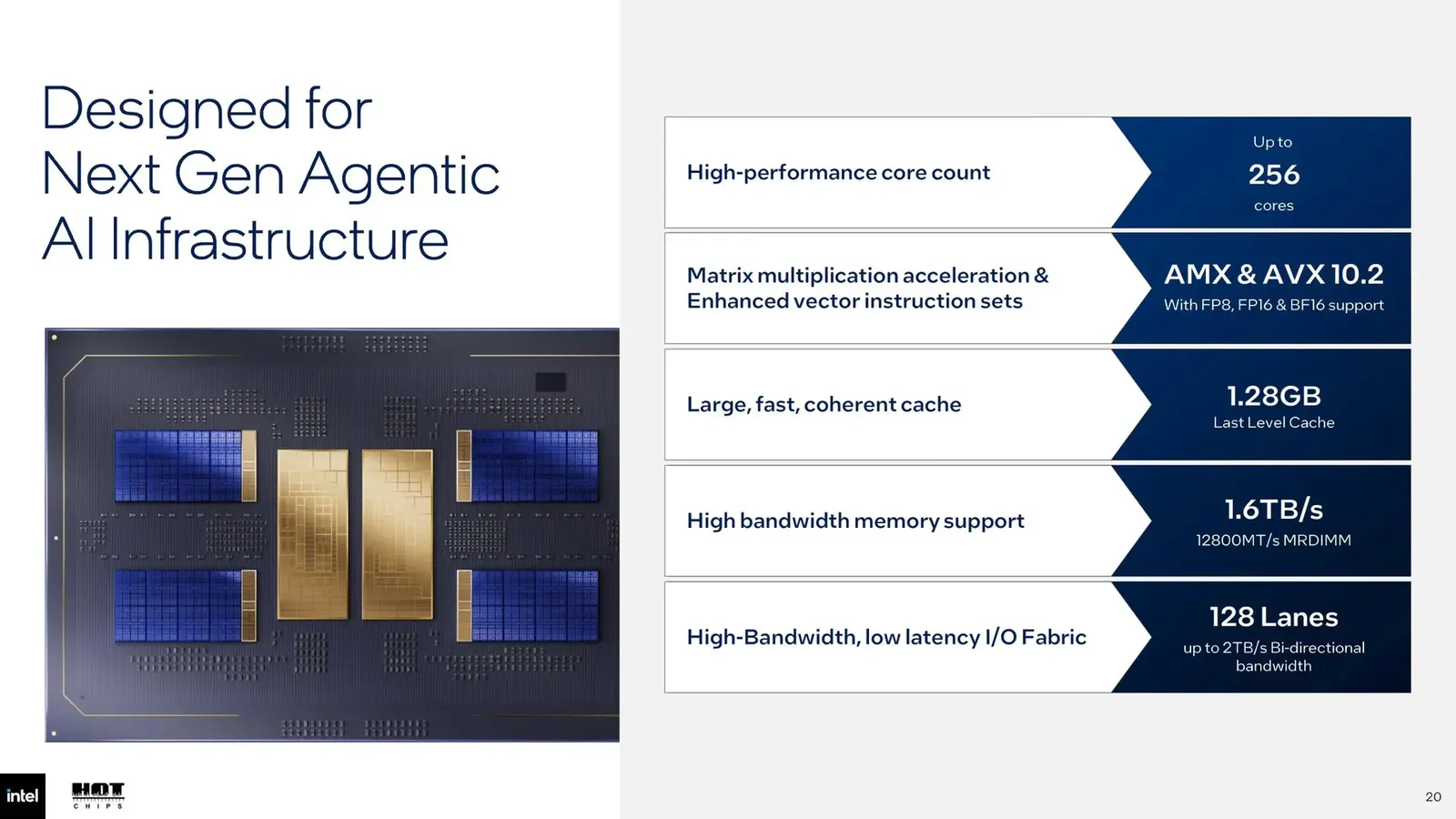
Intel's Diamond Rapids Xeon 7 stacks 256 Panther Cove cores across 16 chiplets, four base tiles, and two fabric hubs using three different process nodes.
| Xeon 7 Diamond Rapids | |
|---|---|
| cores | 256 Panther Cove P-cores |
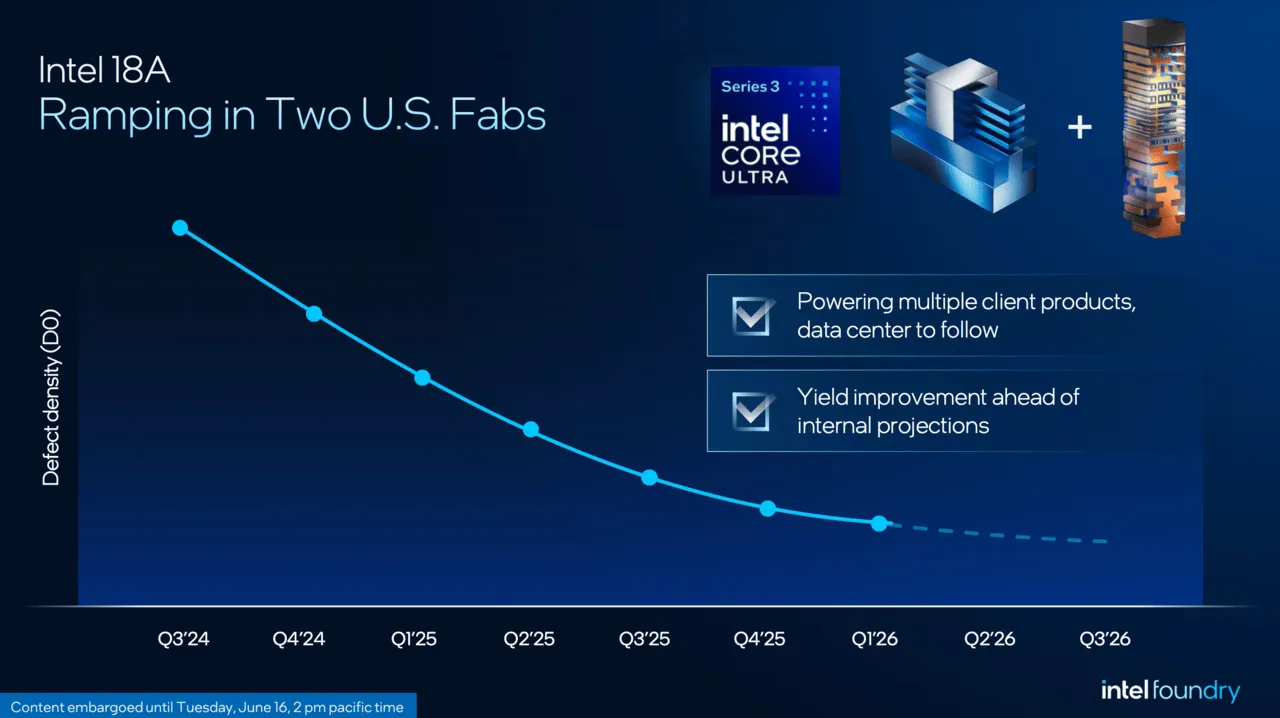
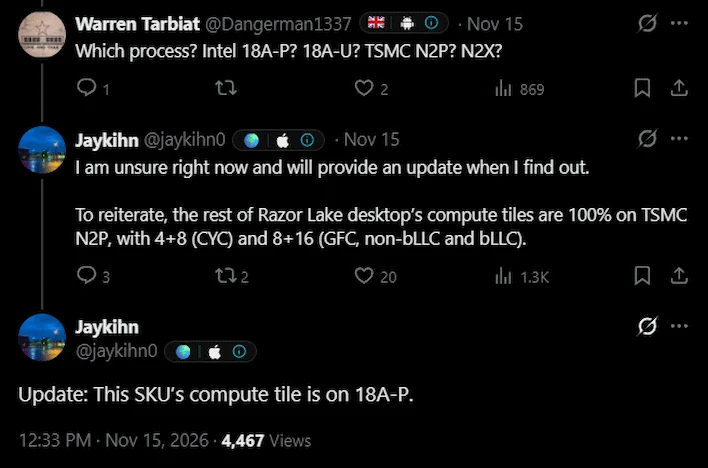
| core chiplets | 16 (Intel 18A-P) |
| compute base tiles | 4 (Intel 3-T) |
| fabric hub tiles | 2 (Intel 3) |
| L3 cache | 1.28 GB (320 MB per base tile) |
| memory | 16-channel DDR5, MRDIMM up to 12,800 MT/s |
| PCIe | 128 PCIe 6.0 + 16 PCIe 4.0 |
| packaging | Foveros 3D Direct |
256 Panther Cove P-cores is the maximum core count Intel has published for Diamond Rapids, and it does not prove the package will ship at that density. The architecture splits those cores across 16 chiplets on Intel 18A-P, four compute base tiles on Intel 3-T, and two Fabric Hub Tiles on Intel 3, with Foveros 3D Direct hybrid bonding stacking four chiplets per base tile into a 64-core group.
The 320 MB of L3 per base tile works out to five megabytes per core, a step up from prior Xeon budgets, but the document states no clock frequency, no TDP, and no socket specification. A buyer cannot size a cooling envelope or a motherboard from this filing. The UCIe-S copper links in the substrate and the fan-out fabric topology between base tiles and hubs are the mechanism that makes 256 cores addressable as one socket, but the latency of that fabric is not measured here.
Clock frequencies, power limits, SKU designations, pricing, and a release window appear nowhere in the packet.
The five-megabytes-per-core L3 budget is the only figure a buyer can act on from this filing; the UCIe-S fabric latency and the package TDP are the numbers that keep a datacenter engineer from specifying a rack. Until Intel publishes a socket spec and a clock range, Diamond Rapids is a topology, not a part.
Clock frequencies, TDP, socket mechanical spec, SKU numbers, pricing, and release date are absent from every document in the packet.
Per-core L3 of 5 MB is the actionable spec here. The UCIe-S substrate links and fan-out fabric topology define the inter-tile path, but no latency or bandwidth figure is given. Without TDP, socket pinout, or clock range, a platform engineer cannot close a BOM.
After community.intel.com. We did not report this. The pictures, if any, are theirs.